

The house feels suddenly, impossibly quiet after your companion takes their final breath. In these first moments of stillness, the weight of responsibility often arrives before the heart has even begun to process the loss. It's natural to feel a sense of emotional paralysis or confusion regarding the physical changes and practical decisions that now require your attention. You want to act with the same love you provided throughout their life, yet knowing exactly what to do when your pet dies can feel overwhelming when you are submerged in grief.
We understand that this is a sacred time that requires both gentle empathy and steady, professional guidance. This guide serves as a dignified checklist to help you navigate the immediate hours and days following your loss with composure. We'll walk you through the essential steps for handling your pet's remains at home, explain the transparent options for private or individual cremation, and help you find a sense of peace through a meaningful final tribute. By following a structured path, you can ensure your companion receives the respectful farewell they deserve while protecting your own need for a quiet, healing space.
Key Takeaways
- Understand why the first hour following a loss is a sacred time for stillness, offering you the permission to pause before you address any practical responsibilities.
- Learn the gentle techniques for positioning and preparing your companion's body to ensure they remain in a state of grace and dignity.
- Gain a clear understanding of what to do when your pet dies by reviewing the transparent differences between private, individual, and group cremation services.
- Follow a methodical checklist for necessary notifications, such as updating veterinary records and microchip registries, to prevent painful automated reminders.
- Begin the journey toward closure by learning how to select a fitting memorial and create a dedicated space in your home for quiet remembrance.
Immediate Actions: Confirming the Passing and Finding Initial Calm
The transition from life to memory is a profound threshold that requires a steady hand and a quiet heart. When you first realize your companion has passed, time often seems to stop, replaced by a heavy stillness. It's vital to understand that you have the gift of time in this moment. You don't need to rush into phone calls or logistics immediately. Instead, focus on finding a steady rhythm through deep, intentional breathing. This helps manage the initial shock that can cloud your judgment. Reducing the light and noise in the room maintains a sense of solemnity as you begin the process of understanding what to do when your pet dies with dignity.
To find a sense of grounding during this difficult transition, consider this perspective on the initial steps of the journey:
How to Confirm Your Pet Has Passed Away
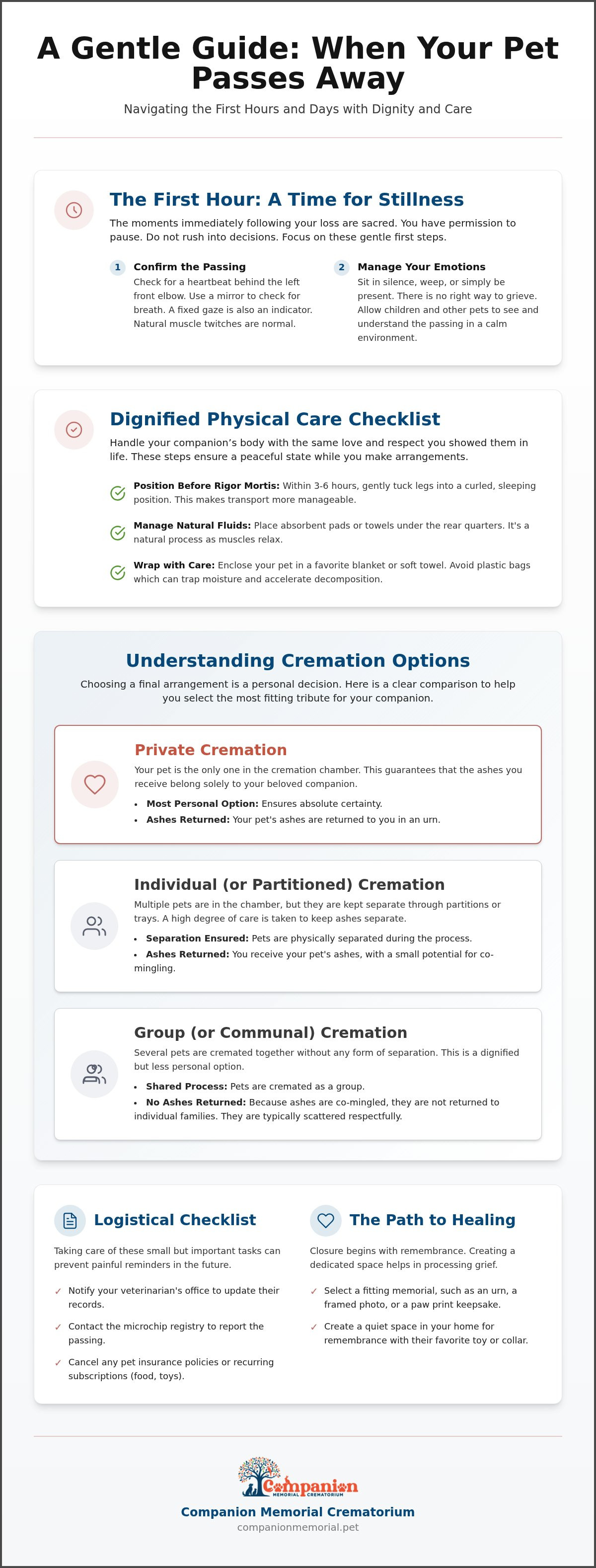
Confirming the loss provides the clarity needed to move forward. To check for a heartbeat, place your hand firmly behind the left front elbow where the chest wall is thinnest. You may also use the mirror test; hold a small mirror or a piece of glass just in front of their nose. If there's no condensation, respiration has ceased. Check the eyes for a fixed gaze and a lack of reflex when the surface is gently touched. You might witness involuntary muscle twitches or a "death rattle," which is a sound caused by air escaping the lungs. These are natural physiological releases. They're not signs of pain or distress but rather the body's final way of letting go. Understanding these details helps you know what to do when your pet dies at home without fear of the unknown.
Managing Your Emotional State in the First 30 Minutes
The initial half hour is often defined by a profound sense of shock and emotional paralysis. Allow yourself to simply sit in silence or weep without judgment. There's no "correct" way to begin grieving the loss of a pet, and staying with their body for a period of time is a healthy way to begin accepting the reality of the situation. If you have children, use clear, gentle language to explain what happened. Avoid euphemisms like "went to sleep," which can cause fear or confusion. Let other household pets sniff their companion as well. This often helps them understand the change in the household dynamic and prevents them from searching for their friend later. This unhurried approach ensures that every member of the family has the space to begin their own healing journey.
Physical Care Checklist: Handling Your Companion’s Body with Dignity
Once you have confirmed the passing, the focus shifts to providing a dignified transition for your companion's physical form. This stage of the process requires a balance of practical action and gentle care. Knowing exactly what to do when your pet dies at home involves preparing their body for transport or final arrangements with the same respect you showed them throughout their life. Taking these steps early ensures that your pet remains in a peaceful state while you coordinate the next phases of their journey.
Body Positioning and Hygiene Basics
It is helpful to position your pet before rigor mortis sets in. Rigor mortis is the natural stiffening of the muscles that typically begins within three hours of a pet's passing and becomes fully set within six to twelve hours. By gently tucking their legs into a curled, sleeping position, you make future transport much more manageable and dignified. If possible, gently close their eyes and mouth to maintain a peaceful expression.
Biological processes continue even after life has ceased, which means natural fluids may be released as muscles relax. This is a common and natural occurrence. To manage this with dignity, consider the following steps:
- Place absorbent "potty pads" or heavy, folded towels beneath the rear quarters.
- Use a clean cloth to gently wipe away any moisture from the nose or mouth.
- Wrap the body in a favorite blanket or a soft towel to create a protective shroud.
Environmental Considerations for the Home
Maintaining a cool environment is the most effective way to preserve your pet's body if there is a delay in transport. Selecting a cool, dry area of the home, such as a basement or a room with stone flooring, is ideal. You should lower the thermostat in that specific room or use ice packs wrapped in small towels placed around the abdominal area. Avoid placing ice directly on the fur to prevent moisture buildup or dampness.
If you find yourself needing more than a few hours to process your next steps, seeking guidance on professional cremation services can provide a structured and supportive path forward. Keeping the body in a space away from other living animals is also recommended, as it allows you a private area for final goodbyes without distraction. These environmental adjustments, though practical in nature, are an extension of the care you have always provided. By managing these details with quiet efficiency, you create the space needed to focus on honoring your pet's memory with a clear and calm mind.
Deciding on Final Arrangements: Cremation and Service Options
Deciding on a final resting path is a deeply personal choice that requires clarity and transparency. While the immediate physical care is behind you, the next step in understanding what to do when your pet dies involves selecting a service that aligns with your emotional needs and your desire to honor their memory. Professional facilities offer several distinct paths, each designed to provide a specific level of connection and closure for the family during a period of high stress.
Choosing the Right Cremation Type for Your Needs
Understanding the distinctions between service levels is essential for your peace of mind. Every family has different needs for closure, and these options reflect those varying emotional journeys:
- Private Cremation: This service ensures your companion is the sole occupant of the cremation chamber throughout the entire process. It provides absolute certainty that the cremated remains returned to you are exclusively those of your beloved pet.
- Individual Cremation: In this arrangement, multiple pets are present in the chamber but are kept separate by partitions or distance. This allows for the return of your pet's specific ashes at a different price point than a private service.
- Group Cremation: This is a communal process where several pets are cremated together. Because the remains are commingled, ashes are not returned to the owners, making it a choice often selected by those who prefer a simpler, collective farewell.
For many families, the dedicated focus and transparency found in Private Pet Cremation: A Guide to Dignified End-of-Life Care in 2026 offers the highest level of comfort and certainty.
Coordinating with a Professional Crematorium
For families residing in the Tri-State area across New York, Connecticut, Pennsylvania, and New Jersey, logistics are a primary consideration. You may choose to bring your companion directly to the facility or arrange for a professional pickup from your home or veterinary clinic. If your pet is nearing their end but hasn't yet passed, utilizing an on-site euthanasia facility in Ferndale, NY, provides a peaceful, controlled environment for a gentle transition. This approach avoids the clinical atmosphere of a traditional hospital and allows for a seamless, respectful move into aftercare services.
Transparency should be the foundation of your trust in a provider. Don't hesitate to ask about the "chain of custody" and how the facility tracks your pet's journey from the moment they arrive until they are returned to you. A disciplined, veteran-owned facility often brings a unique level of organization and solemnity to these procedures, ensuring every step is documented with precision. You may also find solace in scheduling a private viewing. This allows you to spend a final few moments in a dedicated, quiet room, offering a sense of closure before the cremation begins. These professional services are designed to guide you through these sensitive choices with a steady, unwavering hand.
The Logistical Checklist: Notifications and Documentation
While the emotional weight of the moment is heavy, certain practical obligations require your attention to prevent unnecessary distress in the coming weeks. Knowing what to do when your pet dies involves managing the digital and administrative footprint they left behind. These tasks, though seemingly clinical, represent a final act of stewardship that protects your long-term peace of mind. By addressing these details now, you ensure that your focus can remain entirely on healing rather than on unexpected paperwork or administrative errors.
Essential Notifications After a Loss
Start by contacting your primary veterinarian. They must update their medical records to halt automated reminders for vaccinations or wellness exams. This step also ensures that any recurring medication refills are cancelled immediately. If your companion was covered by insurance, notifying the provider promptly allows you to settle outstanding claims while the details are still fresh in your mind. Perhaps most importantly, update your pet’s microchip registry. Marking a companion as deceased in their database prevents the arrival of heartbreaking "found pet" alerts or marketing reminders that can trigger sudden waves of grief during your recovery.
- Notify your veterinarian to stop all automated mailings and digital alerts.
- Contact pet insurance providers to close the policy and finalize claims.
- Update microchip registries and local pet licensing departments.
The Importance of Official Records
A professional and transparent facility will always provide an official cremation certificate upon the completion of services. This document serves as a formal record, providing both legal and emotional closure by confirming the date and location of the final arrangements. It acts as a testament to the fact that your companion was handled with the dignity they deserved throughout the entire process. Keeping this certificate with your family's important papers ensures their place in your personal history is documented with the same respect as any other cherished family member.
Understanding local ordinances is a vital part of this process, particularly for those residing in the Tri-State area. Home burial is often restricted in urban and suburban areas due to local public health codes and proximity to shared water sources. In New York and New Jersey, specific zoning laws may dictate burial depth or distance from property lines, making professional cremation a more reliable and legally sound choice for many families. If you have questions about the documentation provided or need help understanding the next steps, you can reach out to our dedicated staff for professional and compassionate assistance.
The Path to Healing: Memorialization and Grief Support
The conclusion of practical arrangements marks the beginning of a more personal, inward journey. Once the immediate responsibilities of what to do when your pet dies have been addressed, the focus shifts toward creating a lasting tribute that honors the bond you shared. Memorialization is not merely a task; it's a vital step in the healing process that transforms a physical absence into a cherished memory. By creating a dedicated space for reflection, you provide yourself and your family with a sanctuary where grief can be processed with quiet dignity.
Selecting Memorial Urns and Tributes
Choosing a final vessel for your companion's remains is a deeply personal decision that should reflect their unique spirit and your home's environment. Materials range from the organic warmth of hand-finished wooden chests to the timeless elegance of ceramic vessels or the eco-conscious choice of biodegradable urns for those who prefer a return to nature. Engraving these tributes with names, significant dates, or a short, meaningful quote adds a layer of permanence to their legacy. These small details ensure that their physical presence remains a respectful part of your daily surroundings.
For many, the act of creating a pet memorial at home serves as a profound tool for closure. This space might include a framed photograph, a favorite toy, or a candle that you light during moments of remembrance. This dedicated area acts as a focal point for your love, ensuring that while the house may be quieter, the memory of your companion remains vibrant and honored.
Accessing Bereavement Resources
Grief is rarely a linear path, and it's important to recognize when the weight of loss requires external support. Families in the NY, CT, PA, and NJ areas have access to a variety of specialized resources, ranging from online communities to local pet loss support groups. In Sullivan County and the surrounding regions, professional bereavement counseling can provide the tools needed to navigate the more complex waves of sorrow. Seeking help is a sign of respect for the depth of the relationship you lost; it's a way to ensure you heal as thoroughly as you loved.
A veteran-owned facility approaches aftercare with a specific sense of duty that extends beyond the cremation itself. This "duty of care" means providing a steady hand and reliable resources even after the final services are complete. Whether through a private viewing that allows for one last quiet goodbye or the provision of official certificates that document their life, the goal is always to provide clarity and peace. Remember that you don't have to walk this path alone. By utilizing the available support networks and leaning on professional guidance, you can move through the initial shock toward a place of lasting, peaceful remembrance.
Honoring Their Legacy with Peace and Clarity
Navigating the first few hours after a loss is an act of profound love. By prioritizing stillness in the first hour and handling your companion's body with gentle dignity, you set the foundation for a peaceful transition. Knowing what to do when your pet dies allows you to move from a place of emotional paralysis to one of quiet, respectful action. Whether you are coordinating logistical notifications or selecting a memorial that reflects their unique spirit, each step is a meaningful tribute to the bond you shared.
As a combat veteran-owned and operated facility, we bring a disciplined sense of honor to every service we provide. We offer a peaceful environment for on-site euthanasia and private viewing rooms to ensure your final goodbye is held in total tranquility. We're dedicated to supporting families across NY, CT, PA, and NJ with unwavering transparency and care. If you need a steady, reliable guide during this difficult journey, please Contact Companion Memorial for Respectful Final Arrangements. You've provided a life full of love; now, let us help you find the peace that comes with a dignified farewell.
Frequently Asked Questions
What should I do if my pet dies in the middle of the night?
You should focus on finding initial calm and preparing a cool space if your companion passes during the night. Most professional crematoriums operate during standard business hours; therefore, there is no need to feel pressured into immediate action. Follow the physical care steps of positioning your pet in a sleeping posture and using absorbent padding. This allows you to wait until the morning to coordinate a respectful pickup or viewing.
How long can I keep my pet's body at home before I need to call a crematorium?
You can typically keep your pet's body at home for up to 24 hours provided you utilize proper cooling techniques. Understanding what to do when your pet dies at home involves lowering the room temperature or using wrapped ice packs to preserve their remains. While there's no immediate rush, contacting a professional facility by the next morning ensures that transport can be arranged with quiet efficiency and care.
Is it legal to bury my pet in my backyard in New York or New Jersey?
Backyard burial is often governed by local municipal ordinances rather than just state law in New York and New Jersey. While some rural areas may permit it, many urban and suburban zones prohibit home burial to protect groundwater and comply with public health codes. It's essential to check with your local health department or town clerk before proceeding. Professional cremation offers a legally sound and dignified alternative that bypasses these complex local restrictions.
How do I know for sure that I am receiving my own pet's ashes back?
Selecting a private cremation service is the most reliable way to ensure you are receiving only your own pet's ashes. Professional facilities utilize a disciplined tracking system that follows the pet from arrival through the entire process. This "chain of custody" is documented on the cremation certificate you receive at the conclusion of the service. This transparency provides the peace of mind that your companion was honored individually and with absolute integrity.
What happens during a group cremation compared to a private one?
In a group cremation, several pets are placed together in the chamber and their remains are commingled. This differs significantly from a private service because the ashes are not returned to the family but are instead handled in a communal, dignified manner. It's often chosen by those who prefer a collective farewell. This process ensures that every pet is treated with respect while offering a simpler path for final arrangements during a difficult time.
Can I bring my pet's favorite toy or blanket to be cremated with them?
You can often include a small, combustible item such as a favorite blanket or a soft toy to accompany your pet during the process. It's a gentle way to maintain a sense of comfort and connection during their final journey. However, items containing metal, large amounts of plastic, or batteries cannot be included due to environmental safety regulations. Discussing these tributes with your provider beforehand ensures your wishes are carried out with absolute precision.
How do I help my other pets cope with the loss of their companion?
Allowing your surviving pets to gently sniff their companion's body is a helpful way to let them process the loss. This simple act can prevent them from searching the house later and helps them understand the change in the household. Maintaining their established feeding and walking routines provides a necessary sense of security. Extra quiet time and gentle affection can help them navigate their own period of mourning with less stress and confusion.
What is an official pet cremation certificate and why do I need one?
An official pet cremation certificate is a formal document that confirms the date, location, and specific type of service provided for your companion. It serves as a vital piece of documentation for your family records, offering both legal and emotional closure by verifying the "chain of custody" was maintained. Knowing what to do when your pet dies includes securing this certificate to honor their place in your personal history with the respect they deserve.


