

Imagine the final moments with your companion, not as a clinical procedure, but as a gentle transition held in a space of profound respect. For many pet owners, the decision to say goodbye is the most difficult act of stewardship they'll ever face. Understanding exactly what to expect during pet euthanasia can transform a time of overwhelming anxiety into a period of quiet, focused love. You've likely spent days or weeks questioning if the timing is right, carrying the heavy weight of responsibility for a friend who has given you everything. It's natural to feel a sense of guilt or fear that your pet might experience discomfort during their final moments.
This guide provides the clarity you need to navigate this difficult journey with a compassionate understanding of the medical process and the emotional support available. We'll walk through the physical steps of the procedure, address common concerns regarding natural reflexes after death, and explain how a specialized facility prioritizes your pet's comfort. By removing the veil of the unknown, you can find a sense of closure and ensure your companion's passing is defined by peace and dignity. We're here to serve as a steady, knowledgeable presence as you honor the bond you share.
Key Takeaways
- Learn how the medical definition of a "good death" ensures a painless transition and serves as a final gift of mercy for a suffering companion.
- Gain a clear, step-by-step understanding of what to expect during pet euthanasia to help replace anxiety with a sense of calm and preparation.
- Prepare for the physical realities of the passing process, including natural reflexes that occur without pain, to maintain your focus on the emotional bond.
- Understand why planning for aftercare and memorialization before your appointment creates space for a more meaningful and unhurried farewell.
- Discover the quiet dignity of a specialized on-site facility where veteran-owned discipline ensures your pet is treated with the highest level of respect.
What is Pet Euthanasia? Understanding the Compassionate Choice
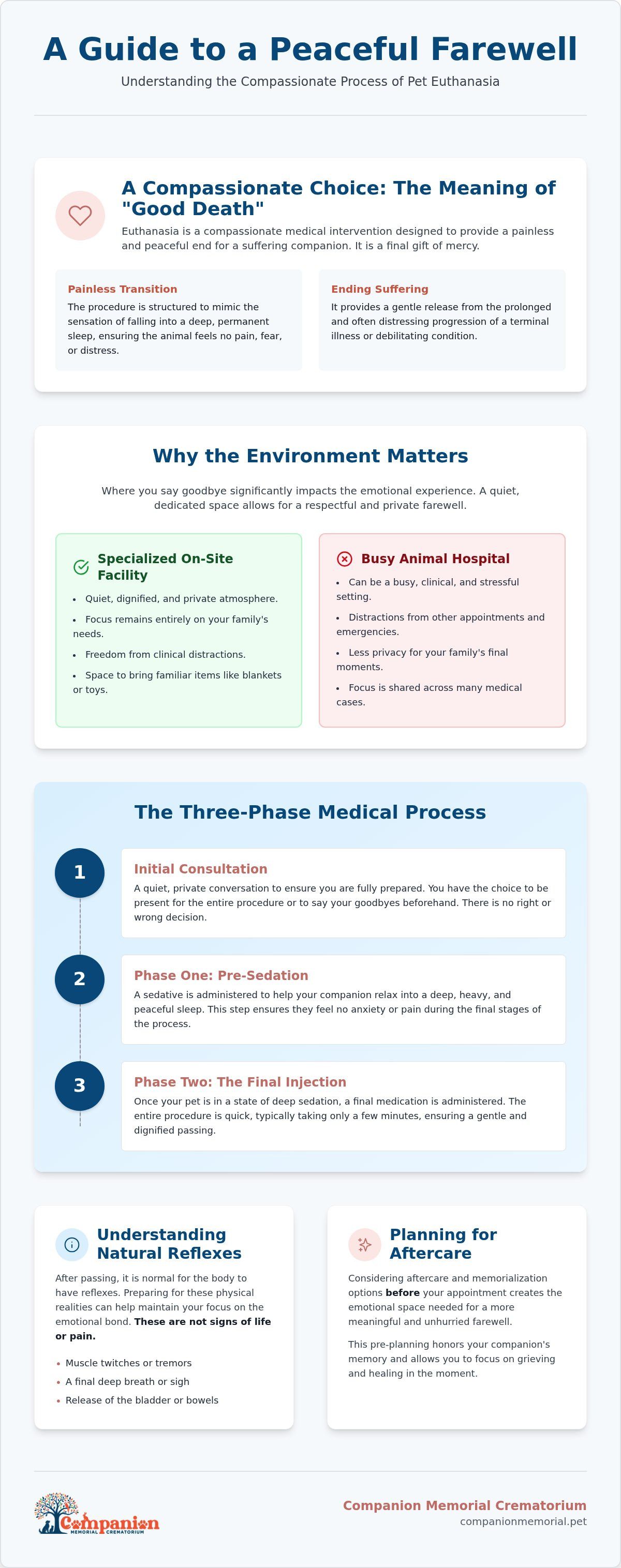
The term euthanasia finds its roots in the Greek words for "good death." It's a compassionate medical intervention designed to provide a painless end for a companion who is suffering. Unlike the natural progression of a terminal illness, which can be prolonged and distressing, Animal euthanasia offers a gentle release. It is a final gift of mercy. The procedure itself is structured to mimic the sensation of falling into a deep, permanent sleep, ensuring the animal feels no pain or fear. This process allows for a transition that's as peaceful as the life you shared together.
To better understand how this choice fits into your pet's journey, watch this helpful video:
Recognizing When It Is Time
Deciding when to schedule this procedure is often the most taxing part of the journey. Many families utilize quality-of-life scales to objectively assess their pet's daily comfort and joy. These tools help you look at mobility, appetite, and social engagement without being clouded by the fog of grief. Consulting with professionals provides a clear perspective on the progression of your pet's specific condition. For a deeper look at these markers, you may find our guide on when is it time for pet euthanasia particularly helpful in making an informed, loving decision.
The Setting: Why Environment Matters
Where the goodbye happens significantly impacts the emotional experience for both you and your pet. A dedicated facility like Companion Memorial Crematorium offers a sense of quiet dignity that's often difficult to find in a busy, clinical animal hospital. In a specialized environment, the focus remains entirely on your family's needs. You can create a familiar space by bringing favorite blankets, toys, or playing soothing music. This privacy is a key part of what to expect during pet euthanasia. A quiet, private room allows for a meaningful final goodbye, free from the distractions of a general medical practice. Knowing what to expect during pet euthanasia includes understanding that the atmosphere should be as soft and respectful as the medical care provided.
The Step-by-Step Medical Process: What Happens During the Procedure
Before any medical steps are taken, a quiet consultation occurs to ensure you're fully prepared. This initial conversation is a vital part of the process. It allows the medical team to prioritize your pet's comfort while acknowledging your emotional state. You'll have the choice to stay for the entire procedure or say goodbye beforehand; there is no wrong decision, only what feels right for your family. Understanding what to expect during pet euthanasia helps alleviate the fear of the unknown. Resources from Cornell University on what to expect emphasize the importance of this transparency. The entire procedure is remarkably quick, typically taking only a few minutes from start to finish.
Phase One: The Pre-Sedation
The process begins with a sedative administered to help your companion relax into a deep, heavy sleep. This step ensures that your pet feels no anxiety or pain during the final stages. Many owners find this phase the most peaceful. As the medication takes effect, you'll see your pet appear comfortable and at ease, often for the first time in quite a while. For families seeking a dedicated environment for this transition, our on-site euthanasia services provide a serene alternative to a busy clinical setting.
Phase Two: The Final Injection
Once your pet is in a state of deep sedation, the veterinarian administers a concentrated anesthetic solution. This is usually done via an IV catheter to ensure the delivery is smooth and painless. The medical transition is a peaceful cessation of heart function. You'll notice your companion's breathing slows and stops quietly, followed shortly by the heart. It's a gentle process that mirrors the natural act of drifting off to sleep.
Phase Three: Confirmation of Passing
After the medication has been administered, the veterinarian will use a stethoscope to confirm the heart has stopped. A respectful moment of silence is often observed to honor the pet's transition and the bond you shared. This part of the process is never rushed. You're given as much time as you need to remain with your companion in the privacy of the room. This unhurried pace is essential for finding a sense of closure. Knowing what to expect during pet euthanasia allows you to focus entirely on your pet during these final, sacred moments together.
Physical Realities: Understanding Normal Post-Passing Reflexes
One of the most misunderstood aspects of the transition is the period immediately following the heart's cessation. It's during this time that the body may exhibit natural, involuntary reflexes. While these moments can be startling if you aren't prepared, they're purely physical responses. They don't indicate pain, awareness, or any form of distress. Part of knowing what to expect during pet euthanasia is understanding that the physical shell takes a few moments to catch up with the peaceful departure of the spirit. Our medical team remains by your side to guide you through these occurrences, ensuring you feel supported and informed throughout the entire process.
Common Reflexes and Muscle Twitches
Residual nerve impulses can sometimes cause small, localized twitches in the legs or facial muscles. These movements are similar to the "sleep starts" humans experience when drifting off. Additionally, the release of residual air from the lungs might produce a sound similar to a sigh or a deep gasp. It's a natural mechanical process of the respiratory system relaxing. You may also notice that your pet's eyes remain slightly open. This is a common occurrence, as the muscles in the eyelids require active energy to stay closed. Understanding these details is a vital component of what to expect during pet euthanasia, as it removes the fear of the unknown and allows you to maintain your focus on the love you share.
The Body's Natural Release
As the body enters a state of complete and total muscle relaxation, the bladder or bowels may release. This is a natural, biological inevitability that signifies the body has fully transitioned into a state of peace. Our team prepares for this possibility discreetly and with the utmost care, ensuring your companion's dignity is maintained at all times. We often use soft, absorbent bedding to manage these moments silently, so they don't interrupt your final goodbye. These occurrences aren't a sign of struggle; rather, they're the final physical markers of a body that is no longer burdened by illness or tension.
By addressing these physical realities openly, we aim to provide a sense of security. Transparency is a cornerstone of our care. We believe that when you're fully informed, you can experience the transition with a steady heart. This knowledge serves as a shield against unnecessary alarm, allowing the quiet dignity of the moment to remain the central focus of your experience.
Aftercare and Memorialization: The Path to Healing
Deciding on aftercare before your appointment is a profound act of self-care. It allows you to remain fully present with your companion during their final moments rather than navigating logistics while in a state of shock. When you understand what to expect during pet euthanasia, you realize that the medical procedure is only the first step in a longer journey of honoring a life well-lived. Transitioning from the quiet of the euthanasia room to the memorialization process should feel like a seamless continuation of care. For many, having a plan in place provides a structured path through the early stages of bereavement. If you find yourself unsure of the immediate logistics, our guide on what to do when your pet dies offers a clear, supportive checklist.
Cremation Options Explained
Choosing a method of aftercare is a deeply personal decision. Considering what to expect during pet euthanasia involves more than the clinical event; it encompasses the entire transition of your pet's remains back to your care. Private Cremation ensures your pet is the only one in the chamber, allowing for the return of only their specific ashes. It's important to understand the key differences between individual and group options. While individual cremation also returns your pet's ashes, group cremation is a communal process where ashes are not returned to the family. To provide you with absolute certainty, an official cremation certificate is issued for private and individual services. This document serves as a verified record of the respect and integrity shown to your companion during their final journey.
Creating a Lasting Tribute
Creating a lasting tribute is a vital part of the healing process. Selecting a memorial urn that reflects your companion's unique personality can turn a vessel of loss into a beautiful symbol of memory. In Sullivan County, memorial services offer a way to find community support among others who understand the depth of this bond. You might also consider keeping your pet's memory close through specialized keepsakes or memorial jewelry. These tangible items serve as a steady reminder of the love that remains. By looking ahead to these steps, you ensure that the narrative of your pet's life concludes with the same honor it was lived with. If you're ready to discuss a dignified farewell, our team is here to walk you through our private cremation and aftercare options.
The Companion Memorial Crematorium Difference: Specialized On-Site Care
Choosing where to say goodbye is a decision that carries immense weight. Unlike a traditional veterinary clinic that balances wellness exams with emergency surgeries, our Ferndale facility is designed specifically for end-of-life care. This specialization allows us to provide a level of focus and solemnity that general medicine cannot replicate. Veteran-owned and operated, Companion Memorial Crematorium is built on a foundation of discipline, respect, and silent efficiency. We understand that your companion deserves a final transition handled with the highest degree of honor. By offering a seamless transition from euthanasia to on-site cremation, we ensure your pet never leaves our care, providing you with a continuous circle of support from the final breath to the return of ashes.
The Benefits of an On-Site Facility
The atmosphere of a traditional animal hospital, while necessary for healing, can often feel jarring during a final goodbye. You won't find the noise of barking dogs or the stress of a crowded emergency waiting room here. Instead, we provide a calm, unhurried environment where your family is the sole priority. Understanding the benefits of an on-site pet euthanasia facility means recognizing the value of a space built for peace. Our facility features private viewing rooms, allowing you to spend those final, sacred moments in a dignified setting. This intentional design removes the clinical coldness often associated with medical procedures, replacing it with a sense of safety and quiet reverence.
Our Commitment to Ferndale and Beyond
Our mission is rooted in the concept of "Quiet Dignity," a philosophy that honors the profound bond between owner and companion. We believe that every pet should be treated with the same respect as a family member, a standard that guides every action we take at Companion Memorial Crematorium. From our home in Ferndale, we're proud to serve families across New York, Connecticut, Pennsylvania, and New Jersey. This regional reach ensures that more pet owners have access to a specialized alternative to the clinical hospital experience. When you're learning what to expect during pet euthanasia, it's reassuring to know that your guide is a team dedicated exclusively to this sacred transition. We remain a steady, knowledgeable presence, ensuring that your pet's legacy is honored with professional decorum and deep-seated empathy.
By choosing a facility dedicated to the end-of-life journey, you're choosing a partner who understands the gravity of your loss. We don't just provide a service; we provide a space for closure. Our unhurried pace respects your need to process information and emotions at your own speed. In this room, you aren't just another appointment; you're a family honoring a lifetime of love. We carry out our duties with the silent efficiency you expect from a veteran-owned business, ensuring that every detail is handled with the care it deserves.
Honoring the Final Bond with Clarity and Peace
Saying goodbye is a final, profound act of devotion that requires both courage and clarity. By understanding the medical phases and the natural physical responses that may follow, you replace the weight of fear with a sense of calm stewardship. This knowledge ensures your focus remains entirely on the bond you share, allowing for a goodbye defined by love rather than the anxiety of the unknown. Having a clear understanding of what to expect during pet euthanasia is a vital step toward finding a sense of closure and peace.
At Companion Memorial Crematorium, we're dedicated to providing this transition with the quiet dignity your companion deserves. As a veteran-owned and operated facility, we prioritize respect and professional solemnity in every detail of our service. Our on-site private crematory ensures your pet remains in our care throughout the entire process, and we provide official cremation certificates for your peace of mind. We invite you to request a compassionate consultation for on-site euthanasia services to discuss a dignified farewell. You've provided a lifetime of care, and we're here to help you honor that legacy with grace.
Frequently Asked Questions
Is pet euthanasia painful for the animal?
Pet euthanasia is a painless medical procedure designed to prioritize your companion's comfort above all else. The process begins with a sedative that helps your pet drift into a deep, heavy sleep before the final medication is administered. This protocol ensures they feel no anxiety or physical distress, mimicking the natural sensation of falling into a permanent sleep without any awareness of the transition.
Can I stay in the room with my pet during the procedure?
You have the absolute right to stay with your pet for the entire duration of the procedure if you choose. Many families find that their presence provides a sense of security for their companion during those final moments. If you prefer to say your goodbyes beforehand, our team will ensure your pet is held with the same quiet dignity and respect in your absence. There is no wrong choice, only what feels right for your family.
How long does the entire euthanasia appointment take?
While the medical portion of the procedure typically takes only a few minutes, we structure our appointments to be unhurried and respectful. You should generally plan to spend 30 to 60 minutes with us to accommodate the initial consultation, the sedation phase, and any private time you require afterward. We never pressure you to rush the transition, as we understand that finding closure is a vital part of your journey.
What happens to my pet's body immediately after they pass?
Immediately after your pet passes, they remain in the private room with you for as long as you need to say your final farewells. Once you are ready, our team gently transitions them to our on-site crematory. Because we handle every step at our Ferndale facility, your pet never leaves our care, ensuring a continuous circle of respect from their final breath until their ashes are returned to you.
What are the physical signs that my pet has passed away?
The primary physical signs of passing include the quiet cessation of breathing followed shortly by the heart stopping. You will notice a profound and total relaxation of the entire body. It is helpful to know what to expect during pet euthanasia regarding involuntary reflexes, such as a final sigh or small muscle twitches, which are natural mechanical responses and do not indicate any pain or awareness.
Can I bring other pets to say goodbye during the appointment?
Bringing other pets to say goodbye is often a helpful way to assist them in processing the loss of their companion. Animals often understand the transition through scent and presence, which can prevent them from searching for their friend later. Our specialized facility provides a calm, private environment where your other pets can visit peacefully, away from the noise and stress of a traditional clinic.
How do I explain pet euthanasia to my children?
Explaining this transition to children is best handled with honesty and gentle, age-appropriate language. It's often recommended to avoid the phrase "going to sleep," as this can create confusion or fear about their own bedtime or the health of other family members. Instead, explain that the pet's body has stopped working and the doctor is helping them find peace so they don't have to feel any more pain.
What is the difference between home euthanasia and an on-site facility?
Home euthanasia offers a familiar environment, while an on-site facility provides a specialized setting focused entirely on end-of-life care and immediate aftercare. Our facility removes the clinical stress of a hospital while offering private viewing rooms and a seamless transition to our on-site crematory. Knowing what to expect during pet euthanasia at a dedicated facility can provide a greater sense of structured support and continuity of care during a period of high stress.


