

A senior dog’s final chapter can affect you before it ends. The sadness that comes before a loss is anticipatory grief, and grieving the loss of a senior pet has no set timetable or single right way to feel. Take each day as it comes, even as you prepare for the possibility of goodbye.
Whether your dog dies naturally or after a long decline, the bond and routines you shared can make the change deeply painful. Missing familiar walks, quiet company, and the small moments that made your dog part of daily life is a real part of grief.
This article explains how anticipatory grief may arise, why memories of a beloved dog can bring comfort as well as sadness, and how disrupted routines can affect life after a loss. It also offers gentle ways to make room for your feelings and remember your companion without expecting yourself to move on by a certain date.
Key Takeaways
- Recognize that sadness before a pet’s death is a real response, and there’s no fixed timeline for experiencing it.
- Make room for meaningful time together while caring for your own emotional needs.
- Use memories, photographs, or a letter to honor the bond you shared with your dog.
- Expect everyday routines to feel different after a loss, and give yourself time to shape new ones.
- There’s no need to decide when to welcome another pet until you feel ready.
What is Anticipatory Grief?
Anticipatory grief is sadness experienced before a pet’s death. For someone grieving the loss of a senior pet, it can begin as aging or illness changes familiar days and expectations.
Accepting Emotions Before a Pet Dies
Anticipatory grief means feeling sadness, worry, or other emotions before a pet dies. Naming those feelings can help you notice what you need while continuing to care for your companion.
You might feel tender during a quiet moment, then afraid after a difficult day. You may feel guilty for imagining life after your dog, or relieved when a demanding care routine eases. These reactions can coexist; they don’t diminish your affection. Try writing down a feeling and what brought it on, such as worry after giving medication or sadness when your dog rests instead of greeting you.
There’s no set timeline or sequence for anticipatory grief. Take each day as it comes: focus on the care your dog needs today, and let tomorrow’s decisions wait if they don’t need attention now.
The Time It Takes to Grieve
Grief has no fixed duration, and everyone’s experience is different. Remembering this can ease the pressure to feel better by a particular date or to experience grief in a specific order.
A familiar routine may bring sadness weeks later, even after a calmer day. A photograph, an empty bed, or a usual walk can make the loss feel present again. That doesn’t mean you’ve failed to heal. Notice what brings comfort, and let your response change over time.
If another pet shares your home, keep familiar feeding and walking routines where practical, while giving each animal individual attention. A calm, consistent day offers your surviving companion familiar cues as the household adjusts.
If your dog dies at home, contact your veterinarian to coordinate care and arrangements for the remains. After death, natural nerve spasms may cause twitching; movement can also release air from the mouth, bodily fluids, or gas. These experiences can be unsettling, but they can happen after death.
People may replay the final hours, especially if they wish they had acted differently. When that happens, separate what you knew then from what became clear later. Writing down the decisions you made and the care you provided can help keep hindsight from becoming the only story you remember.
Remembering your dog doesn’t require a formal ritual. You might choose a photograph, write a few lines about a shared moment, or keep a familiar daily pause. Each small choice gives affection a place to rest as grief changes.
Anticipatory grief for a senior or terminally ill pet
Anticipatory grief can begin as a pet ages, receives a serious diagnosis, or experiences a marked decline. Understanding its emotional effects can help you care for your animal while preparing for changes ahead.
Emotional Symptoms of Anticipatory Grief
Emotional symptoms are responses to the possibility of losing a beloved animal before death. You might feel sadness, fear, irritability, or difficulty concentrating after a change in your dog’s condition. These feelings can make ordinary choices, such as changing a daily activity, seem heavier. Naming the emotion can help you identify what might bring comfort in that moment.
Grieving as Pets Age
Grief may arise as aging changes the life you and your pet share, even before a diagnosis. A dog who once ran to greet you might now need more rest or medication several times a day. Such changes can bring tenderness and sorrow into the same afternoon. Notice what remains meaningful, such as a familiar greeting or a quiet moment together, without expecting every day to feel the same.
Coping With Anticipatory Grief
Coping means finding ways to meet your emotional needs while caring for your pet. Ask your veterinarian to explain the condition, comfort needs, and end-of-life options; clear information can make decisions feel less overwhelming. Hospice care may help keep a pet comfortable during its final days. You can also seek support from someone who understands pet loss or a pet bereavement group. Around one-half of caregivers of seriously ill pets experience caregiver burden, so accepting practical help can matter.
Helping Children Grieve a Senior Pet
Help children by explaining your pet’s aging or death in language suited to their age. Use clear words rather than confusing euphemisms, and invite questions without expecting an immediate response. For example, explain that the dog’s body is becoming less able to do familiar things, then let the child share a memory or draw a picture. A simple, honest conversation gives children room to understand and express their feelings.
Losing a senior pet can hurt deeply. A dog may be a close companion, a daily presence, and someone you’ve cared for over many years. The coming loss can affect both shared routines and the relationship itself.
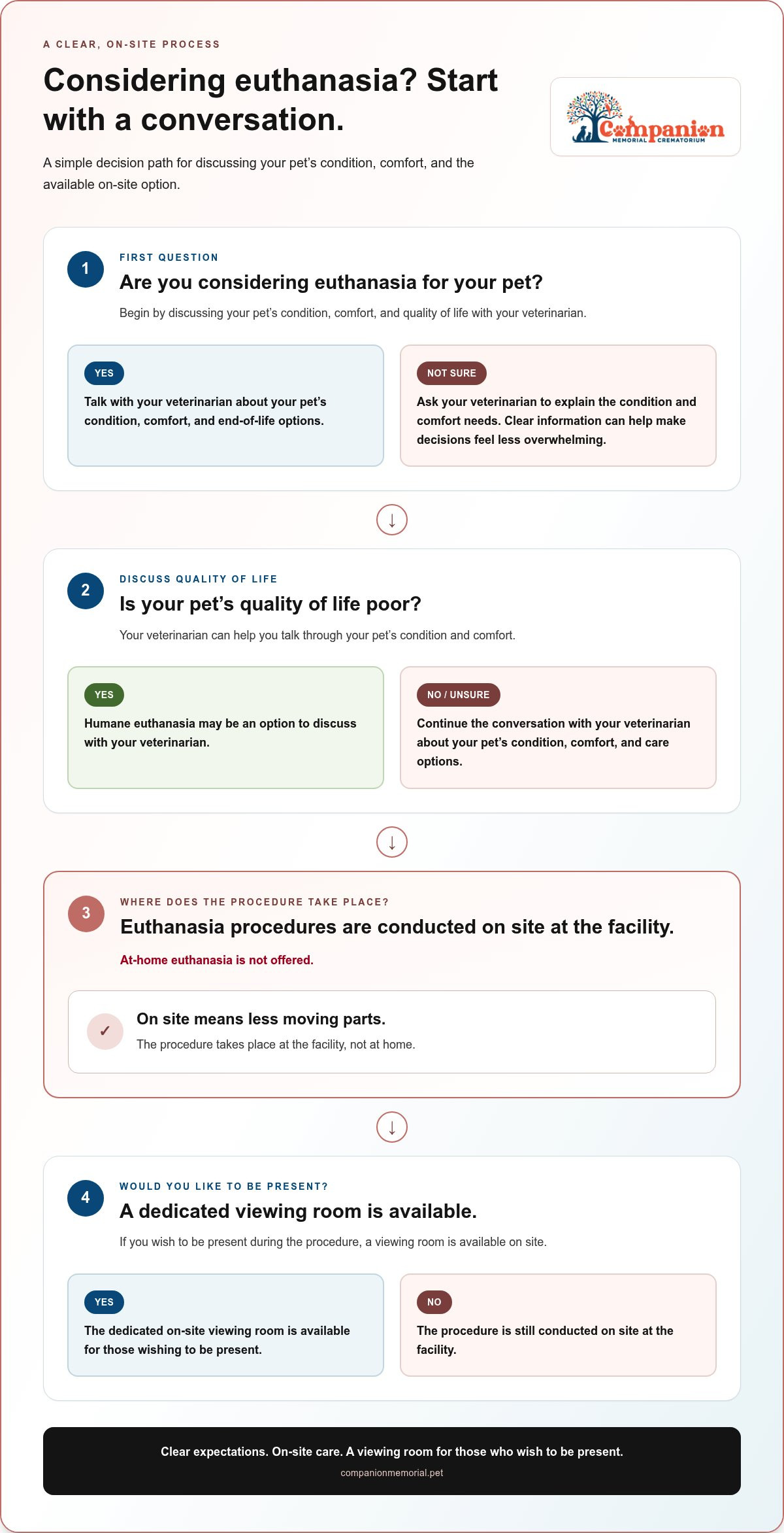
If you’re considering euthanasia, discuss your pet’s condition, comfort, and quality of life with your veterinarian. When a pet’s quality of life is poor, humane euthanasia may be an option to discuss.
Consider counseling or a pet loss support group if grief feels difficult to carry alone or you want to speak with people who understand. In the United States, pet bereavement groups and hospice or palliative care providers can offer emotional support before and after a loss.
For families considering euthanasia, procedures take place on site at the facility, not at home. A dedicated viewing room is available for those wishing to be present; on-site euthanasia services can be part of this conversation.
A case example of grieving a dog
Consider a composite example, built from experiences shared by bereaved dog owners. One person remembers a 15-year-old dog whose age made each familiar day feel precious. Another marked Dexter’s passing on April 1st. These details show how a dog’s final chapter can become attached to ordinary dates, places, and habits. The relationship is not measured only by its ending, but by all the moments that came before it.
After a death, familiar sights and sounds can briefly make it seem as though your dog is still present. You might mistake a shadow for movement or hear a familiar pant or whimper in the quiet. Such moments can feel startling, especially soon after a close companion dies. Pausing to name what happened, such as “I thought I heard Dexter,” can help distinguish a memory or impression from what’s around you.
Memories can also return through places you shared. Someone whose dog could no longer walk well near the end might later revisit a favorite path. The empty stretch may bring sadness, but it can also recall earlier walks and companionship. You don’t have to force a visit. A photograph of the path, or a quiet conversation about one walk, can offer a gentler way to revisit it.
Putting feelings into words can give grief a shape. Write your dog a letter describing an ordinary moment, something you miss, and something you’re grateful for. You might remember the sound of paws at the door or your dog’s presence during a difficult evening. The letter doesn’t need to be polished or shared. Its purpose is to make room for thoughts that may be hard to say aloud.
A photo montage can preserve the relationship beyond the final days. Choose images from different chapters, such as an early portrait, a favorite resting place, and a later quiet moment. Let each image bring its own memory rather than asking the collection to tell a perfect story. This can help when illness has dominated recent memories: earlier scenes bring back a fuller sense of your dog’s life.
One manageable approach is to choose a single remembrance at a time. Select a photograph today, write a letter another day, or tell someone a story about your dog. If you miss your shared walks, begin by recalling a familiar route without needing to walk it right away. These acts don’t erase sorrow. They help hold affection and loss together, honoring your companion as more than the circumstances of death.
Owners may lose a source of unconditional love, a close companion, and a beloved friend they cared for like a child. That bond can make a dog’s loss especially painful.
Believing the last dog was the best
After losing a beloved dog, it can feel as though no future companion could compare. That belief often reflects the place this particular dog held in your life, not a verdict on every dog you might meet. You may remember how your senior dog waited beside the door each evening. That memory belongs to your shared life; another animal would bring a different relationship.
Comparison can make the thought of another dog feel disloyal. You might think, “No dog will know me like she did,” or “Getting another dog would replace him.” Try completing this sentence instead: “What I loved about my dog was…” You might name a patient greeting, a favorite resting place, or the way your companion followed you from room to room. Naming those qualities honors your bond without making them a standard another dog must meet.
Remembering the difficult parts can help create a fuller picture. If illness, medication, or reduced mobility shaped your dog’s final chapter, include earlier memories too. Write down an ordinary scene, such as a walk your dog once enjoyed or a familiar game at home. This doesn’t lessen the care you gave near the end. It keeps the whole relationship in view, rather than letting the hardest moments define it.
You don’t need to decide about another pet while grief is fresh. Your family might leave the leash and bed in place for now, then revisit the question when daily life feels different. Readiness doesn’t mean feeling no sadness. It may mean being able to consider a new animal as an individual, rather than expecting it to behave like the dog who died.
If you meet another dog, notice your response without treating it as a final decision. Enjoying a neighbor’s dog at a park, for example, doesn’t mean you need to adopt one. You can appreciate that encounter and still miss your own companion. Likewise, feeling uncertain around a new dog doesn’t mean you’ve closed your heart; the relationship may simply need to grow on its own terms.
A small remembrance can preserve your beloved dog’s distinct place in your life. Set aside a photograph, list favorite habits, or share a story with someone who knew the dog. If you later welcome another pet, you can create new routines without letting go of these memories. The new bond won’t repeat the old one, and it doesn’t need to. Love for one dog can remain part of your life while another relationship develops in its own time.
Disruption to routines after pet loss
A dog’s absence can change the shape of an ordinary day. If your morning began with feeding, medication, or a walk, that familiar sequence may suddenly leave an empty space. The same can happen at evening mealtimes or when you reach for a leash. These moments matter because routines carry reminders of the care you gave and the companion who shared your home.
Notice which parts of the day feel hardest. A quiet kitchen, for example, may feel especially stark after feeding your dog there each morning. You could choose a gentle replacement routine, such as making tea, opening a window, or taking a short walk alone. The goal isn’t to erase the old habit, but to give that point in the day a manageable shape.
Some changes are practical as well as emotional. Your dog’s needs may have shaped work breaks, errands, or vacation plans; without those responsibilities, free time can feel unfamiliar. Choose a small activity that fits your day, such as calling a friend during a former walk or planning a simple outing. You don’t need to fill every open hour. A modest structure can make the day feel less unmoored.
Friends can help by offering specific company instead of general advice. Ask someone to join you for a walk, share a meal, or listen to a story about your dog. If a friend didn’t know your companion, describe an ordinary detail, such as a favorite resting spot or the way your dog greeted you. Concrete memories can make it easier to talk about your relationship and say goodbye in your own words.
Keep meaningful rituals if they bring comfort, and change them if they deepen your distress. You might leave your dog’s bed untouched for a while, then decide later whether to move it. Someone else may find it easier to put the leash away but keep a framed photograph nearby. Neither choice measures love. Your home can change gradually, according to what feels manageable in each room.
When disrupted routines make the day difficult, try identifying one recurring moment and choosing one gentle response. A former feeding time might become a pause to remember your dog; an empty evening could be shared with a friend. If you’re also arranging your companion’s after-death care, explore respectful pet memorial arrangements as one practical matter to consider. Grief and ordinary responsibilities can coexist, and small decisions can help you move through both.
Losing a dog can disrupt daily routines because schedules and vacation plans may revolve around the pet’s needs.
Companion Memorial Crematorium: Private Cremation
Companion Memorial Crematorium offers Private Cremation for families seeking an individual aftercare option for their pet. Individual Cremation and Group Cremation are also available, so families can consider the arrangement that feels right for them.
For families considering euthanasia, the service is conducted on site at the facility; at-home euthanasia isn’t offered. Keeping the procedure on site means less moving parts, and a dedicated viewing room is available for owners who wish to be present. This can make the practical arrangements clearer during an emotionally difficult time.
If you’re considering aftercare or an on-site service for your pet, contact Companion Memorial Crematorium to discuss the available options.
Carry Their Love Into What Comes Next
As you move through grieving the loss of a senior pet, you don’t have to turn every memory into a decision or task. Let one small act of care mark the day ahead: save a photograph, share a story with someone who knew your dog, or take a quiet moment in a place you shared. These gestures can honor your companion while leaving room for life to continue at its own pace.
When you’re ready to consider the practical arrangements for your pet, contact Companion Memorial Crematorium. You can take that step when it feels right for you, with your pet’s memory held close.
Frequently Asked Questions
What Happens When a Dog Dies Naturally?
When a dog dies naturally, contact your veterinarian for guidance and help coordinating aftercare. You can take a moment to decide who should be with you, then gather any questions about burial or cremation. If others are present, one person can make the call while another stays nearby. Dividing these first practical tasks can make it easier to focus on what needs attention next.
What are the common stages and symptoms of pet grief?
Pet grief doesn’t follow a required sequence of stages. Sadness, guilt, or frustration may surface at different times, including when revisiting decisions or noticing a change at home. Rather than measuring your response against a stage chart, note what happened before a difficult moment and what helped afterward. This can make it easier to explain what you need to family or someone supporting you.
How can I cope with the loss of an older pet?
Choose someone you trust and tell them what kind of support would help, such as listening, company, or assistance with an errand. If you’re grieving the loss of a senior pet, a brief daily check-in can help you notice whether your needs are changing. You might say, “I’d like to talk about my dog today,” or ask for quiet company without needing to explain everything.
What are the options and costs for pet burial, cremation, or memorials in the United States?
Options include burial, cremation, and personal memorials; local burial requirements vary, so check the rules where you live. Companion Memorial Crematorium serves families in New York, Connecticut, Pennsylvania, and New Jersey and is 100% combat veteran-owned. Private Cremation places a pet alone in the chamber; Group Cremation does not return remains. Urns are also available. Call For Pricing, as costs depend on the selected arrangement and memorial choices.


