

The cremation itself usually takes one to three hours, but receiving a pet’s ashes can take longer. If you’re wondering how long pet cremation takes from beginning to end, the key distinction is between the time in the cremation chamber and the full process of cooling, processing, and returning the remains.
It’s natural to want a clear timeframe while saying goodbye to a beloved companion. The exact wait depends partly on the service chosen: communal cremation and individual cremation follow different processes, and only individual cremation returns that pet’s remains to the family.
This article explains what happens after the cremation cycle, why cooling and processing add time, and which practical factors can affect when ashes are ready. It also clarifies what to expect from individual and group options, so you can make a decision with greater understanding during a difficult time.
Key Takeaways
- The cremation itself usually takes one to three hours, while the full process includes additional cooling and processing time.
- Individual cremation returns that pet’s cremains to the family; communal cremation involves multiple pets, and individual remains aren’t returned.
- A pet’s size can affect the time needed in the cremation chamber, while scheduling and delivery can also shape the overall wait.
- Cooling and processing are separate stages after cremation, so the chamber time alone doesn’t tell you when ashes will be ready.
- Understanding the service type and what happens after cremation can make the waiting period easier to anticipate.
What’s the difference between individual and communal cremation?
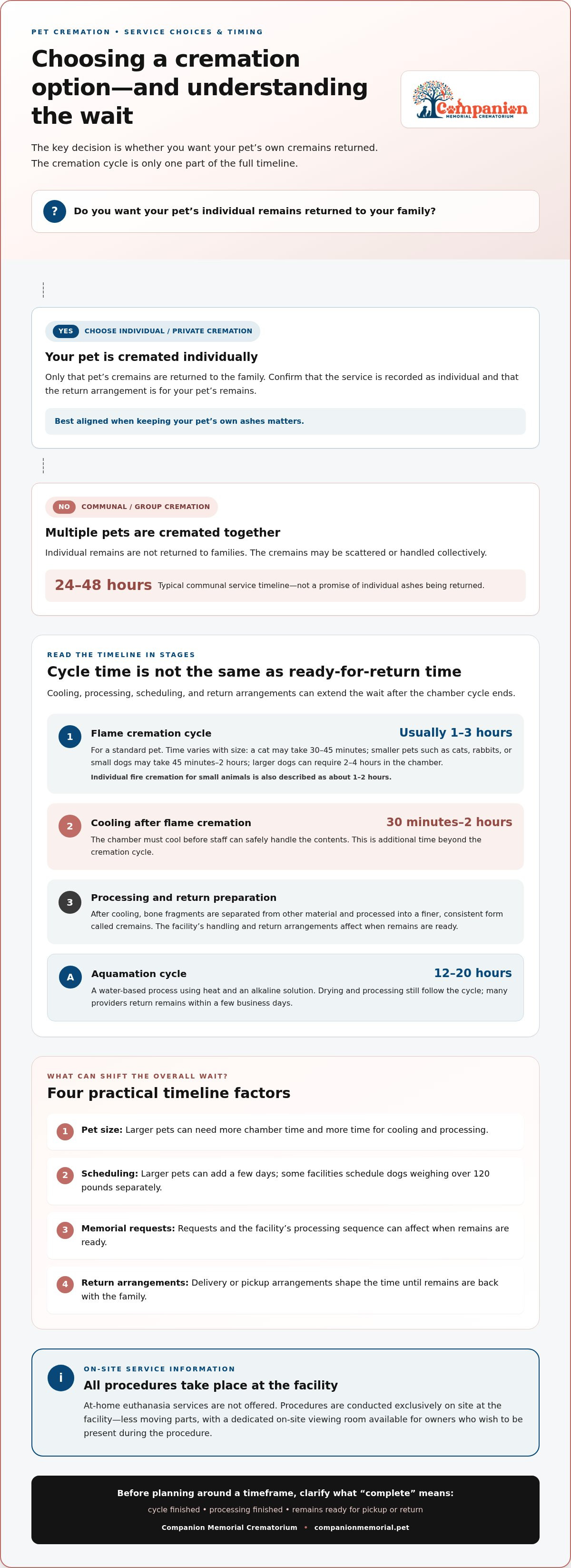
The main difference is whether a pet is cremated alone or alongside other animals, and whether the remains are returned. Individual cremation means one pet is cremated individually, and only that pet’s cremains are returned to the family. Communal cremation involves multiple pets cremated together; their cremains aren’t returned to their families and may be scattered or handled collectively.
The cremation itself usually takes one to three hours for a standard pet. Individual fire cremation for small animals takes about one to two hours. The duration isn’t the same as the complete service timeline, because cooling and processing happen afterward.
How long does the pet cremation process itself take by pet size? A cat’s cremation may take 30 to 45 minutes, while cremation for smaller pets such as cats, rabbits, or small dogs may take 45 minutes to two hours. Larger dogs can require two to four hours in the chamber, and the process can take about four hours depending on the animal’s size.
Those ranges explain why “typical” chamber time is only a starting point. A small animal generally requires less time in the chamber than a large dog. Individual fire cremation for a small pet has a stated range of one to two hours, while size-related differences can place particular cases outside that estimate.
Communal cremation is typically completed within 24 to 48 hours. That figure describes the communal service timeline, not just time inside the chamber. Because multiple pets are cremated together, the ashes aren’t separated and returned to each family. Individual cremation is the relevant choice when a family wants their pet’s own cremains returned.
What are the steps involved in arranging a pet cremation? Choose private, individual, or group cremation, then arrange the service with the crematorium. Ask what the chosen option includes and whether your pet’s remains will be returned. Private and individual cremation return the remains; group cremation does not.
How can owners verify that a pet receives an individual cremation and their own ashes? Select individual cremation and make sure the service selection is recorded as individual. Confirm that the return arrangement is for that pet’s cremains, since communal cremation does not return individual remains.
These distinctions can help families make a considered choice during a meaningful goodbye. If keeping the ashes matters, individual cremation aligns with that intention; if returning remains isn’t desired, communal cremation is a separate option.
Cooling and processing cremated remains
The chamber’s cycle is only one part of preparing cremated remains. After flame cremation, the chamber must cool before staff can safely handle the contents. Cooling can take 30 minutes to two hours, adding time beyond the cremation itself. The pet’s size and the facility’s processing sequence also affect when the remains are ready.
Once cooled, bone fragments are separated from other material and processed into a finer, consistent form commonly called cremains. This careful step prepares the remains for return in an urn or another memorial container. It is distinct from the chamber cycle, so a short cremation doesn’t mean the ashes are immediately ready for pickup.
Size can influence more than the time inside the chamber. Larger pets require longer aquamation cycles and more time for cooling and processing. The amount of material to cool and prepare affects the work that follows, while each facility’s handling and return arrangements shape the overall wait.
Aquamation follows a different process from flame cremation. It uses water, heat, and an alkaline solution to break down tissue, leaving bone fragments that are dried and processed into fine remains. Aquamation cycles at facilities typically take 12 to 20 hours. That cycle is not the full preparation and return timeline; drying and processing still follow.
After aquamation, many providers return a pet’s remains within a few business days. The interval can reflect the processing stages and arrangements for returning the memorial urn. A family should distinguish the cycle duration from the time needed to prepare and hand over the finished remains. A witness may be present for a service when that option is part of the arrangement, but witnessing doesn’t remove cooling or processing steps.
Are there state or local rules for pet cremation and handling a pet’s remains? Rules can vary by location, so requirements for handling remains may differ between state and local jurisdictions. The applicable requirements depend on where the service takes place and the chosen arrangement.
For either method, ask what “completion” means in the stated timeline: the end of the chamber or aquamation cycle, finished processing, or the point when remains are ready for pickup. These are separate milestones. Clarifying which milestone a timeframe describes helps families plan a respectful goodbye and understand when the memorial remains will be available.
If you’re arranging cremation, reviewing pet cremation arrangements can help you understand the service options and what happens after the cycle ends.
Factors affecting cremation timelines
The time before ashes are ready depends on more than the cremation cycle. Pet size, scheduling, memorial requests, and return arrangements can each add time. A useful timeline separates when the facility receives your pet, when cremation begins, and when remains are ready for return.
Size affects both chamber time and the overall schedule. Larger pets can add a few days to the process, and very large dogs may need special scheduling. For dogs weighing over 120 pounds, some facilities schedule the cremation separately. That can affect when the process begins, even before cooling and processing.
Pickup schedules also matter. In some areas, crematory pickup runs occur only two or three times per week. A pet received just after a scheduled run may wait two to three days before cremation begins. This is one reason a timeline counted from a pet’s passing can differ from one counted from the facility’s receipt.
Memorial choices can extend the wait after cremation. Custom urns and requests such as paw prints can add 7 to 14 days. A clay paw print, for example, may make the total timeline seven or eight days. These additions involve preparation beyond the cremation itself, so they can affect the return date even when the chamber process is complete.
Delivery is another factor. Local delivery may take a few days, while shipping or courier delivery can add one to three days, depending on location. Holiday-weekend backlogs may extend the wait by three to five additional days. These intervals are separate from the time needed for cremation and processing.
What options are available if a pet cremation provider has a long turnaround time? Some facilities offer rush cremation, which typically takes two to three days rather than providing same-day return. Choosing communal cremation may also suit families who don’t need individual ashes returned; the service itself is typically completed within 24 to 48 hours.
For a clearer timeline, distinguish the main milestones rather than relying on a single total. Note when the facility receives your pet, when cremation is scheduled, whether memorial items are requested, and whether remains will be picked up or delivered. Each point helps explain where time is spent.
Private cremation typically takes five to ten business days, while individual cremation with returned ashes usually takes three to seven business days. Those service-level estimates show why the chosen arrangement matters alongside size and logistics. A gentle, practical approach is to decide whether individual remains or a faster communal option best fits the family’s needs, then account for any memorial or delivery steps in the expected timeline.
Private and witnessed cremation timelines
Private cremation timelines describe more than the chamber cycle. The full interval can include scheduling, cremation, cooling, processing, and returning the remains. Private pet cremation typically takes 5 to 10 business days, while some providers return remains within a day or two. These estimates can refer to different milestones, so families benefit from understanding what each timeframe includes.
Some private cremation ashes may be returned within one to two days. That shorter interval can describe the period after the service, rather than the full time from receiving your pet. The distinction matters: transport to a facility, scheduling, and preparing bone fragments for return may happen before ashes are ready.
Witnessed cremation has a different timing possibility. Owners may take the ashes home right away after witnessing the cremation. This means the return can happen at the service, rather than after a later pickup or delivery. The chamber still needs to complete its cycle, and the remains still need to be prepared before handover.
“Private” and “viewing” describe different aspects of the service. Private cremation means your pet is alone in the cremation chamber; a private viewing is an optional way to be present. Companion Memorial Crematorium offers private cremation with an optional private viewing.
Identification is especially important when a family expects individual remains. Before arrangements are finalized, clarify how the pet is identified through intake, cremation, and return. Ask what the quoted timing starts from: the facility receiving your pet, the scheduled service, or completion of cremation. These points make it easier to understand the expected handover.
Transport can affect the overall interval, even when the cremation itself is complete. A family collecting remains at the facility has a different return arrangement from one waiting for delivery. Confirm whether the timeframe includes transport, processing, and preparation of any memorial container. Those separate steps explain why ashes might not be ready when the chamber cycle ends.
For a clear comparison, consider three timing questions: when the facility receives the pet, when cremation takes place, and when remains are ready for pickup or return. A witnessed service may allow immediate handover after the cremation and preparation. Other private arrangements may involve a later return, with published estimates ranging from one or two days after service to 5 to 10 business days overall.
These differences help families choose the arrangement that suits their wishes and practical needs. If being present is important, ask specifically about witnessed cremation and the timing of handover. If transport or a memorial urn is involved, include those steps when considering how long the complete process may take.
Coping with the wait and pet loss
Waiting for a beloved companion’s remains can make grief feel especially immediate. The cremation process has separate stages, from care after death through preparation and return. Knowing which stage is underway can give the waiting period a clearer shape, without diminishing the bond you shared with your pet.
One practical step is to call the cremation facility for an update. Ask whether your pet has been received, whether cremation has taken place, or whether processing remains. These questions focus on specific milestones rather than an uncertain overall timeline. A clear update can also help you plan for pickup or delivery.
Families may find it helpful to choose one person to manage updates. That person can note the date of each call and the information received, then share it with relatives. If multiple pets are being cared for, keep a separate record for each animal, including its name and selected service. This simple system can prevent confusion during an emotionally difficult time.
A small memorial can offer a place to direct attention while you wait. Some families gather a favorite photograph, collar, or written memory of their companion. Others set aside a quiet moment to remember a familiar routine, such as a morning walk or a greeting at the door. These acts honor the relationship while the cremation process takes place.
It may also help to decide how you’d like your pet’s remains to be handled. Private and individual cremation include their return; group cremation does not, and the remains are scattered in a private memorial garden. With private cremation, a wood urn and cremation certificate are included.
When the remains are returned, families may see processed bone fragments rather than the form they imagine from the word “ashes.” Understanding that distinction beforehand can make the moment less surprising. A chosen urn or another meaningful memorial can provide a respectful place for the remains, while a photograph or keepsake preserves a different part of your pet’s story.
Grief does not follow the same course for every person. One family member may want to talk about the animal, while another may prefer quiet. A gentle approach is to share what feels manageable, listen without correcting someone else’s feelings, and allow each person to remember the companion in their own way.
If arranging the next step would help, discuss pet cremation arrangements with a caring team.
Companion Memorial Crematorium: Private Cremation
Companion Memorial Crematorium offers private and individual cremation for families who want their pet’s cremains returned, as well as group cremation for those who prefer a communal option. Its on-site euthanasia services are performed exclusively at the facility, not at home. An on-site viewing room is available for families who wish to be present. Keeping care at one location means less moving parts during an already difficult time.
If you’re considering which arrangement best reflects your wishes, Companion Memorial Crematorium can help you understand the available options. You’re welcome to contact the facility or visit companionmemorial.pet to learn more about its pet cremation services.
Take the next step at your own pace
Choosing what happens next is a personal decision, and there’s no single way to honor a companion’s place in your life. If you’re still weighing how long pet cremation takes, focus on the timing details that matter most to your family, such as when the remains will be ready and how you’d like to receive them.
You can also consider what would help you feel settled with the arrangement. Some families value having a clear point of contact; others want time to reflect before deciding. A conversation can help you understand the available choices and consider which one feels right, without rushing a meaningful decision.
When you’re ready, contact Companion Memorial Crematorium to discuss the next step. Take the time you need to make a choice that feels respectful of your beloved companion.
Frequently Asked Questions
How Long Does Pet Cremation Take?
The question of how long pet cremation takes has two answers: the chamber process and the full service timeline. A standard cremation commonly takes one to three hours in the chamber, while an especially large pet can require more time. Scheduling, cooling, and preparation happen separately. If you’re planning around a memorial or family gathering, base arrangements on when the remains are ready, not just the chamber duration.
How Long Does It Take To Get My Pets Ashes Back?
For many U.S. providers, returned remains arrive within 7 to 14 days. The wait can include scheduling, cremation, cooling, processing, and transport or pickup arrangements. For example, a pet cremated promptly may still need additional time before the remains are prepared for return. Ask what event starts the provider’s stated timeframe, such as receiving your pet or completing the cremation.
How Soon Are Pet Ashes Returned After Cremation?
Return timing depends on what happens after the chamber cycle and how the family receives the remains. Processing, an urn or memorial request, and delivery arrangements can each affect when ashes are ready. A witnessed service may allow owners to take ashes home after the service, while other arrangements involve later pickup or delivery. Keep the cremation date and expected handover date distinct when planning.
How soon should I arrange cremation after my pet passes?
Arrange care as soon as you can after your pet passes. If your pet has died at home and is kept somewhere cool, families generally have 12 to 24 hours to make arrangements. Warm conditions can make timely planning especially important. If you’re managing immediate care, focus first on keeping your pet in a cool place while you make arrangements for cremation.
How long does pet cremation take from drop-off to receiving the ashes?
From drop-off to receiving ashes, private cremation typically takes 5 to 10 business days. The total includes more than the time in the chamber: the facility must complete the cremation, allow cooling, process the remains, and prepare them for return. If you’re arranging pickup, ask whether the expected date refers to completion or readiness for collection, since those milestones aren’t necessarily the same.
How long does private pet cremation take compared with communal cremation?
Private cremation typically takes 5 to 10 business days, while communal cremation is typically completed within 24 to 48 hours. These timelines describe different arrangements, not interchangeable ways to receive ashes. In communal cremation, multiple pets are cremated together, and individual remains aren’t returned. Families who want their pet’s cremains returned should choose an individual or private arrangement.
How long do pet cremation providers take to return ashes?
Return schedules vary, but many U.S. providers return remains within 7 to 14 days. Companion Memorial Crematorium completes cremations within 7-10 days. The facility is 100% combat veteran-owned and serves families throughout New York, Connecticut, Pennsylvania, and New Jersey. A stated completion window and an ashes handover date may refer to different stages.
What factors affect pet cremation turnaround time?
Pet size, facility scheduling, memorial requests, and return arrangements all influence the overall timeline. For example, a larger pet can require more chamber time, while a requested paw print or custom urn adds preparation beyond cremation. Pickup schedules and delivery also affect when remains reach the family. When comparing dates, separate the cremation start, completion, processing, and return milestones to understand where time is being spent.


