

If your pet dies at home, first make sure they have died, since very shallow breathing can be difficult to detect. Then handle your pet’s body after death gently: place them on their side, support them when moving them, and keep them in a cool place out of direct sunlight while you decide what to do next.
It’s understandable to feel unsure about what to do in those first moments. A body may make a sound when moved, become stiff, or release fluids. These changes can be unsettling, but knowing what to expect can help you care for your pet with dignity.
This guide explains practical steps for preparing and keeping the body, managing bodily changes, and transporting your pet when you’re ready. It also covers cremation choices, so you can make the next decision at a pace that feels right for your family.
Key Takeaways
- Confirm your pet has died before moving them; very shallow breathing can be hard to notice.
- Keep the body cool and out of direct sunlight while you decide on the next steps.
- Know that sounds, fluid release, and stiffness can occur after death, and prepare a soft, absorbent layer beneath your pet.
- Move your pet gently, supporting their body, and use a blanket or towel to make transport more manageable.
- Consider how much time you need for a farewell, then choose a cremation option that fits your wishes.
What do I do when my pet dies at home?
First confirm what has happened, then decide how to care for your pet’s body and arrange their remains. Taking these steps in order can help you proceed gently and make decisions more manageable.
Confirm the pet has died at home
- Look and listen for breathing before moving a pet found still at home. Very shallow breaths can be difficult to notice, so don’t assume your pet has died if you’re uncertain. Call a veterinarian for guidance if you can’t tell whether your pet is breathing.
- If poisoning or contagious disease may be involved, keep children and other animals away from the body. Avoid contact with fluids and ask a veterinarian what precautions to take. A veterinarian or animal control service can also help explain after-death arrangements.
- Note the time you found your pet and gather clean towels, a blanket, or a carrier. Careful handling a pet's body after death begins with knowing what you need before repositioning or moving them.
Touch, comfort, and introduce other pets
- Spend time with your deceased pet in a way that feels right for your family. You may gently touch, brush, or cuddle them, or take a photograph. Move slowly and place a towel beneath the body in case fluids are released.
- Supervise children and other pets near the body. If you let another pet approach, keep the interaction calm and brief, and allow them to leave freely. Don’t force contact or let animals disturb the deceased pet.
Position and handle the body
- Gently place your pet on their side and curl the body into a small shape, including the tail, if it moves easily. A small groaning sound can happen when air passes through the relaxed voice box; it doesn’t mean your pet is responding.
- Support the head and body while repositioning. If your pet has been deceased for several hours and feels stiff, gently massage the joints and muscles before making a small adjustment. Don’t force a limb into position.
- Place a towel or plastic beneath the hind end to protect furniture or flooring. Keep the body in the coolest area available, away from direct sunlight, and use ice bags around it if arrangements must wait.
Choose burial, cremation, or memorial services
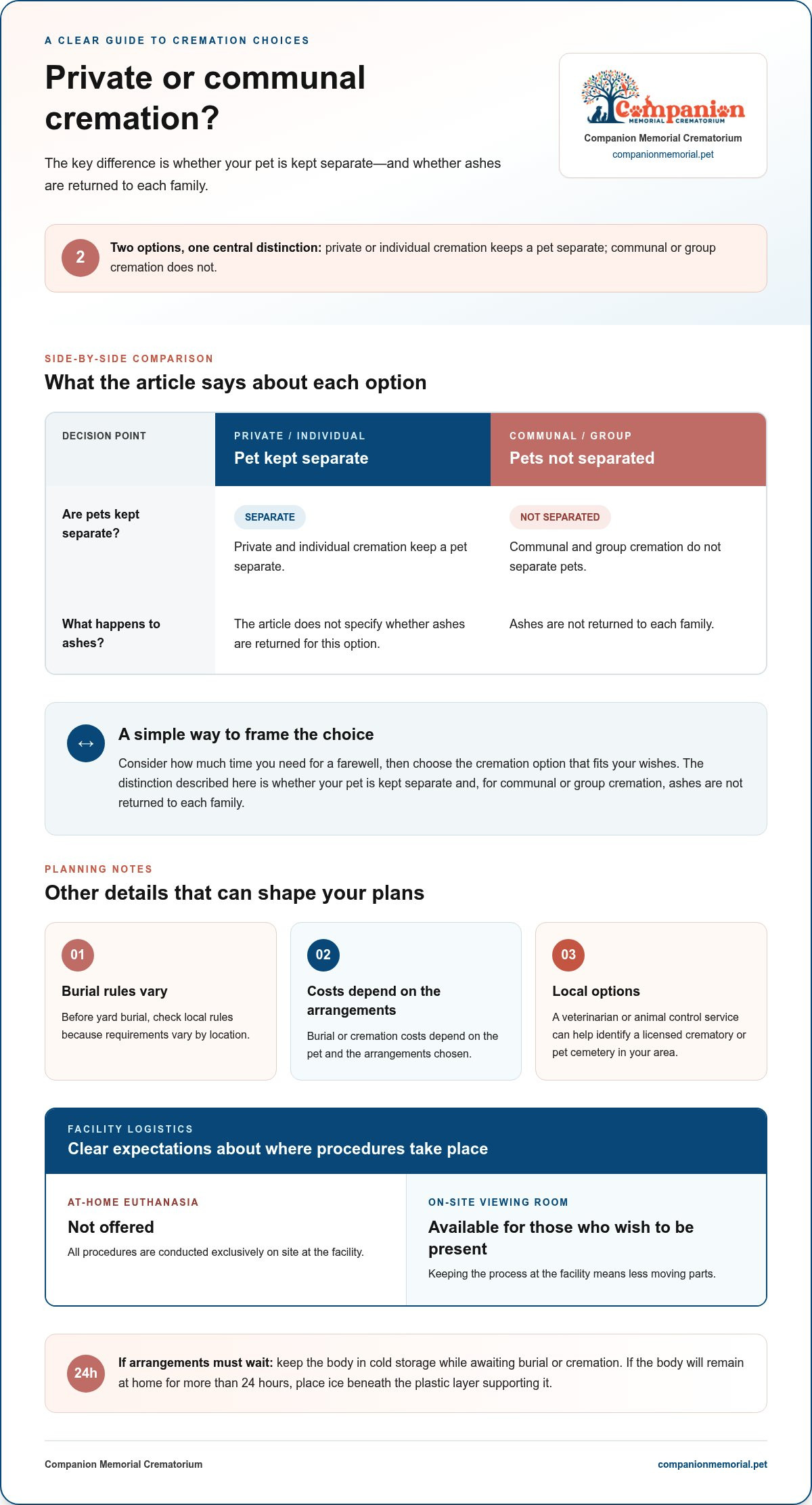
- Consider burial, cremation, or a memorial keepsake. Private and individual cremation keep a pet separate; communal or group cremation does not separate pets, and their ashes aren’t returned to each family.
- Before yard burial, check local rules because requirements vary by location. Cremation or burial costs depend on the pet and arrangements chosen. To find a licensed crematory or pet cemetery, ask a veterinarian or animal control service for local options.
- Keep the body in cold storage while awaiting burial or cremation. If it will remain at home for more than 24 hours, place ice beneath the plastic layer supporting it. For safe handling a pet's body after death, keep children and animals away from the body and any soiled materials.
Post-death sounds and bodily fluids
Sounds and fluid release can occur as a pet’s body relaxes after death. Avoid direct contact with bodily fluids, protect nearby surfaces, and keep children and other animals away while you prepare for the next arrangements.
Notice post-death sounds and discharge
- Stay gentle if your deceased pet makes a small groaning sound while being moved. Air passing through the relaxed voice box can cause this sound; it doesn’t mean your pet is responding or suffering.
- Look for fluid around the mouth and hind end, and place disposable puppy pads beneath those areas. Bodily fluids may continue leaking for hours to days, so check the pads regularly while the body remains at home.
- Keep a family member nearby to help observe the body and replace soiled pads. If you notice discharge, avoid wiping it toward clean areas or touching your face before washing your hands.
Manage waste and bodily fluids
- Cover the surface beneath your pet with an absorbent pad, then add a plastic layer underneath to protect furniture or flooring. Keep towels close by so a family member can replace a soiled layer without moving the body more than necessary.
- Check the body regularly for urine, waste, or other fluid. Place used pads and towels in a sealed bag, away from children and other animals, then wash your hands after handling them.
- If fluid reaches carpet or flooring, blot the area rather than spreading it. Persistent odor after a pet has been deceased at home calls for professional cleaning; avoid masking it with fragrance or rubbing it deeper into the material.
- Keep the body in a cool place, away from direct sunlight, while arrangements are made. Pads help contain discharge, but they don’t replace cold storage when the body must remain at home.
Take precautions when handling the body
- Limit direct contact with discharge, and cover any cuts on your hands before handling towels or pads. Wash your hands with soap and water after contact, and clean any surface that has become soiled.
- Keep children and other animals away from waste and used materials. If a contagious disease or possible poisoning is suspected, avoid handling the body further and contact a veterinarian for specific instructions.
- Ask another adult to help if you need to change bedding or prepare the body for transport. One person can support the pet while the other replaces the protective layers, reducing unnecessary movement and keeping clean materials separate.
- For a strong or lingering odor in a room, arrange professional cleaning rather than attempting extensive treatment yourself. Keep the area undisturbed until it can be cleaned, especially if a family member or another animal might touch the affected surface.
Rigor mortis and repositioning a pet’s body
Rigor mortis is muscle stiffening after death, and its timing can vary. If you need to reposition your pet, gentle movement before stiffness develops can make handling easier.
Recognize rigor mortis after death
- Notice whether your pet’s limbs or jaw feel increasingly stiff, but don’t use force to test their range of motion. The body begins cooling after death, and stiffness can develop as muscles change. This physical change is not a sign that your pet is in pain.
- Use the timing as a guide, not a precise schedule. Rigor mortis may begin within 1-2 hours after death; other descriptions place its typical onset at 3-4 hours after death. Some accounts describe cooling and stiffening after about half an hour, while rigor mortis is typically complete within 12 hours post death.
- Remember that these timeframes differ, so the body’s condition matters more than estimating the exact time of passing. A pet’s size, environment, and individual circumstances can affect how quickly stiffness becomes noticeable.
- If euthanasia has taken place, the same careful approach to movement applies. A difficult goodbye can make practical decisions harder, so decide in advance whether repositioning is necessary for a viewing, wrapping, or transport.
Position the body around rigor mortis
- Choose the position you want before stiffness sets in, if possible. With clean hands and a prepared blanket or towel nearby, gently bring the front and back legs closer to the body. This compact position can make wrapping and carrying easier.
- Support the head, chest, and hindquarters together when changing your pet’s position. Ask another adult to help with a larger animal, with one person supporting the front and the other supporting the rear. Move slowly and stop if the body resists.
- If stiffness has already developed, don’t try to straighten or bend the limbs. Forcing joints can damage tissues and make repositioning more difficult. Keep your pet in the position they are in, and use a blanket or towel to support the body for the next step.
- When some time has passed and gentle repositioning is necessary, slowly massage the joints and muscles before attempting a small adjustment. Avoid pulling on paws, legs, or the tail. If the body remains rigid, leave the limbs in place and adapt the wrap or container around them.
- Prepare the destination first, such as a lined container or a clear space on a blanket. A ready surface reduces repeated lifting, which matters when a pet is stiff or difficult to move after losing them.
Keeping a pet’s body longer for religious, spiritual, or personal reasons
- Tell the provider in advance if your family wants to keep your pet’s body until the next day after an end-of-life appointment. A planned pause can allow time for a farewell, prayer, or family gathering before burial or cremation. State how much time you’re requesting and when you expect to make the next arrangement.
- Keep the body in cold storage if it must remain at home. Choose the coolest available place, away from direct sunlight, and use ice bags around the body while arranging the next step. If the body will remain at home for more than 24 hours, place ice beneath the plastic layer supporting it.
- Prepare the resting place before moving your pet. Lay down plastic to protect the surface, then place a clean blanket or absorbent towel on top. Keep the area away from direct sun and household activity. A prepared space helps your family spend time together without needing to reposition the body repeatedly.
- Plan the time you need around the practical limits of keeping a body at home. Some jurisdictions limit how long a pet’s body may be kept before burial, so local rules may affect a religious or personal observance. If burial is your plan, look into applicable local requirements before setting a date.
- Keep checking the body and its supporting layers while your pet remains at home. Replace a soiled towel or pad carefully, and maintain the cold storage arrangement rather than relying on a blanket alone. Cooling slows changes to the body, while a blanket provides a respectful covering but does not keep the body cold.
- Choose the next arrangement once your family has had the time it needs. Burial and cremation are common options; families choosing cremation can select a private, individual, or group arrangement according to their wishes. If you’re planning a home burial, account for local rules and keep the body protected until it is placed.
- Make a simple plan that names who will care for the body and when arrangements will proceed. For example, one family member can monitor the cooling setup while another coordinates a next-day burial or cremation. A clear plan prevents uncertainty about the body’s placement, especially when relatives need time to gather.
If keeping your pet’s body for religious, spiritual, or personal reasons is part of your family’s plans, raise that need with the provider before the end-of-life appointment. Make the request explicit rather than waiting until the appointment has ended, so the provider is aware that you want extra time with your pet’s body. You can explain that the request is connected to a farewell or observance, and say that the additional time matters to your family. Advance notice gives the provider an opportunity to understand what you’re asking for before the appointment begins. Keep the conversation focused on your wish to spend more time with your pet’s body after the appointment.
Moving and transporting a pet’s body
Plan the route and prepare the vehicle before lifting your pet. A clear plan helps family members move the body gently and avoid handling it more than necessary.
- Gather a blanket or large towel, absorbent pads, and large trash bags before you begin. For a small pet, use a blanket as a supportive sling. For a larger pet, ask another adult to help hold the blanket or towel securely.
- Position the body on its side, with the front and back legs close to the body if they move easily. This compact position can make wrapping and transport more manageable. Don’t force stiff limbs into place; let the blanket fit around your pet’s natural position.
- Support the head, chest, and hindquarters when lifting. Bend your knees, lift with your legs, and keep your back straight. For a larger pet, coordinate with another family member before lifting, so both people raise and lower the body together.
- Wrap your pet in a blanket or place them in a suitable container for the journey. Keep the head supported and the body secure, so it doesn’t shift during transport. Choose a container that can hold your pet without requiring the body to be bent or forced.
- Protect the vehicle before loading. Line the seat or trunk with large trash bags, then place absorbent pads and towels on top. This layered setup helps contain urine or other fluids and makes cleanup easier after you arrive.
- Move slowly from the resting place to the vehicle, keeping the path clear of furniture, loose rugs, and other obstacles. If your pet is heavy or difficult to carry, pause and adjust your grip rather than lifting with a twisted back. Keep the blanket’s edges gathered beneath the body.
- Choose a destination and arrange access before departure. Keep the vehicle cool and avoid leaving your pet in direct sunlight while you prepare. If transport must wait, return the body to the coolest available place and continue the cold-storage steps described earlier.
- For cremation, find out how the body will be received and where it should be brought. Veterinary practices may arrange collection twice-a-week or once-a-week, so collection timing can affect when remains move onward. Plan accordingly, rather than leaving your pet in an unprepared vehicle.
If cremation is the next step, explore cremation arrangements and choose an option that suits your wishes.
Companion Memorial Crematorium: Private Cremation
Companion Memorial Crematorium offers Private Cremation for families choosing an individual memorial arrangement. Individual Cremation and Group Cremation are also available, so you can select the option that aligns with your wishes for your pet’s remains.
Euthanasia services are provided on site at Companion Memorial Crematorium, not at home, and only for pets who are suffering or have a significantly reduced quality of life. A private viewing room is available for families who wish to be present. The on-site setting brings the procedure and arrangements together in one place.
When you’re ready to discuss cremation or on-site arrangements, contact Companion Memorial Crematorium.
Choose a next step that feels right
The decisions made after a pet’s passing don’t need to capture the whole relationship. Let the next step reflect what matters to your family, whether that means a quiet farewell, a shared remembrance, or time to consider your options.
Handling a pet’s body after death is one part of saying goodbye. What comes next is a personal choice, shaped by the memories you want to carry forward and how you wish to honor your companion.
Companion Memorial Crematorium offers Private Cremation, Individual Cremation, and Group Cremation. You can consider these options in light of your wishes for your pet’s remains and the kind of remembrance that feels meaningful to you.
When you’re ready to discuss arrangements, contact Companion Memorial Crematorium. Take the next step when it feels right for you and your family.
Frequently Asked Questions
What should I do immediately after my pet dies at home?
First, make sure your pet has died; very shallow breathing can be difficult to notice. If you can’t tell whether your pet is breathing, don’t assume they have passed. Once death is clear, note the time and gather what you’ll need for the next arrangement, such as clean towels and a suitable carrier. Preparing these items can help you avoid repeated trips.
How long can a pet’s body remain at home before arrangements are made?
There isn’t one universal time limit, and some jurisdictions restrict how long a pet’s body may be kept before burial. Keep the body in cold storage; if it will remain at home for more than 24 hours, place ice beneath the plastic layer supporting it. Local requirements may affect families in New York, Connecticut, Pennsylvania, and New Jersey. Companion Memorial Crematorium is 100% combat veteran-owned and offers pet cremation arrangements.
How much does pet cremation or burial cost in the United States?
Cremation costs depend on the pet and arrangements.
Can I bury my pet in my yard, and what local rules apply?
Rules for burying a pet at home vary by location. Check local requirements before making plans, including any rules about how long a pet’s body may be kept before burial.


