

Being present is a choice, not a measure of how much a child loves a pet. When explaining pet euthanasia to a child, give an honest, age-appropriate explanation and let them decide whether to attend once they understand what will happen. They can also say goodbye beforehand without being in the room for the procedure. A pet’s illness and death are not the child’s fault. Euthanasia may be considered when a pet is suffering or has a significantly reduced quality of life.
It’s understandable to want to protect a child from a painful experience while helping them feel included in a decision that affects the family. This guide explains how to discuss illness, death, and euthanasia in clear, gentle language; prepare a child for the procedure; and consider whether being present feels right for them. It also offers ways to support a child’s grief and remember the pet together, without rushing them through a meaningful loss.
Key Takeaways
- Give children clear, age-appropriate information about their pet’s illness and what euthanasia means.
- Let a child’s understanding, questions, and wishes guide whether they attend, rather than treating attendance as a measure of love.
- Prepare children for the goodbye by explaining what will happen and making space for their questions.
- Include children in gentle conversations about changes in their pet’s comfort and quality of life.
- Support grief at the child’s pace, and find simple ways to remember the pet together.
1. Should children be present during euthanasia?
There’s no single right choice for every child or family. Whether to attend is a personal family decision, and some children may benefit from being present to understand the loss, say goodbye, and begin grieving. Offer an honest explanation of what they might experience, then give them room to choose. A child can say goodbye beforehand and still decide not to stay during the procedure.
Consider the child’s age, understanding, wishes, and ability to leave if the experience feels overwhelming. Experts commonly recommend that children five years and younger not be directly involved in an in-home pet euthanasia, because they may not understand death and may become distressed by adults’ grief. A younger child can still say goodbye at home or help choose a remembrance. Teenagers may want a fuller discussion about the pet’s condition.
After a pet dies, children may feel sadness, anger, loneliness, frustration, or guilt. Parents can acknowledge each feeling without correcting it: “You miss your dog, and it’s all right to feel sad.” Some children grieve in brief moments, then return to play. That shift doesn’t mean they’ve forgotten the pet. Grief may last weeks or months, so offer opportunities to talk without requiring a conversation.
Notice when grief disrupts daily life. If a child’s sleep, appetite, or schoolwork is affected, consider support from a grief counselor or therapist. You can also talk with the child’s school counselor or pediatrician about suitable support. Sharing clear observations, such as trouble sleeping or difficulty concentrating in class, can help adults understand what the child is experiencing.
In the United States, parents can find age-appropriate pet-loss books at a local library and read together at the child’s pace. Pause when a question comes up, and let the child decide whether to continue. A scrapbook, memory box, letter, or planted tree can also help a child honor the pet. Invite them to choose an activity, but don’t insist if they aren’t ready.
Keep checking in gently. For example, ask, “Would you like to look at a photo of your pet?” Familiar routines and an adult who is ready to listen can help a child adjust. If they don’t want to talk, leave the invitation open and return to it another day. Grief may come and go, so continue making room for memories and questions.
2. Explaining euthanasia honestly and in age-appropriate language
Use the words “death” and “died” so a child understands what has happened. You might say, “The veterinarian will give Bella medicine that will stop her heart from beating. She will die peacefully, and she won’t feel pain.” Keep your voice calm, but don’t hide the meaning behind softer language. Explain that euthanasia is a way to end an animal’s suffering when the pet is suffering or has a significantly reduced quality of life.
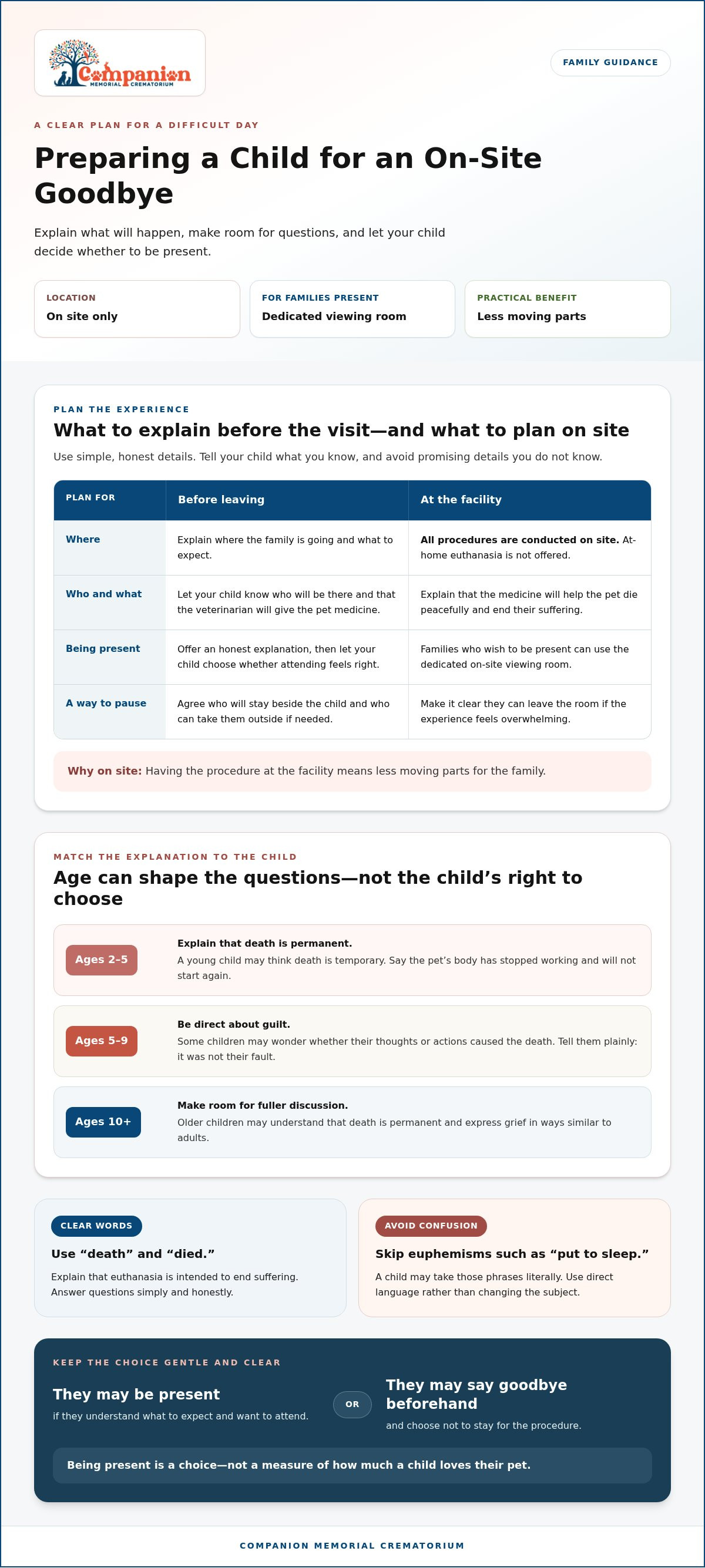
Adapt the details to the child’s understanding and questions. Children ages 2 to 5 may think death is temporary, so explain that the pet’s body has stopped working and won’t start again. A five-year-old might ask whether the dog can wake up; answer, “No. When an animal dies, it can’t come back.” Children ages 5 to 9 may understand death is final but wonder if their thoughts or actions caused it. Tell them plainly that the illness and death weren’t their fault. Children aged 10 years and older may grasp death’s permanence and express grief in ways similar to adults.
Explain the decision simply, too. For example: “The medicine and care haven’t made Max better. He is hurting, and the veterinarian can help him die peacefully so the pain ends.” This tells a child that euthanasia is an intentional choice to relieve suffering, not a punishment or a failure to love the pet. Explain that pets may die even when their families love them deeply.
Avoid phrases such as “put to sleep,” “passed away,” or “went on a trip.” A child may take them literally, worry that sleep means death, or expect the pet to return from a journey. Don’t say the pet ran away, either. Use “died” and answer questions directly, rather than changing the subject or telling a story that could confuse the child.
After explaining, pause and let the child respond. They may ask how the medicine works, whether the pet will be alone, or what happens next. Answer only what they ask, using short, age-appropriate sentences. “The veterinarian gives medicine, and it stops the heart” is clearer than a long description. If you don’t understand a question, ask what the child means before answering.
Children may ask the same question at different times as they process the news. Repeat the central facts consistently: the pet is dying, the decision is intended to end suffering, and the child didn’t cause it. You can also say, “You can ask me again whenever you want,” then make space for the child to express sadness, anger, or confusion without correcting those emotions.
3. Preparing a child for the euthanasia procedure
Before the appointment, explain the practical steps your child will experience. Tell them where the family will go, who will be there, and what the veterinarian will do. For example: “We’ll go to the clinic, and the veterinarian will give Luna medicine so she can die peacefully.” Avoid promising details you don’t know. If your child asks what happens next, answer honestly or explain that you’ll find out together.
Children may imagine a procedure differently from what adults expect. Describe only what they might see or hear, using what you know about the appointment. Give them a chance to ask questions before leaving home. Make a simple plan: who will stay beside the child, who can take them outside, and what they can do if they want to leave the room.
Companion Memorial Crematorium provides on-site euthanasia services only; at-home euthanasia isn’t offered. Families who wish to be present can use the dedicated on-site viewing room. Having the procedure and viewing room at the same location can mean fewer moving parts on a difficult day. Explain the setting to your child beforehand, including how you’ll arrive and where you’ll wait, so the location itself isn’t a surprise.
Make saying goodbye personal and manageable. A child might bring a drawing, tell the pet a favorite memory, or spend a quiet moment stroking them. Another child may prefer to say goodbye at home rather than attend the appointment. Neither choice measures how much a child loves the pet. Let them decide without pressure, and identify a trusted adult who can accompany them or take them home.
Before the visit, agree on a simple signal for a break, such as squeezing your hand or saying, “I need to step out.” Explain that adults may cry, and that seeing someone’s sadness doesn’t mean anything has gone wrong. Keep school plans in mind: arrange for a calm adult to collect the child if needed, and allow time to talk afterward rather than expecting an immediate return to routine.
Families can create a memorial ritual by inviting everyone to choose a remembrance. A child might add a photo to a memory box, write a letter, or help plant a tree in the pet’s honor. Explain beforehand what will happen to the pet’s remains and how the family plans to remember them. A clear, shared ritual gives children a meaningful way to say goodbye without requiring them to witness the procedure.
After the appointment, offer a specific opening for conversation: “Would you like to tell me what you remember about today?” If the child doesn’t want to talk, leave the invitation open. Returning to a familiar activity, such as reading together or preparing dinner, can provide structure while leaving room for more questions and feelings.
4. Whether children should be present for euthanasia
For school-aged children and pre-teens, offer a genuine choice after explaining what they may see and hear. The Baltimore Humane Society describes attendance as a personal family decision. Being present can help a child understand the loss and say goodbye, but choosing not to attend doesn’t lessen their love. Make clear that they can change their mind or leave with a trusted adult.
Experts commonly recommend that children five years and younger not be directly involved in an in-home euthanasia, because they may not understand death and may become distressed by adults’ grief. This guidance concerns in-home procedures; a child’s understanding, emotional response, and wishes also matter. A young child can still say goodbye before the appointment or take part in a family remembrance afterward.
Offer teenagers and young adults the option to attend. Talk with them about the pet’s suffering and quality of life, then invite their thoughts without making them responsible for the decision. For example, a parent might say, “We’re considering this because treatment can’t keep Sam comfortable. Would you like to be there, or would you rather say goodbye beforehand?” Their answer can help shape the family’s plan.
Before deciding, describe the experience in plain, specific terms. Explain that a veterinarian will give the pet medication and that the pet will die. Don’t say only that the animal will be “put to sleep,” since a child might associate sleep with waking up. Ask what they imagine will happen, then gently correct any misunderstandings. A child who expects the pet to walk out afterward needs a clearer explanation before choosing.
Pay attention to the child’s words and behavior, not just their first answer. If they say “yes” because they think adults expect it, remind them that either choice is acceptable. If they seem overwhelmed, offer another way to participate, such as drawing a goodbye card or sharing a favorite memory beforehand. Identify an adult who can stay with the child and help them step out if needed.
A child may feel peaceful about attending, or feel sadness, fear, or uncertainty. Acknowledge those feelings without steering the child toward either option. Some children want to be present for the final moments; others prefer a private goodbye at home. Give them time to consider the choice, answer follow-up questions, and revisit the plan if their feelings change before the appointment.
Afterward, check in with a simple question such as, “What was that like for you?” Children may process the experience differently from adults, shifting between grief and ordinary play. Keep listening over the following days, and make room for further questions. Attendance is one possible way to say goodbye, not a requirement for understanding death or honoring a beloved pet.
5. Including children in conversations about illness and quality of life
Begin conversations before a pet’s condition becomes an immediate crisis. If an older dog has a long illness, explain changes as they happen: “Milo’s medicine isn’t helping him feel comfortable anymore.” This helps a child connect the pet’s condition with the family’s decisions. It also gives them time to ask questions, express concern, and share what they notice. When explaining pet euthanasia to a child, build on earlier conversations rather than introducing every difficult detail at once.
Keep the discussion grounded in familiar examples. You might say, “You’ve noticed that Bella no longer enjoys her walks, and she seems uncomfortable.” Don’t ask a child to decide whether the pet should die. Instead, explain that adults are considering the pet’s comfort and will make the care decision. Children can share their observations without carrying responsibility for the outcome.
Quality of life can sound abstract, so describe what it means for that particular animal. Talk about whether the pet can rest comfortably, eat, move, or enjoy familiar routines. If treatment can no longer keep a pet comfortable as their condition declines, euthanasia may be considered to relieve suffering. When explaining pet euthanasia to a child, connect the decision to changes they’ve already observed.
Invite questions across more than one conversation. A child might ask, “Will the medicine make Rusty better?” Answer plainly, then explain what the treatment can and can’t do. If the pet’s condition changes, update the child with specific observations instead of suddenly announcing a decision.
You can model grieving by saying, “I feel sad because I love Daisy, too.” This shows that sadness is a natural response to losing a pet. Keep familiar routines, such as reading together after school, while making room for questions.
When euthanasia is being considered, connect the decision to what the child has observed: “We’ve talked about how Charlie is hurting, and treatment isn’t keeping him comfortable. We’re choosing a peaceful way to end his pain.” Invite the child to help with a memorial, such as choosing a photograph for a memory box.
Set aside a quiet family conversation, share what has changed, and ask what the child wants to understand. For guidance on planning the next step for your pet, discuss your pet’s end-of-life plans.
Companion Memorial Crematorium: Private Cremation
Companion Memorial Crematorium offers private, individual, and group cremation, giving families different aftercare arrangements to consider. With private cremation, the pet is placed alone in the cremation chamber. Individual cremation keeps a pet separate while other pets are in the chamber. With group cremation, several pets are cremated together, and their remains aren’t returned to their owners.
With group cremation, remains are scattered in a private memorial garden. These distinctions can help families choose an arrangement that reflects their wishes and explain the choice to children in clear, practical terms.
To discuss cremation options, contact Companion Memorial Crematorium.
Make room for the next conversation
A child’s understanding can change as they grow and revisit the loss. A question that feels settled today may return during a quiet moment, a family milestone, or a memory of the pet. Keep the conversation open without asking a child to speak before they’re ready. When explaining pet euthanasia to a child, remember that care can continue through listening, familiar routines, and space for new questions.
There is no need to find perfect words for every moment. A steady, honest presence can help a child feel included while the family adjusts. When you’re ready to discuss practical arrangements for your pet, contact Companion Memorial Crematorium. Take the next step at a pace that feels manageable for your family, and let the memories you share remain a source of connection.
Frequently Asked Questions
Should children be present during euthanasia?
Children may attend if they understand what will happen and want to be there. Before deciding, describe the procedure clearly, then ask what they prefer without suggesting one answer is better. Arrange for a trusted adult to focus on the child, separate from the person supporting the pet. That adult can step outside with the child if their feelings change during the appointment.
Should my other pets or children see my deceased pet?
Some families let other household pets see their companion after death. The Baltimore Humane Society says this may help them understand the loss and reduce searching. For children, offer a brief goodbye without requiring them to view the pet’s body. Describe what they’ll see beforehand, and let them decline. A photograph, collar, or favorite toy can provide a gentler way to mark the loss.
How should you explain pet euthanasia to a child by age?
Adapt the explanation to the child’s understanding. Children under two may sense emotions without understanding death. From ages two to five, explain that death is final, since children may think it’s temporary. Ages five to nine may need reassurance that their thoughts or behavior didn’t cause the death. Children aged ten and older often grasp that death is permanent and may want more detail about the illness and decision.
What words should parents use to explain that a pet is dying or has died?
Use direct words such as “dying,” “died,” and “death,” followed by a simple explanation. For example: “Molly’s body is very sick, and the veterinarian can’t make it better. She died, so her body has stopped working.” Avoid “put to sleep” or “went away,” which can confuse children about sleep or separation. Pause after speaking so the child can respond or ask what they need to know.
Should a child be present for a pet's euthanasia?
There’s no single answer for every family. Consider the child’s wishes, understanding, and response to difficult experiences, then explain what attendance involves. A child who wants to be there can have an adult focused on their needs. A child who prefers not to attend can say goodbye earlier or take part in a remembrance afterward. Neither choice measures how much the child loves the pet.
How can children say goodbye to a pet before euthanasia?
Offer a quiet, personal opportunity that suits the child. They might sit beside the pet, speak a few words, draw a picture, or share a favorite memory. A child who doesn’t want physical contact can leave a note or choose a photograph instead. Tell them when the goodbye will happen and who will be with them, so they have a clear, manageable way to take part.
How do children commonly grieve after a pet dies, and how can parents help?
Children may feel sadness, anger, guilt, or loneliness, and their grief may come in brief moments. They might cry, then return to play; that doesn’t mean they’ve forgotten the pet. Name feelings without judging them, keep familiar routines, and invite conversation when the child is ready. If grief disrupts sleep, appetite, or schoolwork, consider support from a grief counselor or therapist.
How should parents answer a child's questions about pet euthanasia and death?
Answer the question asked with a short, truthful response, then pause. If a child asks, “Will Max come back?” say, “No. He died, and he can’t come back.” If they ask about the medicine, explain that it helps end the pet’s suffering. Children may return to the same question as they process the loss, so repeat the main answer calmly and consistently.


