

Choosing to say goodbye isn't an admission of defeat; it's the final, most courageous act of stewardship you'll ever perform for your companion. You've spent years learning your pet's unique language, from the gentle tilt of their head to the rhythmic wag of their tail, yet the question of when is it time for pet euthanasia remains the most difficult one to answer. It's completely natural to carry a heavy weight of guilt or fear that you're making this choice too soon or perhaps waiting until they're in distress. You aren't alone in these feelings, and your desire to protect them from pain is the ultimate reflection of your bond.
This guide provides the clarity and peace of mind you need to evaluate your pet's quality of life with a steady, compassionate hand. We'll offer a structured framework for assessing their daily comfort, explain the vital differences between a natural passing and a peaceful euthanasia, and help you understand how a private, dignified setting can honor their memory. By the end, you'll feel more prepared to choose a path forward that's rooted in love, respect, and professional care.
Key Takeaways
- Utilize the "Good Days vs. Bad Days" calendar method to gain an objective perspective on your pet's physical comfort and emotional spirit.
- Learn how to recognize when is it time for pet euthanasia by reframing the decision as a final act of stewardship and compassion.
- Understand the vital differences between a natural passing and a peaceful, medically assisted transition that prioritizes your pet's dignity.
- Evaluate the benefits of choosing a private, dedicated facility that ensures a quiet and respectful environment for your final moments together.
- Discover how a seamless transition to private cremation services provides a professional and heartfelt tribute to your pet's memory.
Evaluating Quality of Life: Recognizing the Signs It May Be Time
Quality of life is a delicate balance between a pet's physical comfort and their enduring emotional spirit. As a caretaker, you're the most qualified person to judge this balance because you know the nuances of their personality better than anyone else. The decision to pursue animal euthanasia is rarely based on a single symptom; instead, it's a cumulative assessment of their daily experience. When the burden of their illness begins to outweigh the joy of their existence, the focus of care shifts from curative treatment to providing a dignified, peaceful end.
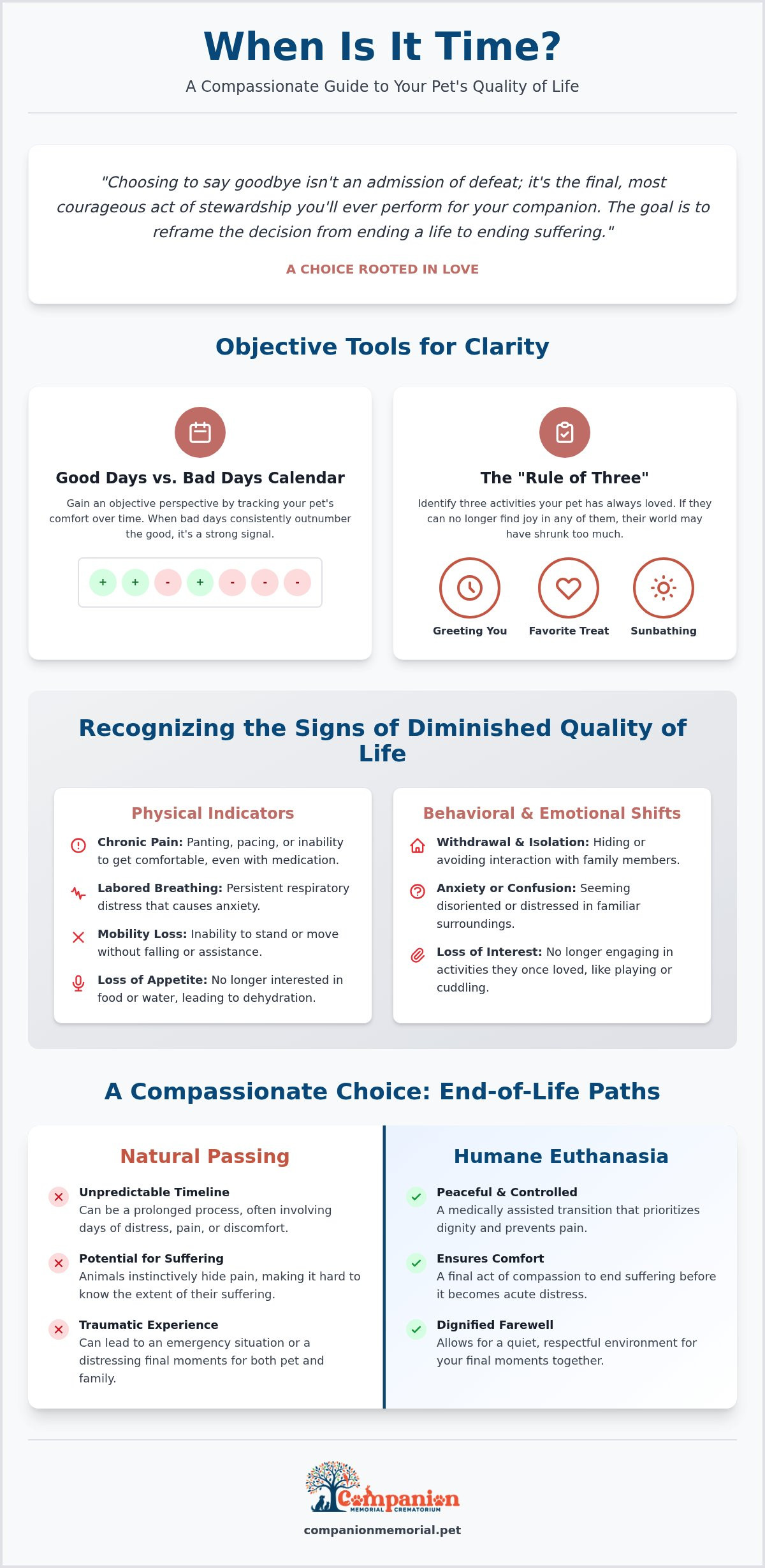
One of the most effective ways to gain objective clarity on when is it time for pet euthanasia is the "Good Days vs. Bad Days" calendar method. It's easy to lose perspective when you're in the middle of a health crisis. By marking a physical calendar with a simple "plus" for a day where your pet is comfortable and engaged, and a "minus" for days marked by pain or withdrawal, you create a visual record. When the minuses consistently outnumber the pluses for a full week, or when the "good" days are only achieved through heavy sedation, it's often a clear signal that their threshold of suffering has been reached.
You may also find peace in the "Rule of Three." Think of three activities that have always defined your pet's happiness, such as greeting you at the door, enjoying a favorite treat, or resting in a sunlit spot. If they can no longer do any of these things, their world has likely shrunk to a point where they're no longer finding fulfillment in their surroundings. This framework helps move the decision from a place of "giving up" to a place of mercy and stewardship.
Physical Indicators of Diminished Quality of Life
Clinical symptoms often provide the most direct evidence of a pet's decline. Chronic pain that no longer responds to standard medication is a significant indicator; this often manifests as panting, pacing, or an inability to find a comfortable resting position. Persistent labored breathing or respiratory distress is particularly concerning, as it creates a high level of anxiety for the animal. Additionally, if a pet can no longer stand or move without falling, or if they've lost interest in food and water to the point of dehydration, their body is likely signaling that it can no longer sustain itself without distress.
Behavioral and Emotional Shifts
The emotional spirit of a pet is just as vital as their physical health. You might notice your companion withdrawing from family interactions or seeking isolation in quiet corners of the home. Some pets experience visible anxiety or confusion that cannot be soothed by your presence or touch. When a pet loses interest in the people and activities they once cherished, it often indicates that their mental energy is entirely consumed by managing their physical discomfort.
The Emotional Journey: Navigating Guilt and Decision-Making
The period preceding a loss often carries a unique weight known as anticipatory grief. This emotional state is a testament to the depth of your connection, but it can also cloud your judgment with intense guilt. To find clarity on when is it time for pet euthanasia, it helps to reframe the choice entirely. Rather than seeing this as an act of ending a life, try to view it as a final, courageous act of ending suffering. The word euthanasia itself finds its roots in the Greek terms eu, meaning good, and thanatos, meaning death; it's a promise of a transition marked by peace rather than pain.
Common Misconceptions About 'The Right Time'
Many families hold onto the myth that their pet will clearly "tell them" when they're ready. In reality, our companions often possess a deep-seated instinct to hide vulnerability and pain to protect the pack. This makes determining when is it time for pet euthanasia a clinical and emotional decision rather than one based on a single sign. Consider these common pitfalls:
- The 'Good Day' Trap: A single afternoon of energy doesn't negate a long-term trend of physical decline.
- Waiting for a Sign: Animals often suffer in silence; waiting for a visible crisis can lead to a more traumatic experience for everyone involved.
- The Guilt of 'Too Soon': It's often more compassionate to be a week early than a minute too late in preventing acute distress.
Seeking Professional Guidance
Your veterinarian is an essential partner in this journey. When seeking a clinical assessment in Sullivan County and surrounding areas, don't hesitate to ask the most revealing question: "If this were your pet, what would you do?" This allows the medical team to move beyond clinical data and offer advice rooted in both expertise and empathy. These professionals follow strict Humane euthanasia guidelines to ensure every procedure is conducted with the utmost care. If you find yourself overwhelmed by these medical details, our compassionate team can help guide you through the practical steps of the process.
Involving the entire family is a necessary part of the healing process. When explaining the situation to children, use honest, age-appropriate language. Avoid confusing euphemisms like "going to sleep," which can create unnecessary fear about their own bedtime. Instead, explain that the pet's body has stopped working and that the veterinarian is helping them pass away without any more hurting. This transparency builds a foundation of trust and allows everyone to honor the bond in their own way.
Comparing End-of-Life Paths: Natural Death vs. Humane Euthanasia
Many families hold a gentle hope that their companion will simply pass away peacefully in their sleep. It's a comforting thought, yet the biological reality often differs from this ideal. Deciding when is it time for pet euthanasia frequently involves weighing the uncertainty of a natural decline against the controlled peace of a medical transition. While nature is often beautiful, the final stages of organ failure or terminal illness can be unpredictable and distressing for the animal. Choosing to intervene isn't an act of interference, but rather a final act of protection against the physical trauma of a body failing.
The Process of a Natural Passing
A natural death is rarely a single moment in time. Instead, it's often a prolonged process that can span hours or even days. Without medical intervention, the body’s shutdown can involve difficult physical symptoms such as labored breathing, occasionally referred to as "air hunger," seizures, or significant restlessness. The lack of predictability means a crisis could occur at any hour, potentially leading to a frantic, late-night emergency visit to an unfamiliar clinic. This unpredictability creates a heavy emotional toll on the family. Maintaining a constant vigil is exhausting, and the fear of a pet suffering while you're asleep or away can be overwhelming.
The Benefits of Scheduled Euthanasia
Choosing a scheduled path allows you to curate a final experience that's defined by love rather than urgency. This process ensures that the transition is entirely painless through the use of professional sedation. This initial step allows the pet to drift into a deep, peaceful sleep before the final medication is administered. You gain the ability to control the environment, ensuring it remains quiet, familiar, and free from the sterile noise of a busy hospital. It's a structured and solemn way to honor the bond you've shared.
This approach also provides the space to make practical arrangements without the cloud of an active crisis. You can coordinate sensitive aftercare, such as private pet cremation, well in advance. Having these details settled allows you to focus entirely on your companion during their final moments. When you evaluate when is it time for pet euthanasia, consider that a "good death" is one where the pet's last memory is of your touch and a calm environment. It's a final gift of stewardship, ensuring they never have to experience the peak of their physical distress.
Choosing the Right Setting: On-Site Facility vs. In-Home Services
Deciding when is it time for pet euthanasia is a profound emotional hurdle, but choosing where that transition occurs is equally significant for your long-term peace of mind. The environment you select should serve as a sanctuary, providing the security and quiet dignity required for such a solemn occasion. While some prefer the intimacy of their own residence, others find that a dedicated, professional setting offers a level of privacy and unhurried focus that a traditional home or a busy veterinary clinic simply cannot match. Logistical factors, such as the ease of travel and the immediate availability of aftercare, also play a vital role in this choice.
The Atmosphere of a Professional On-Site Facility
A specialized facility is designed with a singular purpose: to honor the bond between you and your companion in a controlled, peaceful environment. There are numerous benefits of an on-site pet euthanasia facility, most notably the absence of the clinical distractions found in a standard hospital. You won't encounter a crowded waiting room, the sounds of barking dogs, or the hurried pace of staff managing medical emergencies. Instead, you'll find private viewing rooms where you can spend as much time as necessary in reflection. This setting also facilitates a seamless move toward memorialization, as immediate aftercare steps can be handled with the same steady, respectful hands that managed the procedure itself.
When In-Home Euthanasia Might Be Preferred
For some companions, the best path is the one that involves the least amount of physical change. In-home services are often ideal for pets with severe mobility issues who find movement painful, or those who experience extreme anxiety during car travel. This setting also allows other animals in the household to witness the passing, which can help them process the loss of their pack member. The priority is always to reduce stress for the pet, ensuring their final experience is rooted in the smells and sounds they know best. If you're uncertain which path is right for your family, you can schedule a consultation with our team to discuss your specific needs.
Ultimately, your choice should reflect what will bring you the most comfort during the grieving process. Some families find that performing the procedure at home creates a lasting, heavy memory in a space they use every day. By choosing a professional facility, they create a clear boundary that preserves the home as a place of life and joy. Once you've determined when is it time for pet euthanasia, selecting a setting that aligns with your emotional needs ensures the final goodbye is as dignified as the life it honors.
A Dignified Farewell with Companion Memorial
Once you've found the clarity to answer when is it time for pet euthanasia, the focus shifts toward ensuring their final transition is handled with unwavering respect. At Companion Memorial, we believe that the end of a pet's life deserves the same level of honor as the years they spent by your side. Our veteran-owned facility in Ferndale, NY, was established to provide a sanctuary where families can find peace during their most difficult moments. The transition from on-site pet euthanasia Ferndale NY to our specialized aftercare is designed to be seamless, ensuring your companion never leaves our steady, professional care.
Our Commitment to Professional Solemnity
Our veteran-led team brings a unique perspective to end-of-life services, rooted in a deep-seated commitment to duty and personal integrity. We treat every animal that enters our facility with the highest level of honor, recognizing the significant bond they shared with their family. Transparency is a cornerstone of our service; we provide an official cremation certificate with our private and individual services to offer you absolute peace of mind. We're proud to support families from Sullivan County and the surrounding regions, offering a calm, knowledgeable presence that guides you through each practical step with silent, respectful efficiency.
Honoring Your Companion's Legacy
Creating a lasting tribute is an essential part of the healing process. We offer several paths for aftercare to meet the diverse needs of the families we serve. You may choose a private cremation, where your pet is the only one in the chamber, or an individual cremation where pets are separated during the process. For those who prefer a simpler path, group cremation is also available. Regardless of the service you select, our team ensures the process is conducted with professional decorum and care.
To help you find closure, we provide private viewing rooms where you can say your final goodbyes in a quiet, unhurried atmosphere. Selecting a memorial urn that reflects your pet's unique personality can also serve as a comforting reminder of the joy they brought into your home. If you're still navigating the early stages of this journey, learning How to say goodbye to a pet with dignity can help you move forward with confidence. When you determine when is it time for pet euthanasia, remember that you don't have to walk this path alone. Our team is here to act as your partner, providing a final farewell that is both practical and deeply resonant.
Choosing a Path of Peace and Dignity
Determining when is it time for pet euthanasia is a journey of love that requires both a clear mind and a gentle heart. By utilizing objective tools like the quality-of-life calendar and focusing on your pet's physical comfort, you can move beyond the weight of guilt. You've learned that a controlled, medically assisted transition offers a level of peace that a natural passing often cannot guarantee. Selecting a dedicated facility for this final goodbye ensures that your companion's last moments are held in an atmosphere of quiet respect, far from the noise of a standard clinic.
Our veteran-owned facility in Ferndale is committed to providing this sense of professional solemnity, offering both on-site euthanasia and private cremation in one respectful location. We're here to act as your steady guides, ensuring that every detail is handled with transparency and profound empathy. You don't have to carry this burden alone. Speak with our compassionate team at Companion Memorial to discuss a peaceful farewell. Your dedication to your pet's well-being is the greatest tribute you can offer, and we're honored to help you protect their dignity until the very end.
Frequently Asked Questions
Is it too soon to euthanize my pet if they still have some good moments?
Deciding when is it time for pet euthanasia involves looking at the overall trend of your pet's health rather than isolated "good" moments. While a sunny afternoon of energy is heartening, it doesn't negate a larger pattern of physical decline or chronic pain. It's often more compassionate to choose a peaceful transition a few days early than to wait until your pet reaches a state of acute medical crisis.
Does the euthanasia procedure cause any pain to the pet?
The procedure is designed to be entirely painless and resembles the experience of drifting into a deep, restful sleep. We utilize a two-step process that begins with a professional sedative to ensure your companion is fully relaxed and comfortable. Once they're in a peaceful state, the final medication is administered, allowing them to pass away quietly without any distress or anxiety.
Can I stay with my pet during the euthanasia process at your facility?
We encourage you to stay with your companion throughout the entire process to provide comfort and a familiar presence. Our veteran-owned facility in Ferndale, NY, offers private viewing rooms specifically designed to provide a quiet, solemn environment for these final moments. This ensures you have the privacy and time you need to honor your bond without the distractions of a busy veterinary hospital.
What is the difference between private and individual cremation after euthanasia?
In a private cremation, your pet is the only animal placed in the cremation chamber, ensuring that the remains you receive are exclusively theirs. Individual cremation involves several pets placed in the chamber at the same time, but they're kept strictly separated by physical barriers. Both options at our facility are handled with professional solemnity and include an official certificate of cremation for your peace of mind.
How long does the on-site euthanasia appointment typically take?
An on-site appointment usually spans 30 to 60 minutes to ensure the process remains calm and unhurried. We move at a pace that respects your emotional needs, allowing you ample time for private reflection both before and after the procedure. This methodical approach helps build a sense of security and reliability during a difficult time.
What should I bring with me to the appointment for my pet's comfort?
Bringing a cherished item from home, such as a favorite soft blanket or a well-loved toy, can help your pet feel more secure. You're also welcome to bring specific treats that your companion has always enjoyed. These familiar scents and tastes provide a sense of safety, ensuring their last environment feels as much like home as possible.
What happens if my pet passes away naturally before my scheduled appointment?
If your companion passes away naturally at home, our team remains available to provide respectful aftercare and support. You can call us to arrange for the transition to our facility, where we'll handle the cremation process with the same dignity and care we provide during a scheduled appointment. We're here to act as your partner in this journey, regardless of how the final moment occurs.
Is pet euthanasia available for exotic pets like rabbits or birds?
We provide compassionate on-site services for a wide variety of companions, including rabbits, birds, and other exotic pets. Every animal is treated with the highest level of honor and professional decorum. When you're evaluating when is it time for pet euthanasia for an exotic companion, our team can offer the same specialized care and private cremation options we provide for cats and dogs.


