

For family-present pet euthanasia in NY, families who wish to be present can use Companion Memorial Crematorium’s dedicated viewing room. The procedure takes place at the facility, not at home. Consider who would bring comfort and what could help your pet feel calm.
Wanting to be present, or needing someone close for support, is deeply personal. There is no single right choice for every family. This guide explains how to prepare, who may attend, what to discuss with the veterinarian, and how loved ones can offer support.
An on-site setting keeps the appointment in one place, which can simplify arrangements during a difficult day. Knowing what to expect can help you make thoughtful choices and give your companion a quiet, loving goodbye.
Key Takeaways
- Discuss your pet’s health, age, and prognosis with a veterinarian as you consider the next step.
- Choose who will be present based on who is likely to comfort your pet and support you.
- Consider children’s emotional readiness and whether other pets will feel calm in the room.
- Think ahead about small rituals and the practical details that can make the goodbye feel more personal.
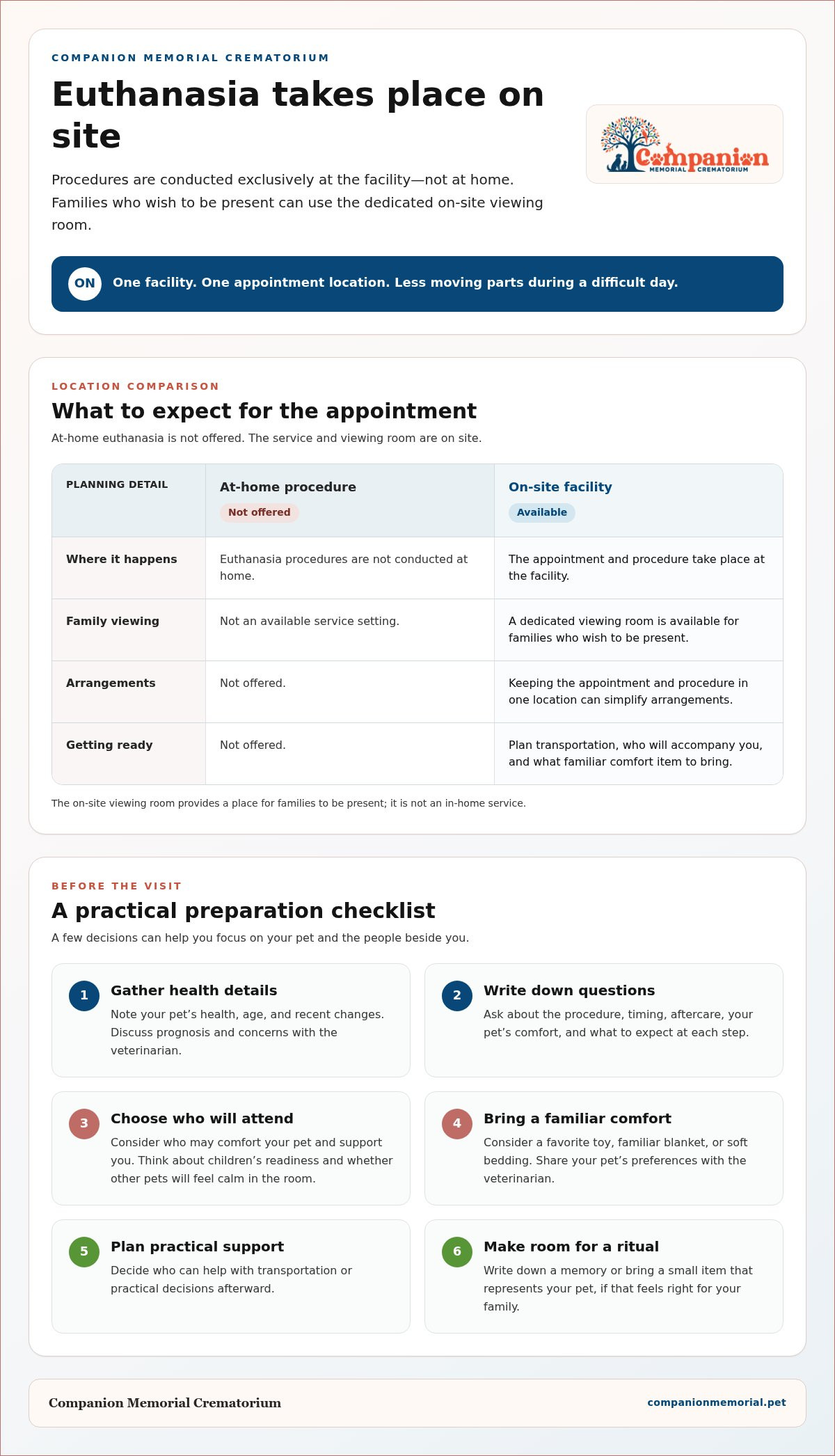
- Euthanasia takes place on site, with a dedicated viewing room for families who wish to be present.
Appointment preparation and rituals
Preparing for a humane euthanasia appointment can help family members make thoughtful choices. For family-present pet euthanasia in NY, start by gathering information about your pet and deciding what you want to discuss with the veterinarian.
At Companion Memorial Crematorium, euthanasia appointments take place on site. Keeping the appointment and procedure in one location can simplify arrangements for families planning a difficult day.
Lap of Love’s video offers a practical look at preparing for a pet’s euthanasia appointment:
Preparing for the Visit
Before making an appointment, note your pet’s health, age, and recent changes. The Animal Protective Foundation recommends discussing these details and your pet’s prognosis with a veterinarian before making a humane euthanasia appointment. This conversation can help you organize your concerns and decide which questions matter most to your family.
For family-present pet euthanasia in NY, consider what would make the visit personal without complicating arrangements. Write down a memory or bring a small item that represents your pet, such as a favorite toy. Decide which family members want to attend, and identify someone who can help with transportation or practical decisions afterward.
Pre-Appointment Guidance
Prepare questions about the procedure, timing, and aftercare before speaking with the veterinarian. Ask what steps to expect and raise any concerns about your pet’s comfort. A written list can help you remember important points when the conversation feels emotional, especially if several family members are involved.
Care options can also inform the conversation. Wood Hill Veterinary Clinic says hospice care may include dietary strategies, pain medications, and human interaction. It also says there is no right or wrong choice between hospice and euthanasia. If a pet needs immediate care, the Animal Protective Foundation advises taking them to a local emergency animal hospital.
In-Home and Clinic Options
In-home and clinic appointments differ in location and setting. At Companion Memorial Crematorium, euthanasia procedures take place exclusively on site. Knowing this in advance helps families plan transportation, arrival, and who will accompany them. Having the appointment and viewing room in one location can make the day easier to organize.
For families asking about New York arrangements, the practical detail is that appointments take place at Companion Memorial Crematorium’s facility. Pricing is provided upon request. Before the visit, note any questions about the appointment and aftercare so you can focus on your pet and the people beside you.
What happens during the euthanasia process?
The setting, your pet’s comfort, and clear communication all shape the experience. At Companion Memorial Crematorium, the procedure takes place on site, and families who wish to be present can use the viewing room.
A Comfortable Location
Choose a calm place for your pet to rest while the veterinarian explains the process. At Companion Memorial Crematorium, that means using the on-site viewing room rather than preparing a room at home. A familiar blanket or soft bedding can provide a recognizable surface. Keep the space clear enough for your pet to settle comfortably and for family members to sit nearby.
Before the appointment, think through practical details: who will bring the bedding, where family members will sit, and whether a favorite toy should come along. These simple choices can create an orderly setting without complicated arrangements. An on-site procedure keeps the appointment and viewing room in one location.
The Pet’s Comfort and Personality
Your pet’s usual preferences can guide small decisions. A pet who rests best on a familiar blanket can use it during the appointment; one who prefers quiet may do better with a calm space and little activity. Consider how your pet responds to handling and unfamiliar surroundings, then share those observations with the veterinarian before the procedure begins.
Comfort also includes the people and sounds around your pet. A familiar voice, gentle touch, or quiet presence may be reassuring if your pet responds well to them. If your pet startles easily, limit unnecessary movement and conversation. These choices keep attention on your companion and support a loving goodbye.
Comfort Care and the Procedure
For a pet with a terminal illness, comfort care can be part of a discussion about quality of life. Wood Hill Veterinary Clinic says hospice care may include dietary strategies, pain medications, and human interaction. It also says there is no right or wrong choice between hospice and euthanasia. These options help frame a conversation around your pet’s needs rather than a single measure of care.
At the appointment, ask the veterinarian to explain each step before it happens. You can ask what your pet might experience, when family members can be close, and how you will know the procedure is complete. Understanding the sequence can help you decide whether to speak, sit nearby, or simply remain present. You do not need to plan a script for the goodbye.
If an on-site viewing room and a compassionate setting would help your family, explore the details of on-site euthanasia services before the appointment. Knowing where the procedure happens can help you plan your arrival and focus on your pet.
Deciding who will be present, including children and other pets
Choosing who attends can shape the atmosphere of the goodbye. Consider who will comfort your pet, who needs support, and whether anyone’s presence could add stress. The aim is a peaceful setting that honors your companion and helps family members be present in a manageable way.
Start by considering how your pet responds to familiar people and other animals. A companion who settles beside one trusted person may prefer a quiet room; a social pet may seem more at ease with several familiar faces nearby. Think about the final moments from your pet’s perspective, not only what each person hopes to experience.
Children can be included according to their age, understanding, and emotional readiness. Consider whether a child can remain calmly in the viewing room, would rather say goodbye beforehand, or would feel safer with a supportive adult outside. Give a simple, honest explanation before the appointment, and let the child’s needs guide the decision.
Other household pets also deserve consideration. A calm, familiar animal may offer comfort, while a lively pet could create distraction or stress. Think about how each animal responds to unfamiliar people and quiet indoor spaces. If another pet will not attend, plan a familiar routine for them afterward, such as time with a trusted family member.
Companion Memorial Crematorium provides euthanasia exclusively on site, not at home. The dedicated viewing room gives families a place to be present. Decide who would help keep the room peaceful, and identify someone who can support a child or step outside with them if needed. A smaller group may allow for quiet, while a larger gathering may suit a pet accustomed to company.
The decision about euthanasia itself is separate from deciding who attends. The Animal Protective Foundation recommends discussing a pet’s health, age, and prognosis with a veterinarian before making an appointment. Bring observations about changes in daily life, such as how your pet manages familiar routines, so the conversation can address your concerns and the animal’s quality of life.
There is no single attendance plan for every family. Before the appointment, note who will be present, who will support children, and what might help your pet feel settled. This preparation lets family members focus on their companion instead of making every decision in the room.
Friends and family offering emotional support
A supportive person can help with practical decisions and provide emotional support during a difficult goodbye. Before the appointment, decide who will sit with your pet, who will accompany children, and who can handle arrangements afterward. Giving each person a clear role can reduce confusion and help pet owners focus on their companion.
Ask the person attending what support they can offer. A friend might drive, while a family member prepares food or checks in the following day. Someone else may prefer to sit quietly beside you. Specific offers are often easier to accept than a general promise to help.
In the viewing room, support can be as simple as listening without trying to change the owner’s feelings. A loved one can offer a hand, pass a tissue, or quietly make space. Avoid directing someone on how to grieve or comparing their loss with another experience. Let the pet owner lead, choosing whether to talk, share a favorite story, or sit in silence.
Some families find it helpful to agree on a simple plan before arriving:
- Choose one person to coordinate arrival and practical questions.
- Ask a trusted adult to support a child who wants to say goodbye.
- Decide who will accompany family members who need a quiet break.
- Plan who will help with the next step after the appointment.
The plan does not need to make the experience formal. It gives each person a way to contribute while respecting the family’s wishes. If someone prefers not to attend the procedure, they can still support the family before or afterward, perhaps by preparing a familiar meal or sharing a favorite memory of the pet.
Grief support can continue after the appointment. Choose someone who will listen without setting a timetable for grief, and tell them what would help: conversation, company, or quiet time. A family might also create a small remembrance, such as gathering photographs or writing down a story about the pet’s familiar habits. These acts offer a personal way to honor the bond.
Aftercare decisions can add practical weight to an already emotional day. One family member can record the chosen arrangements and communicate them clearly, allowing others to focus on saying goodbye. A sedative is part of some euthanasia processes, but ask the attending veterinarian what to expect rather than assuming how it will affect your pet. Clear, calm communication helps loved ones support one another through each step.
Support should follow the family’s wishes, not a fixed idea of what a farewell must look like. A quiet presence, a ride home, or a check-in the next morning can all matter. Ask directly, “Would you like company or space?” Then respect the answer.
Family presence during euthanasia
Being present can help owners shape a goodbye around their pet’s needs. The key is a calm, compassionate arrangement that supports both the animal and the people who love them.
Providers Offering Family Presence
Companion Memorial Crematorium provides euthanasia exclusively on site, not at home. Family members who want to be present can use the dedicated viewing room. For families in New York, Connecticut, Pennsylvania, and New Jersey, the practical detail is clear: the appointment takes place at the facility. Keeping arrangements on site can simplify the day.
Holding and Comforting the Pet
Families can comfort their pet with a familiar voice and gentle touch while present. Ask the veterinarian where to sit and how to place a hand without interfering with care. Whether you can hold your pet depends on their position and the steps underway, so discuss this before the procedure begins. The viewing room allows owners to be present without having to arrange a home setting.
Being present does not require speaking throughout the appointment. One owner might sit beside the pet and offer a quiet touch, while another may prefer to speak softly or simply remain nearby. A trusted family member can help keep the room settled by limiting movement and handling practical questions.
Before the appointment, discuss your wishes with the veterinarian. Explain whether you want to stay close, whether family members will attend, and what might comfort your pet. Clear communication gives the veterinarian a chance to explain the sequence and help everyone understand where they can be at each step.
Family presence should reflect your pet’s temperament as well as your needs. A pet who relaxes with familiar voices may welcome loved ones nearby. A pet who becomes unsettled by activity may do better in a quieter room with fewer people. The aim is not a perfect farewell, but thoughtful choices that prioritize your pet’s comfort.
Stepping out is also a valid choice. A family member can stay with the pet if that feels right, while another offers support outside the room. Agreeing on this beforehand can ease pressure if emotions become difficult during the appointment.
For family members who want an on-site viewing room and the opportunity to be present, explore on-site euthanasia services as you plan the appointment.
Companion Memorial Crematorium: Private Cremation
Companion Memorial Crematorium offers on-site euthanasia services for families who want to be present in the dedicated viewing room. All procedures take place at the facility, not at home, keeping the arrangements together with less moving parts during a difficult time.
After the goodbye, families can choose Private Cremation, Individual Cremation, or Group Cremation. Each option has different aftercare arrangements, so consider what feels right for your family and how you wish to remember your pet. Private Cremation is one option for families seeking a private aftercare choice.
If you’re planning an on-site appointment or considering cremation, contact Companion Memorial Crematorium or visit companionmemorial.pet.
Choose a next step that feels right for your family
Before making arrangements, take a quiet moment with the people closest to your pet. Decide what you want your companion’s final moments to reflect, then share that intention with the family members supporting you. A small ritual, such as choosing a favorite photograph or recalling a cherished habit, can make the goodbye feel personal without adding pressure.
For families considering family-present pet euthanasia in NY, practical planning can leave more room for connection. Think about what you’ll need afterward, and choose a trusted person to handle those details if you would rather focus on your pet.
When you’re ready to discuss aftercare, Companion Memorial Crematorium offers Private Cremation, Individual Cremation, and Group Cremation. Each option gives families a different way to honor a beloved companion after the appointment.
Contact Companion Memorial Crematorium to discuss the next step for your family. You can move forward at a pace that respects the bond you share and the care you want to give.
Frequently Asked Questions
Who should be present?
Choose people whose presence is likely to comfort your pet and support you. A quiet companion may settle best with one familiar person, while a social pet may welcome several loved ones. Consider how each attendee responds to emotional situations, too. One family member can focus on the pet while another handles practical decisions. Anyone whose presence might add tension can offer support before or afterward instead.
Hospice or Euthanasia?
Discuss hospice and euthanasia with your veterinarian, considering your pet’s health, age, prognosis, and daily comfort. According to Wood Hill Veterinary Clinic, hospice may include dietary strategies, pain medications, and human interaction. The clinic also says there is no right or wrong choice between hospice and euthanasia. Bring examples of changes in your pet’s routines to make the discussion specific.
How far in advance do I need to make an appointment?
There is no single lead time that works for every family. After discussing your pet’s condition and timing with a veterinarian, arrange an appointment and account for family members who want to attend and any aftercare decisions. If your pet needs immediate care, the Animal Protective Foundation advises taking them to a local emergency animal hospital. For a planned goodbye, organizing these choices helps you communicate what matters.
How will I know when it's time?
Talk with your veterinarian about your pet’s health, age, prognosis, and quality of life. Bring concrete observations, such as whether your pet can manage familiar routines or still enjoys interactions they once sought. Ask how hospice care might address current needs and what changes could prompt another conversation. The Animal Protective Foundation recommends discussing these concerns before making a humane euthanasia appointment.
What areas do you serve?
Companion Memorial Crematorium serves families in New York, Connecticut, Pennsylvania, and New Jersey. On-site procedures take place at 675 Harris Rd, Ferndale, NY 12734, USA, so families should plan for care at that facility. The crematorium is 100% combat veteran-owned. Consider travel arrangements and who can accompany you, especially if you’d prefer not to manage practical details alone after the appointment.
Are family members allowed to be present during pet euthanasia in New York?
Yes. Family members can be present during an on-site procedure at Companion Memorial Crematorium and use the viewing room. The service is not performed at home. Before attending, decide who might help your pet feel settled and who may need support during the appointment. A family member who prefers not to enter can still help with arrival or offer company afterward.
Can children be present during a pet's euthanasia, and how can they be prepared?
Whether a child attends is a family decision. Consider their age, understanding, and emotional readiness. Explain simply that the pet is very ill and the family is saying goodbye, then invite questions without pressuring the child to attend. Agree on a trusted adult who can stay with them or step outside together. Children can also share a drawing or favorite memory before the appointment.
What happens step by step during a pet euthanasia appointment?
At Companion Memorial Crematorium, families arrive for an on-site appointment and may use the viewing room to be present. Before the procedure, discuss the planned steps with the veterinarian and clarify when you can sit close or offer gentle comfort. Afterward, choose an aftercare arrangement: Private Cremation, Individual Cremation, or Group Cremation. Ask each family member what role they want so no one has to guess during the visit.


