
What if the clearest next step is not choosing a procedure, but first understanding your pet’s comfort and quality of life? It’s natural to feel uncertain when signs change or difficult decisions draw closer. A conversation with your veterinarian can help you assess how your pet is doing and discuss what care may be appropriate. This guide to dignified pet end of life care CT families can consider explains those conversations and the options available through Companion Memorial Crematorium.
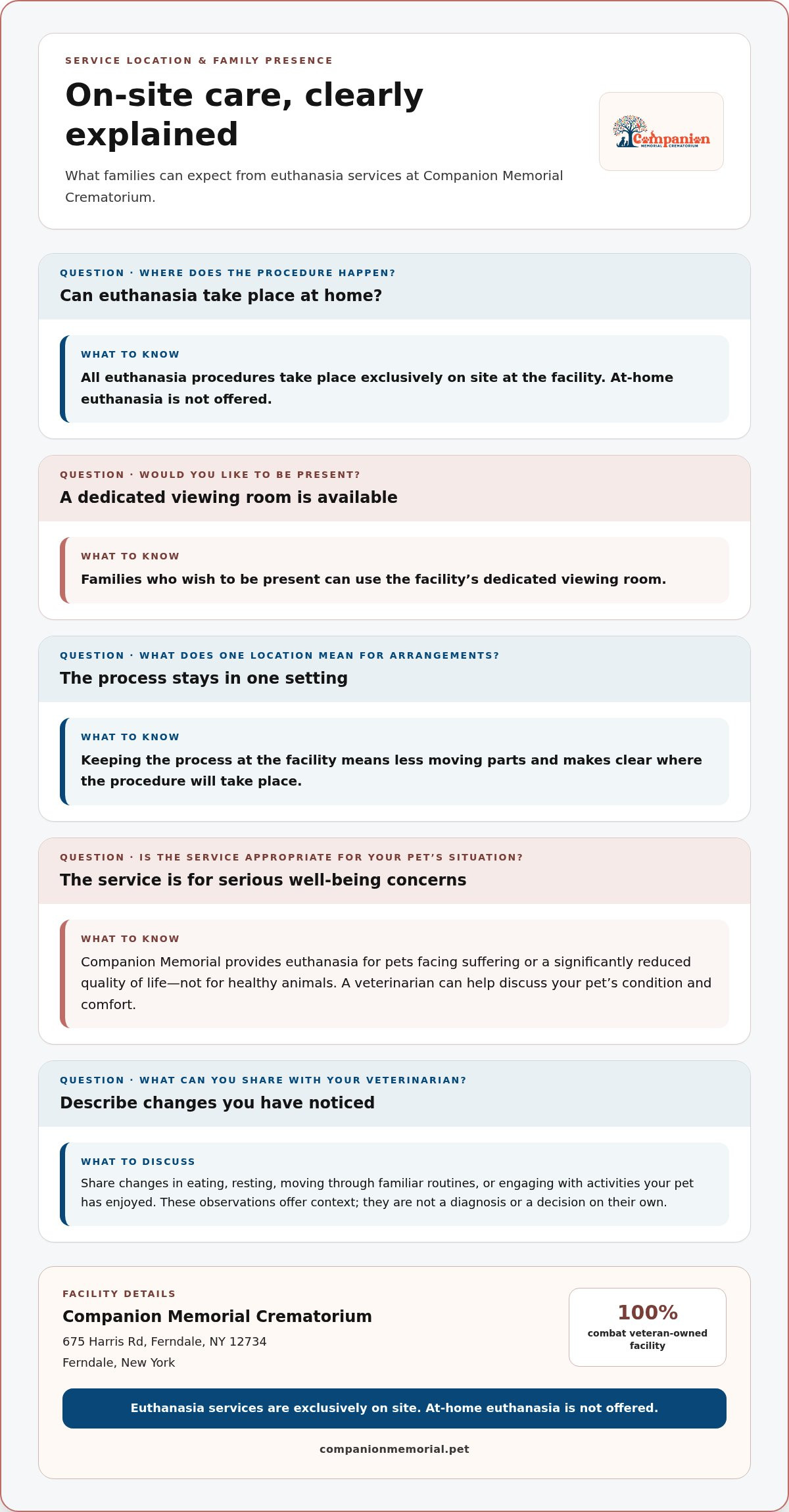
Companion Memorial Crematorium is a 100% combat veteran-owned facility in Ferndale, New York. Euthanasia services take place exclusively on site, not at home. For families who can travel to the facility, keeping the process in one setting means less moving parts. A dedicated viewing room is available for families who wish to be present. This guide explains what to expect from on-site euthanasia and aftercare, including the differences between private, individual, and group cremation, so you can understand the options and consider a respectful next step without feeling rushed.
Key Takeaways
- Learn how comfort-focused care and veterinary guidance can help you consider your pet’s quality of life without feeling rushed.
- Explore dignified pet end of life care CT families can consider, including practical next steps for discussing changing needs with a veterinarian.
- Understand that Companion Memorial’s euthanasia procedures take place exclusively on site in Ferndale, New York; at-home euthanasia isn’t offered.
- Find out how the dedicated viewing room may support families who wish to be present, and what to consider when choosing aftercare.
- Compare private, individual, and group cremation options, including which choices include returned remains. Companion Memorial Crematorium is 100% combat veteran-owned.
What Dignified Pet End-of-Life Care Means for Connecticut Families
Dignified pet end-of-life care means comfort-focused support and respectful decisions guided by a pet’s needs, veterinary advice, and the family’s values. There is no single plan that suits every pet or family. Care may involve ongoing conversations about comfort and changing needs. It may also include considering euthanasia when a pet is suffering or has a significantly reduced quality of life.
Grief can make practical choices feel difficult. Families may feel sadness, uncertainty, or a need for time to understand their options. There is no single response that measures how much a pet matters, and asking questions does not mean a decision has to be made immediately. A veterinarian can help you discuss changing needs and what may support your pet’s comfort.
How quality of life can guide a conversation with your veterinarian
Describe what you have noticed rather than trying to diagnose the cause. You might mention changes in eating, resting, moving through familiar routines, or engaging with activities your pet has enjoyed. Ask what these changes could mean and what comfort-focused care may involve. Your observations can give your veterinarian useful context, but no single sign or checklist can make the decision on its own.
It may help to keep brief notes and bring questions to an appointment. You could ask, “What should I watch for?” or “How might we support comfort as needs change?” Your veterinarian can consider the whole situation with you. For a general overview of animal euthanasia, including its context and methods, see the linked reference.
What support can look like during a difficult transition
Support begins with clear information, room to ask questions, and respectful attention to the pet and family. Emotional needs and practical arrangements can arise at the same time, so learning about care options and what happens next may make the process easier to navigate. If you are weighing signs and timing, learning about recognizing when it may be time for euthanasia can help you frame questions for your veterinarian.
Families in Connecticut, New York, Pennsylvania, and New Jersey can consider on-site care in Ferndale, New York. Companion Memorial Crematorium is located at 675 Harris Rd, Ferndale, NY 12734, and is 100% combat veteran-owned. Euthanasia procedures take place exclusively on site; at-home euthanasia isn’t offered. The facility has a dedicated viewing room for families who wish to be present. Keeping care in one setting means less moving parts and makes clear where the procedure will take place.
Choosing dignified pet end of life care CT means taking the next step with care, not pressure. Begin by sharing your observations with your veterinarian, then give yourself time to understand the options and practical arrangements. Whether you need a conversation about comfort or information about an on-site service, you can ask questions and move forward at a pace that feels considered.
End-of-Life Decisions in Connecticut: Comfort, Timing, and Care Choices
Decisions about a pet’s care are personal, and there is no one answer for every family or animal. A veterinarian can help you understand what changing needs may mean, discuss ways to support comfort, and explain which choices may be appropriate in your pet’s circumstances. Rather than relying on one difficult day or observation, use the conversation to understand your pet’s condition and consider the guidance available to you.
Companion Memorial provides euthanasia only for pets facing suffering or a significantly reduced quality of life. The service is intended for situations involving serious concerns about a pet’s well-being, not for healthy animals. Families considering dignified pet end of life care CT can talk through their concerns with their veterinarian and take time to understand the care and aftercare arrangements relevant to their situation.
Questions to discuss when a pet’s needs are changing
Before or during an appointment, share specific changes you have noticed. Describe how your pet’s usual routines have shifted, which activities they still enjoy, and what seems to affect their comfort. These observations are not a diagnosis, but they can give your veterinarian useful context.
- What could the changes we’ve noticed mean for our pet’s comfort?
- What care options may support comfort in this situation?
- Which changes should prompt us to revisit this conversation?
- Could you explain that term or option in simpler language?
It’s reasonable to ask for clarification or write down the answers. The ASPCA End-of-Life Care resource also discusses care approaches, including hospice and euthanasia, and can provide background for questions you may want to raise with your veterinarian.
How to think through the next step without feeling rushed
Where possible, separate the medical conversation from memorial planning. First, focus on what your veterinarian says about your pet’s circumstances and comfort. Then, when you’re ready, consider practical arrangements and what you’d like to know about aftercare. Some families prefer to discuss these topics together; others find it easier to take them one at a time. Either approach can be respectful.
If a term, recommendation, or choice feels unclear, ask for it to be explained again. You can also ask which decisions need attention now and which can wait. The aim is to leave with a better understanding, not to feel pressed into a choice. For families considering Companion Memorial, euthanasia procedures take place exclusively on site in Ferndale, New York. At-home euthanasia isn’t offered, so the service location is clear before you make arrangements.
Once you’ve discussed your pet’s needs with a veterinarian, you can explore the practical details of on-site pet euthanasia, including what families can expect at the facility. If you’re beginning to consider this service, Companion Memorial’s on-site care information is a useful next step as you weigh arrangements at your own pace.
On-Site Pet Euthanasia Near Connecticut: What to Expect in Ferndale
For Connecticut families considering dignified pet end of life care CT, it helps to know where a service takes place before making plans. Companion Memorial’s euthanasia services take place exclusively on site at 675 Harris Rd, Ferndale, NY 12734, USA. At-home euthanasia isn’t offered. Because the facility is in New York, families traveling from Connecticut can factor in the location when considering this option.
A facility-based process brings the service together in one setting, with less moving parts for families to coordinate. A dedicated viewing room is available for those who wish to be present. You can consider whether the setting and practical arrangements suit your needs. Using the viewing room is an option, not an expectation.
What the on-site setting offers families
The viewing room provides a dedicated space at the facility for families who wish to be present during the procedure. Knowing this option is available can help you think about what participation would feel right for you and your family. Being present is not the right choice for everyone. The important point is that the location and viewing-room option are clear before you plan a visit.
Because the facility is in Ferndale, New York, families traveling from Connecticut can use the exact address to plan and decide whether an on-site appointment suits their circumstances.
How to prepare for an on-site appointment
Next-day appointments are available by request. If you’re considering an appointment, writing down questions in advance can help keep practical details clear during an emotionally difficult time. For example, note whether you’d like to be present in the viewing room and what you want to understand about the visit.
- Write down questions about what to expect at the facility.
- Consider whether you wish to be present in the viewing room.
- Keep the address handy as you plan for the visit: 675 Harris Rd, Ferndale, NY 12734, USA.
- If timing matters, note that next-day appointments are available by request.
These preparations don’t require you to settle every decision at once. They help you identify what information would be useful and make the location and service model easier to understand. Families may also find it helpful to review a guide to compassionate on-site pet euthanasia in Ferndale for service-specific details as they consider their next step.
Companion Memorial’s on-site model offers a clear location and a dedicated viewing-room option. With these details understood, Connecticut families can consider whether traveling to Ferndale fits their circumstances and discuss their pet’s needs with a veterinarian. Clear expectations can make planning more manageable while leaving each family room to decide what feels appropriate.
Aftercare Choices for Connecticut Families: Cremation and Memorials
After saying goodbye, families may want to understand what happens next and whether their pet’s remains will be returned. Companion Memorial offers private, individual, and group cremation. The distinctions matter: they describe how pets are handled during cremation and what happens to the remains afterward. Knowing the details can help Connecticut families choose aftercare that aligns with their wishes, without requiring them to decide on every memorial detail at once.
How the cremation options differ
To compare the options, consider whether your pet is cremated alone or with other pets, and whether the remains are returned.
| Option | How it works | What happens to the remains |
|---|---|---|
| Private cremation | Your pet is alone in the cremation chamber. | Remains are returned with a wood urn and cremation certificate. |
| Individual cremation | Pets are together in the cremation process but kept separate. | Your pet’s remains are returned separately with a certificate. |
| Group cremation | Pets are cremated communally. | Remains are not returned; they are scattered in a private memorial garden. |
Private and individual cremation both include the return of remains, but they are not the same arrangement. With private cremation, your pet is alone in the chamber. With individual cremation, pets are together but kept separate, and your pet’s remains are returned separately. Group cremation is communal, and the remains are not returned to the family.
Memorial choices and clear expectations
Private cremation includes a wood urn and cremation certificate. Urns are available for cats and dogs, with size determined by the pet’s weight. Individual cremation includes a certificate and the separate return of remains. With group cremation, remains are scattered in a private memorial garden rather than returned. These practical differences can guide your choice, whether keeping the remains is important or a communal memorial feels more fitting.
Cremation completion takes 7-10 days. Next-day appointments are available by request; this refers to appointment availability, not the cremation completion time. Keeping those timeframes distinct can make planning clearer, especially when arranging a visit and considering aftercare together.
For a closer explanation of private, individual, and group cremation, review the cremation options as you consider what feels right for your family. For dignified pet end of life care CT, understanding how each option differs can bring clarity to an emotionally difficult decision. Take the time you need to consider whether returned remains in an urn, separately returned remains, or remains not returned best reflects your wishes.
Planning Dignified Pet End-of-Life Care with Companion Memorial
When the next step feels difficult, a simple order can make the practical decisions easier to manage: discuss your pet’s quality of life with a veterinarian, understand what on-site care involves, then consider aftercare. You don’t need to settle every detail at once. Each conversation can clarify a different part of the process, leaving room to ask questions and make choices that reflect your pet’s circumstances and your family’s wishes.
Companion Memorial Crematorium is 100% combat veteran-owned and provides on-site euthanasia only for pets facing suffering or a significantly reduced quality of life. All procedures take place at the Ferndale facility, not at home. Families who wish to be present can use the dedicated viewing room. Knowing these details in advance can help you decide whether this setting suits your needs and what you’d like to understand before making arrangements.
What to have ready when contacting the facility
You don’t need a prepared script. Writing down the questions that matter most may help if it’s difficult to remember them during an emotional conversation. For example, ask about the on-site process and the viewing-room arrangement. You can also mention whether you’re considering private, individual, or group cremation, so the aftercare options you want to discuss are clear.
Service pricing is available upon request. You can ask about pricing alongside your questions about cremation and what happens to the remains. Private, individual, and group cremation have different arrangements, so sharing which options you’re considering can help keep the conversation focused on the details you need.
A respectful next step for families
Companion Memorial is located at 675 Harris Rd, Ferndale, NY 12734, USA. The facility is in New York, and euthanasia procedures are conducted exclusively on site. Cremation completion takes 7-10 days. Keeping appointment availability and cremation completion distinct may help with planning: an appointment is one part of the visit, while cremation completion refers to the aftercare process.
If you’re ready to ask questions, contact the facility at Phone (845) 292-6711 or Email [email protected]. You can ask about on-site care, the viewing room, or aftercare options. You don’t need to have every answer before reaching out. A conversation can help you understand the practical details and consider a next step at your own pace.
For families seeking dignified pet end of life care CT, the process can begin with a quality-of-life conversation, continue with clear information about on-site care, and move to aftercare when you’re ready. If you’d like to learn more about the facility and its services, visit Companion Memorial’s website.
Take the Next Step at Your Own Pace
You don’t need to have every answer before taking a next step. A question about what feels right for your pet, a conversation with your veterinarian, or a request for practical information can each bring greater clarity. Dignified pet end of life care CT is not about following a single path; it’s about making considered choices with your pet’s needs and your family’s wishes in mind.
For aftercare, knowing how remains are handled can help you choose an option that feels appropriate. Companion Memorial uses state-certified cremation procedures, providing a clear point of reference as you consider arrangements and the kind of remembrance you’d like.
To discuss your options or ask questions about on-site support, contact Companion Memorial. You can begin with one question and decide what comes next from there. A thoughtful next step, however small, can help you move forward with care.
Frequently Asked Questions
Is at-home pet euthanasia available through Companion Memorial Crematorium?
No. Companion Memorial Crematorium performs euthanasia procedures exclusively on site, not at home. The facility is in Ferndale, New York, so Connecticut families considering dignified pet end of life care CT can factor in travel when planning. Next-day appointments are available by request. Knowing the location and service setting can help you decide whether this option fits your family’s circumstances.
Can I be present during my pet’s on-site euthanasia?
Yes. A dedicated viewing room is available for families who wish to be present during the procedure. Being there is a personal choice, and families may have different preferences about who attends or whether to participate. If you’re considering the viewing room, mention it when discussing your visit so you can understand how this option fits into your arrangements.
How can I tell whether my pet’s quality of life has changed?
A veterinarian can help you understand changes in the context of your pet’s health. Before the conversation, you might note when you first observed a change and how it affects your pet’s usual day. Share what concerns you, then ask what those observations may mean and what care options could support comfort. Notes can help you explain your concerns, but they aren’t a diagnosis or a decision rule.
Does Companion Memorial Crematorium provide euthanasia for healthy pets?
No. Companion Memorial Crematorium provides euthanasia only for pets facing suffering or a significantly reduced quality of life. The decision should reflect the individual pet’s circumstances and veterinary guidance, rather than a general rule or an assumption based on age alone. If you’re uncertain how your pet’s condition relates to this service, discuss your health and quality-of-life concerns with your veterinarian.
How long does pet cremation take at Companion Memorial Crematorium?
Cremation completion takes 7-10 days. Next-day appointments are available by request, but that refers to appointment availability, not the time required to complete cremation. Keeping those timeframes separate can help with planning and expectations. If you’re coordinating a memorial or waiting for returned remains, use the cremation completion timeframe as your guide.
What happens to my pet’s remains with group cremation?
With group cremation, remains are not returned to the family. They are scattered in a private memorial garden. A certificate may be provided on request. If having your pet’s remains returned is important to your family, compare this option with private or individual cremation before choosing. Each option has a different arrangement for the remains, so consider what best reflects your wishes.
Where is Companion Memorial Crematorium located?
Companion Memorial Crematorium is located at 675 Harris Rd, Ferndale, NY 12734, USA. It is in New York, not Connecticut. Families traveling from Connecticut can use the full address when planning their visit. Euthanasia procedures take place at this facility, and at-home euthanasia isn’t offered.


