

The loss of a dog can hurt deeply because they’re woven into your routines, your home and your sense of companionship. Learning how to cope when your dog dies begins with allowing yourself to grieve, rather than expecting yourself to feel better on a set schedule. You can take small steps to express what you feel and remember the life you shared.
If the quiet at home or the sight of your dog’s belongings feels difficult, you’re not alone. Your grief deserves care and patience, whether you want to talk about your dog, write down a memory, or simply take time before making decisions.
This article offers practical ways to move through the days ahead. You’ll find ideas for sharing your feelings, honoring your dog’s life, deciding what to do with their toys and bedding, and finding pet-loss support. There’s no single right way to grieve, so choose the steps that feel manageable now.
Key Takeaways
- Give yourself room to grieve before deciding whether or when to welcome another pet.
- Share what you’re feeling through conversation, writing or a creative activity that feels comfortable.
- Remember your dog’s life as a whole, including the everyday moments and lessons that made your bond unique.
- Choose what to keep, set aside or pass on from your dog’s belongings at a pace that feels manageable.
- Pet-loss support can give you a place to speak openly and feel less alone in your grief.
1. Allowing time to grieve before getting another pet
Give yourself space to grieve before deciding whether to welcome another dog. Your dog may have shaped ordinary moments, from morning walks and mealtimes to the sound of paws at the door. Familiar routines can make their absence especially noticeable. Write down which moments feel hardest, then consider what support or small change might help. You don’t need to decide your future plans while those feelings are still new.
Getting another pet doesn’t undo or lessen the loss of the dog who died. A new companion will have a different temperament, needs, and place in your household. Before adopting, consider whether you feel ready to care for an individual animal, rather than hoping a new dog will recreate your former relationship. You might welcome a dog while still keeping your previous dog’s favorite bed as a reminder.
Burial and cremation are different choices, and costs depend on the option and arrangements; cremation pricing depends on the selected arrangement and memorial choices and is provided after a quote request. Consider what kind of remembrance feels right for your family, such as a private place to visit or keeping a memorial close. Taking time to understand those preferences can make the decision feel more considered.
When explaining a dog’s death to a child, use clear, gentle words such as, “Max died, and his body has stopped working.” Avoid saying the dog went to sleep, which may confuse a child about sleep. Invite questions, answer honestly in simple language, and let a child express sadness, anger, or curiosity through conversation or drawing.
To remember your dog, choose one specific act, such as framing a favorite photograph, writing down a treasured memory, or planting a flower in a meaningful spot. You may feel ready to adopt when you can consider a new animal’s individual needs without expecting them to replace your dog. There’s no required timeline. Readiness is personal and can change as you grieve.
For a practical pause, set aside adoption decisions until you’ve had time to notice how daily life feels without your dog. Ask yourself whether you can make room for a new animal’s routines, training, and personality. If your household includes children, discuss the decision together and make space for different feelings. One family member may feel ready sooner than another, and that difference deserves a thoughtful conversation.
Learning how to cope when your dog dies can mean postponing major choices while you adjust to life without them. Choose a manageable next step, such as keeping one collar, sharing a story about your dog at dinner, or saving a photograph for a memorial. These gestures honor your relationship without requiring you to decide when grief should end or when another pet should arrive.
2. Expressing grief through conversation, writing, and creative activities
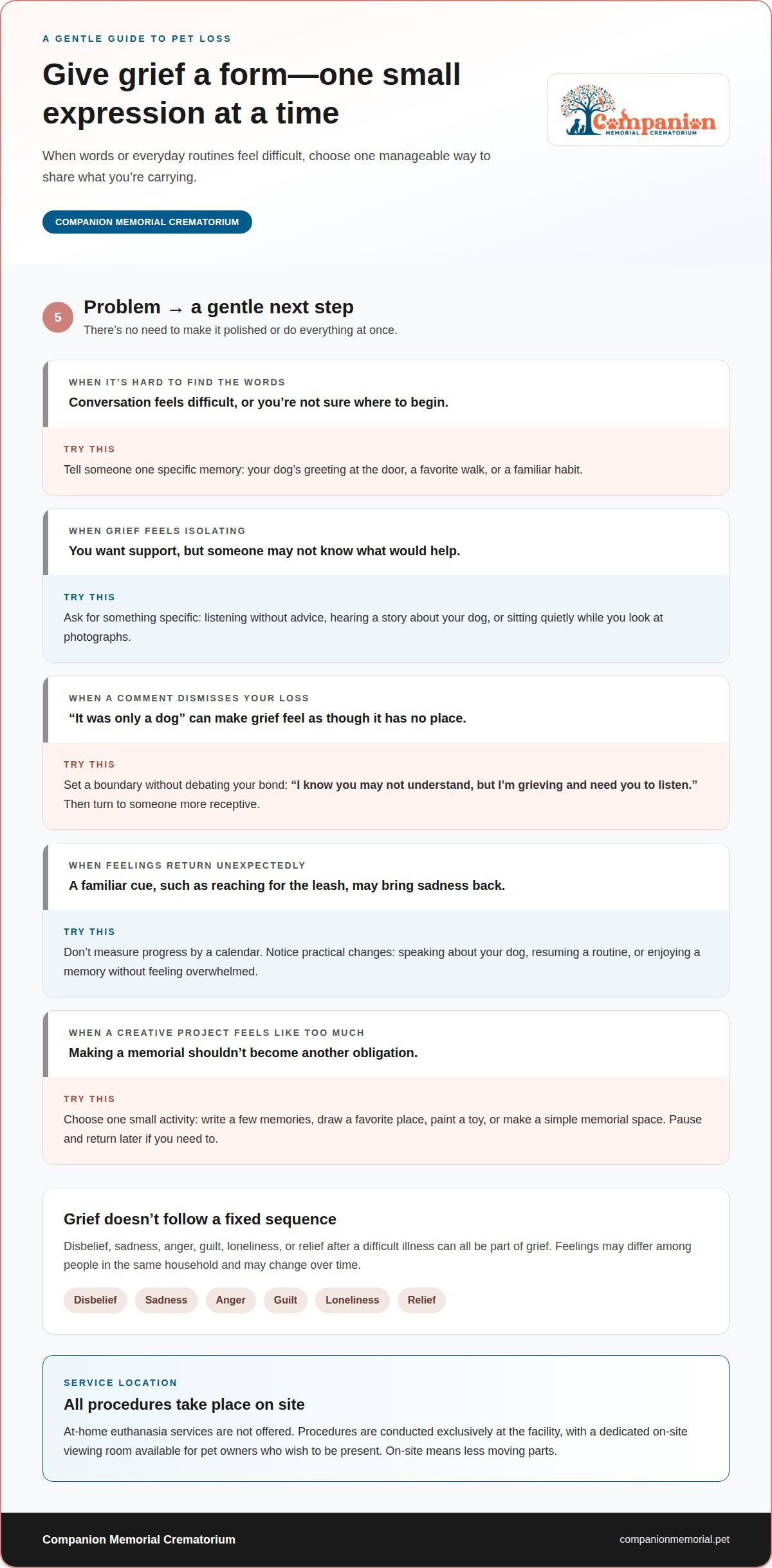
Choose one way to express what you’re carrying today. Tell a trusted friend about your dog’s greeting at the door, write a letter about your favorite walk, or draw the place where you used to sit together. Speaking or creating can give feelings a form when ordinary conversation feels difficult. You don’t need to make something polished or find the perfect words.
Sharing grief with someone can ease the isolation that follows a loss. Say what would help: listening without advice, hearing a story about your dog, or sitting quietly while you look through photographs. If a friend changes the subject, try saying, “I need a few minutes to talk about Bella.” Choose someone who respects that request, whether they knew your dog or not.
Comments such as “It was only a dog” can make you feel that your grief has no place, even though your dog was part of your daily life. You can set a boundary without debating the importance of your bond: “I know you may not understand, but I’m grieving and need you to listen.” Then seek someone more receptive, such as a relative who remembers your dog’s routines.
Grief after a dog dies has no set duration. Its intensity can change, and a familiar cue, such as reaching for the leash, may bring sadness back. Rather than measuring progress by a calendar, notice practical changes: you can speak about your dog, resume a routine, or enjoy a memory without feeling overwhelmed.
Common reactions include disbelief, sadness, anger, guilt, loneliness, or relief after a difficult illness. These feelings don’t follow a fixed sequence, and people in the same household may experience them differently. One person might want to talk while another prefers quiet. Naming a feeling, such as “I miss our evening walks,” can make it easier to explain what support you need.
For a creative expression, choose a small, specific project. Write three memories in a notebook, paint your dog’s favorite toy, or sculpt a simple keepsake. You could also make a small memorial space with a photograph and a meaningful object. If a task feels too difficult, pause and return to it later; the activity should honor your connection, not become another obligation.
If you’re unsure how to cope when your dog dies, try one manageable action: message someone who will listen, write down a memory, or make art for a few minutes. If speaking feels easier than writing, record a voice note about your dog’s familiar habits. These expressions won’t erase grief, but they can help you share it and remember your bond in your own way.
3. Honoring a pet’s life and remembering what they taught you
The circumstances of your dog’s death may feel vivid, but they don’t define your entire relationship. Make room for memories from before that final chapter. Write down ordinary moments: how your dog greeted you, where they liked to rest, and what made them playful. These details bring the whole life you shared into view, not only the loss.
Try making a simple timeline of your dog’s life with you. Include the first day at home, a favorite walk, a move to a new house, or a quiet habit you came to expect. You might remember Luna waiting beside the kitchen while you made breakfast. A timeline can show how many kinds of companionship filled your days, without turning grief into a formal project.
Your dog may have taught you something that still shapes your life. Caring for them might have helped you become more patient, take regular walks, or notice small changes in someone you love. Write one lesson in a journal, then add a practical way to carry it forward. If your dog brought you outdoors, a short walk along a familiar route can honor that part of your bond.
Stories can preserve your dog’s distinctive character for the people who knew them. Ask a family member to share a memory, then record details you might otherwise forget: the sound of a particular bark, a favorite greeting, or a funny response to the doorbell. If your dog carried a slipper around the house, include that detail. Specific stories make remembrance personal.
Choose a quiet act that reflects your dog’s character. Remember a dog who loved the garden by tending a plant, or honor a companion who welcomed visitors by sharing a favorite story with guests. Keep the gesture small enough to feel comforting, not like another obligation. It can change over time as different memories come forward.
If your dog’s final days involved illness or difficult decisions, let other memories sit alongside those moments. Write one sentence about the care you gave, then add a moment when your dog was relaxed, curious, or joyful. This doesn’t erase the pain. It keeps your relationship wider than its ending, making room for affection, gratitude, and sadness together.
When grief makes memories difficult to reach, ask someone who knew your dog to describe a moment you shared. You might hear a forgotten detail or see a familiar story from another perspective. Keep the memories that feel meaningful, and return to them at your own pace. Honoring your dog doesn’t require a perfect tribute. A remembered habit or lesson can carry their place in your life forward.
4. Keeping a pet’s belongings or passing them on
Your dog’s belongings can hold powerful memories, so you don’t need to decide what to do with everything at once. Start with one area, such as the basket beside the front door, and look at each item separately. A leash may recall daily walks, while an unused food bowl may feel easier to put away. Keep what feels meaningful today and leave the rest for another time.
Make three simple groups: keep, consider later, and pass on. Place your dog’s collar and favorite toy in the first group, a spare blanket in the second, and extra bowls in the third. Use a labeled box or shelf for the items you’re keeping. This gives meaningful objects a place without requiring you to display everything at home.
Some belongings may feel comforting to keep close. Set a favorite toy beside a framed photograph, fold a blanket in a memory box, or hang the collar near your dog’s usual resting place. Choose a private or visible location, depending on what brings comfort. If seeing an item feels painful, store it safely rather than treating that reaction as a final decision.
If you choose to pass items on, sharing your dog’s toys or bedding with another pet owner can give them a new purpose. You might offer a spare leash to a friend with a dog, or give a clean blanket to someone you know who recently welcomed a pet. Tell the recipient the item belonged to your dog if sharing that detail feels right.
Try a gradual approach instead of clearing a room in one sitting. Put away one category, such as food dishes, then pause before sorting toys or bedding. A family member can hold up each item and ask whether you’d like to keep it, set it aside, or pass it on. If you share a home, agree together before moving objects from common spaces.
There’s no single correct way to arrange your dog’s things. Keep the worn tennis ball that recalls games in the yard, while passing on unopened or extra items. You may also change your mind: something set aside today can become a keepsake later, or feel easier to share. Make decisions in small steps, guided by the memories attached to each item and your comfort with seeing it.
5. Pet-loss helplines and support
A pet-loss helpline can offer a focused place to talk about your dog with someone who understands the importance of the bond. Call when you feel overwhelmed, or write down what you want to say first. Note your dog’s name, what happened, and the part of the loss that feels hardest today. You don’t need to tell the whole story at once.
Before calling, consider what kind of support would help. You might want someone to listen, help you put words to guilt, or suggest ways to manage a difficult routine. If speaking feels difficult, begin with one sentence: “I’m grieving my dog, and I need someone to listen.” A written note beside you can help keep the conversation grounded.
Support can also come from a trusted friend, family member, or pet-loss group. Ask for something specific, such as company during your dog’s usual walk time or a chance to share a memory. If a friend minimizes the loss, try someone else who can listen without comparing your grief with theirs. The goal is a conversation that makes room for your relationship with your dog.
Professional help may be useful if grief makes everyday responsibilities difficult or sadness and distress feel unmanageable. A counselor or therapist can help you explore the loss and identify practical ways to cope. Begin by explaining what has changed, such as avoiding a room, struggling to sleep, or finding it hard to concentrate at work. You don’t need to wait for a particular date to ask for help.
When contacting a support service, consider asking how conversations are handled, whether sessions are individual or group-based, and what topics they can address. These questions can help you choose a format that feels comfortable. If you’d rather not speak on the phone, look for a written or group option through a support organization. Choose the kind of conversation you can manage today.
Grief can feel especially isolating when people don’t understand why your dog’s death matters so deeply. You might tell someone supportive, “I’m not asking you to fix this. Please hear me talk about Charlie.” A clear request can help them listen rather than offer advice. If you need more structured support, a counselor can help you find words for feelings that are difficult to share.
If practical arrangements are adding strain, consider learning about private cremation as one option for honoring your dog. For emotional support, choose a person or service where you can speak openly, and take the conversation one step at a time.
Companion Memorial Crematorium: Private Cremation
Companion Memorial Crematorium offers Private Cremation for families choosing an individual memorial arrangement. Individual Cremation and Group Cremation are also available. On-site euthanasia services take place at the facility, not at home, helping keep the process to less moving parts. Families wishing to be present during the procedure can use the dedicated on-site viewing room.
If you’re considering cremation or on-site euthanasia, contact Companion Memorial Crematorium to discuss what feels right for your family.
Choose a next step that feels manageable
You don’t have to settle every decision about remembrance or the days ahead at once. Choose one next step that feels possible today, such as asking a loved one to sit with you or writing down what you need help deciding. Learning how to cope when your dog dies includes letting your next steps reflect your needs, not someone else’s timeline.
If you’re considering cremation arrangements, you can reach out when you feel ready to discuss them. Contact Companion Memorial Crematorium to share your questions and consider what feels right for your family.
Your relationship with your dog remains part of your story. Move forward gently, one decision and one day at a time.
Frequently Asked Questions
Why does the loss of a pet hurt so much?
Losing a dog can mean losing a close companion and familiar parts of everyday life. Your dog may have greeted you each morning, joined your walks, or kept you company while you worked. Their absence can make ordinary routines feel different, while reminders bring memories and sadness close. The bond matters because it was part of your life, not because anyone else needs to understand or measure your grief.
What are healthy ways to cope with the grief of losing a dog?
Choose a response that gives your feelings room without adding pressure. Write a short note to your dog, speak with someone who listens, or take a quiet walk along a familiar route. If a reminder feels too difficult today, step away and return to it later. Keep essential routines manageable, such as preparing a simple meal or asking someone to help with an everyday task.
How can I support another family member grieving a dog?
Offer specific, practical support rather than asking them to explain their grief. You might say, “Would you like company at dinner?” or “I can put away the food bowls if you want.” Let them decide whether to talk, look at photos, or have quiet time. If a child is grieving, answer questions honestly in simple words and invite them to share a memory, draw, or choose a keepsake.
What should I do with my dog’s belongings after they die?
Decide what to do with belongings item by item, without clearing everything at once. Keep your dog’s worn collar, place a favorite toy in a memory box, and set extra bowls aside to consider later. If you choose to share clean bedding or toys with another pet owner, explain their meaning if you wish. Keep decisions reversible where possible, so an item can stay stored until you feel ready to revisit it.
Are pet-loss support groups or grief counselors available near me?
Pet-loss groups and grief counselors may be available in your area, though options differ by community. Search for “pet-loss support group” alongside your town or region, or ask someone you trust to help you look. Consider whether you’d prefer a group conversation, individual counseling, or written support. Choose a setting where you can speak openly about your dog and the effect of the loss.


