

The quietest moments after losing a pet can be the hardest: reaching for the leash, listening for familiar paws, or passing a favorite resting place. Pet loss support can help you feel less alone, but grief may still be difficult to explain, especially when everyday reminders keep surfacing.
Your bond was real, and you don’t need to rush through mourning or prove how much your companion mattered. This guide offers practical ways to care for yourself, support children and other pets, and find meaning when guilt or uncertainty about end-of-life decisions weighs on you. You’ll also find ways to adjust familiar routines, seek connection, and create a remembrance that feels personal.
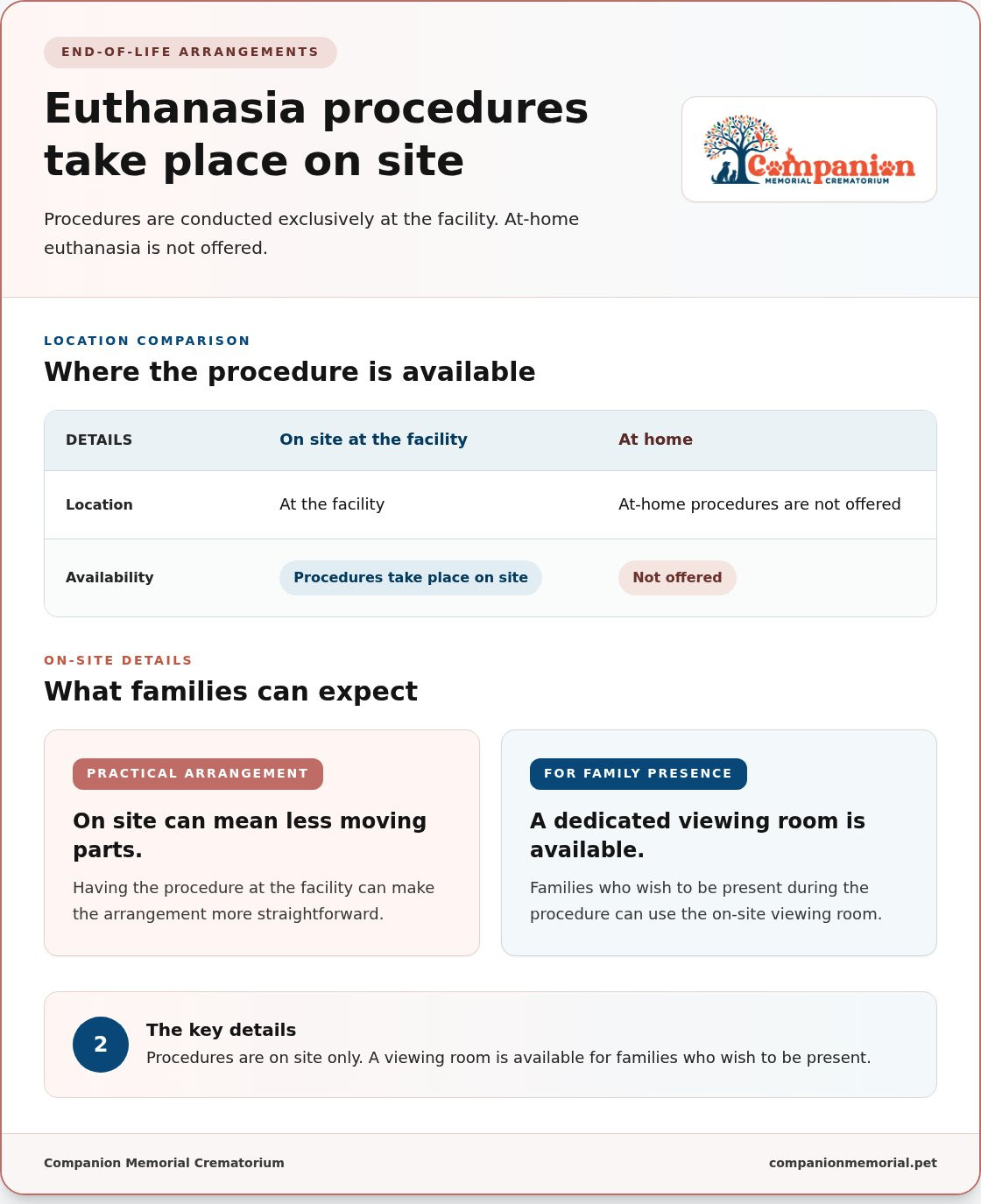
If you’re considering euthanasia, procedures take place exclusively on site at our facility. We don’t offer at-home euthanasia. Having the procedure on site can mean less moving parts, and our dedicated viewing room is available for families who wish to be present. Whatever the days ahead hold, you can take them one step at a time, with care for your grief and the bond you shared.
Key Takeaways
- Pet loss support can include emotional, social, and practical care, and your grief deserves recognition.
- Sadness, anger, guilt, numbness, and even relief can arise in different ways. Notice when you may need additional support.
- Choose one immediate need, reach out to someone you trust, and take one manageable step with daily routines or belongings.
- Informal support, peer groups, and qualified professionals can each offer different kinds of help. Consider what feels right for you.
- Remembrance can be private or shared. On-site end-of-life arrangements include a dedicated viewing room for families who wish to be present.
Pet loss support begins with recognizing that your grief is real
Losing a companion can change the shape of an ordinary day. The quiet at mealtime, an unused leash, or a familiar place by the window may make home feel different. Your pet was part of your routines and relationships, and their absence can be felt in ways that are difficult to explain.
A pet’s loss can be deeply significant, and your grief deserves care. Pet loss support means emotional, social, and practical help during bereavement. It might begin with someone willing to listen, include a friend helping with a difficult task, or involve guidance from a qualified professional. Support doesn’t have to follow a set plan. What feels useful may change from one day to the next.
There’s no single pattern for grieving and no fixed timetable for feeling better. Some people want to talk; others need quiet or find comfort in familiar routines. You may experience strong feelings, feel numb, or move between different responses. None of these reactions is required, and none determines how much your companion mattered. For a broader overview of understanding pet loss and grief, you can explore how bereavement may affect people and the coping approaches discussed.
Why losing a pet can feel overwhelming
Companionship is often woven into small, repeated moments: a greeting at the door, a walk at the usual hour, or the steady presence of a pet nearby while you work. After a loss, these patterns can continue by habit. You might prepare food before remembering, or wake expecting to hear movement. Such reminders can make the absence feel close again, even when the day seemed manageable.
Grief can also touch relationships. People in one household may mourn differently or at different times, and not everyone outside the family may understand the depth of the bond. You don’t need to compare this loss with another kind of loss to justify your feelings. Your relationship was your own; its meaning isn’t measured against someone else’s experience.
Grief can begin before a pet dies
When an animal’s health or quality of life is changing, grief may begin before death. This is often called anticipatory grief. Love, worry, hope, and uncertainty can exist together as you care for your pet and consider what lies ahead. Feeling sadness in advance doesn’t mean you’ve given up or that you care any less. It can be part of facing a changing reality while remaining attentive to the companion beside you.
If your pet has died and you’re unsure what needs attention first, a guide to what to do when a pet dies can help make immediate arrangements feel more manageable. For now, acknowledge what’s happening without requiring a particular emotion or timetable. Support begins with making room for your own experience.
What pet loss grief can feel like, and when to seek more support
Grief after a companion animal dies can be difficult to predict. You might feel sadness or disbelief, struggle with guilt about care decisions, or notice anger, numbness, or even relief after a period of worry or caregiving. Several feelings can coexist, and you don’t have to experience any particular one. There’s no required response or sequence to follow.
Common feelings after a companion animal dies
A feeling may become stronger around a reminder, then ease again. It may help to describe what’s happening in plain words: “I keep replaying that conversation,” “I feel unsettled today,” or “I miss having someone beside me.” You don’t need to find the perfect explanation or justify your response to anyone.
If it would help to hear other perspectives, American Humane’s support and coping strategies for pet loss offers ideas for grieving pet owners. Take what feels useful and leave the rest. Support should respect your beliefs and circumstances, not add pressure to grieve in a particular way.
Grief has no single timetable; your feelings may shift, return, or settle in their own time. You don’t have to fit your experience into prescribed stages or measure it against someone else’s. If people close to you respond differently, tell them what you need, whether that’s a listening ear, company, or space.
Recognizing when additional help may be useful
Consider reaching out to a qualified grief professional if distress feels unmanageable or makes it hard to manage daily responsibilities, relationships, or rest. You don’t need to wait until things feel unbearable. A professional can offer a focused setting to talk through difficult emotions and consider what support may help.
If you’re worried that you or someone close to you may be unsafe, seek urgent local crisis or emergency help. Immediate safety matters. Asking for support is a thoughtful step toward getting through a difficult moment.
Practical pet loss support for home, family, and daily routines
Grief can make ordinary responsibilities feel unusually demanding. Rather than trying to restore every routine at once, focus on what would make today a little more manageable. A small, considered step is enough.
Try this gentle sequence:
- Identify one immediate need. It could be a meal, a quiet hour, help with an errand, or someone to sit with you.
- Choose one trusted person. Be specific: “Could you bring dinner?” or “Would you walk with me?” A clear request can make it easier for someone to offer useful help.
- Take one manageable step. Do only what feels possible now. You can decide what comes next later.
Making the first days feel more manageable
Practical help can ease the weight of everyday tasks. If a friend offers, you might accept help with a meal, shopping, school pickup, or another responsibility. You can also ask someone to handle a particular errand rather than trying to explain everything you need.
There’s no required time to put away a bed, bowl, leash, or other familiar belonging. Keep items nearby, move them to a quieter place, or make no decision yet. A small remembrance, such as looking at a photograph, writing down a memory, or sitting quietly in a favorite spot, can be meaningful if it feels right. It doesn’t need to become a formal ritual.
Supporting children and other pets
Children may need clear, gentle language and room to ask questions more than once. Use words they can understand, such as “died,” and answer honestly without giving more detail than they’re ready for. You can say, “I’m sad too, and we can talk about our questions together.” Let a child choose whether to draw a picture, share a story, keep a photo, or take part in another remembrance. Participation should be an invitation, not an obligation.
Surviving pets may respond to changes in the household in different ways. Where practical, keep familiar feeding, walking, and rest routines. Their presence can be comforting, but they don’t need to take on the role your companion held. If their behavior or care raises concern, speak with your veterinarian.
These ideas are options, not instructions. Your household may include different ages, beliefs, schedules, and needs, so adapt each suggestion or set it aside. Pet loss support can be as simple as accepting one practical offer, keeping a familiar routine, or making space for a memory in a way that belongs to your family.
Finding pet loss support that respects your needs and beliefs
Support can come from different places, and you don’t have to choose just one. Consider what would help most right now: someone to listen without trying to fix things, contact with people who understand pet bereavement, or focused guidance from a qualified professional. Your beliefs, privacy, and comfort matter. You can change the kind of support you seek as your needs shift.
Choosing between personal, peer, and professional support
A trusted friend or family member may offer a familiar, personal presence. They can listen, share memories, or help with an everyday task. If they’re unsure what to say, ask directly for what you need, such as company or a chance to talk about your pet without being hurried.
Peer groups bring together people who have experienced pet loss. Hearing others describe their grief may ease a sense of isolation, while a qualified grief professional can offer focused support if you want help working through difficult feelings or their effect on daily life. These options serve different needs. None is a required step, and you can decide what feels appropriate.
Finding support close to home or online
If you live near Ferndale or elsewhere in Sullivan County, New York, local options may vary over time. Check current details before relying on a group’s schedule or format, and consider asking your veterinarian whether they know of reputable bereavement resources in the community. A local library, community organization, or counseling practice may also be a starting point for current information, though offerings differ.
Online communities can connect you with others beyond your immediate area. Before joining, look for clear privacy expectations and respectful moderation, including how personal information is handled and what happens when a post causes harm. You can read quietly before participating, share only what feels comfortable, or leave if the space doesn’t feel safe or supportive. You’re allowed to protect your boundaries.
Some people also find comfort in remembrance. If you’re considering aftercare, take time to explore what feels fitting for you and your beliefs; there’s no single right way to honor a companion. Memorial ideas can be private, shared with loved ones, or woven into daily life. Keep the choice personal rather than treating it as another task to complete.
Pet loss support should meet you with respect, not pressure. For information about remembrance and aftercare, explore memorial and aftercare options at your own pace.
A gentle next step: honoring your companion while you grieve
Remembrance doesn’t have to be a single event or a decision you make all at once. It may be private, shared with loved ones, shaped by spiritual beliefs, or quietly woven into daily life. You might choose to mark an important date, keep a story alive in conversation, or simply let memories arise when they do. There’s no correct form, and you can change your mind about what feels meaningful.
Memorial choices can reflect a personal bond
A tribute can be as simple or as considered as you wish. Some families appreciate a physical reminder, while others prefer a gathering or personal observance. If you’re making a choice with others, share what matters most to each person and allow different approaches. One family member may want to speak about the pet, while another may hold their memories more privately. Both responses can honor the same bond.
For families who choose cremation, urns provide a place to keep a pet’s ashes, and an official cremation certificate documents the cremation. These are practical aftercare items; the meaning you attach to them is personal. Take the time you need to consider whether either would be comforting. You don’t need to choose an object or create a formal tribute to show that your companion mattered.
Making room for remembrance over time
Grief can change, and so can the ways you wish to remember your pet. A choice that feels right now may feel different later. You can revisit it without treating that change as a failure or a sign that your love has shifted. Some people find that remembrance becomes less about a dedicated act and more about the values or small habits their companion brought into their lives.
If you’re sharing a tribute, consider what feels comfortable to everyone involved. A family conversation can make space for differing beliefs and preferences without asking anyone to explain or defend their grief. You might agree to keep the occasion simple, or decide that no shared observance is needed. The most meaningful choice is one that feels respectful to you, not one that meets someone else’s expectations.
There’s no deadline for honoring a companion. Let the next step be modest and personal, or wait until you have a clearer sense of what would bring comfort. Your memories remain part of your life, whether you mark them openly or carry them quietly. Give yourself permission to find your own way forward, one thoughtful choice at a time.
Let the next step be gentle
There’s no need to decide everything today. A small act of remembrance, a conversation with someone you trust, or simply allowing yourself a quiet moment can be enough for now. Pet loss support can take different forms as your needs change, and you’re allowed to move at your own pace.
Companion Memorial Crematorium is a veteran-owned facility offering private, individual, and group cremation options. Families in New York, Connecticut, Pennsylvania, and New Jersey can consider these choices as part of planning a meaningful goodbye, without needing to make remembrance look any particular way.
Explore on-site cremation and memorial options when you feel ready. The bond you shared remains yours to honor, one gentle step at a time.
Frequently Asked Questions
How long does pet loss grief last?
There’s no single timetable for grieving a pet. Feelings may shift, and a reminder such as an anniversary or familiar sound can bring sadness back after a steadier stretch. Give yourself room to respond at your own pace rather than comparing your progress with someone else’s. Pet loss support can include adjusting expectations on difficult days. If grief feels unmanageable or disrupts daily life, consider speaking with a qualified professional.
Is it normal to feel guilty after a pet dies?
Guilt is a feeling some people experience after a pet dies, particularly when care decisions were difficult. Feeling guilty by itself doesn’t prove that you made the wrong choice. If your thoughts keep circling around a particular moment, try writing down what you remember and what you knew at the time. You could also talk it through with someone you trust or a qualified professional, and offer yourself the compassion you’d give a friend.
How can I help a child cope with the loss of a pet?
Use clear, age-appropriate language, and let the child set the pace for questions and conversation. Euphemisms such as “went to sleep” may confuse them, so explain that the pet died in simple terms. A drawing, a story, or a quiet remembrance can be offered, not required. Check in again later, too. Children may return to the subject as they understand more or encounter new reminders.
Can other pets grieve when a companion dies?
A surviving pet may respond to the absence of a familiar animal or changes in household patterns, but responses vary. Watch for changes in appetite, activity, or behavior, and keep feeding and rest times predictable where practical. Avoid assuming that a pet needs a particular kind of comfort or will react in a specific way. If you’re concerned about a change in health or behavior, consult your veterinarian.
Should I keep my pet’s belongings after they die?
You can keep your pet’s belongings for as long as you wish; there’s no required timeline for deciding. A blanket or toy might feel comforting in a familiar place, while other items may be easier to put away gradually. If you’re uncertain, place an item somewhere safe and revisit the decision later. Keeping one meaningful object can preserve a personal connection without requiring a formal memorial.
What if friends or family don’t understand how much I miss my pet?
It can feel isolating when people close to you don’t understand the bond you shared. Try naming one specific memory and explaining what would help, such as being listened to without advice. If you’re in New York, Connecticut, Pennsylvania, or New Jersey, a veterinarian may be able to suggest ways to look for current community resources. A pet loss peer group or qualified professional can also offer a respectful space to talk.
Is it okay to feel relief after a pet dies?
Yes, relief can be part of grief, especially after a period of caregiving, worry, or difficult decisions. It can sit alongside love and sadness without diminishing the relationship you had. You don’t need to choose one feeling as the truest one. If relief troubles you, try describing what it’s connected to, such as an end to uncertainty or strain, and talk it through with someone you trust or a qualified professional.


