

What if the most comforting thing you can offer a family grieving their beloved pet isn’t the perfect words, but the willingness to listen? If you’re wondering how to comfort a grieving family pet, you may worry about saying the wrong thing or making their loss feel smaller. A quiet expression of care can matter more than a polished response.
Pet loss can leave a deep ache, and grief may feel lonelier when others don’t recognize the pet’s place in the family. You don’t need to fix the pain or know exactly what the family needs. Acknowledge the loss, make room for memories, and let them guide you on whether they want company, practical help, or time alone.
This article shares thoughtful words and considerate gestures to help you show up with care. You’ll find ways to listen without rushing grief, offer useful support without adding pressure, and honor the pet as a cherished part of the family’s life.
Key Takeaways
- Learn how to comfort a grieving family pet by choosing words that honor the bond without trying to rush the family through grief.
- Use the pet’s name when it feels welcome, and share a kind memory to show the family their loss is seen.
- Make support easier to accept by offering a specific task, then following up gently.
- Keep conversations with children truthful and age-appropriate, while allowing each child and surviving pet to respond in their own way.
- Explore simple ways to remember the pet, guided by what feels meaningful to the family.
How to Comfort a Family Grieving the Loss of a Pet
Losing a beloved pet can bring profound grief because the relationship mattered. A pet may have been part of the family’s daily rhythms, offering companionship at the door, during quiet evenings, and through years of shared life. Their absence can change the feel of a home.
A steady principle can guide your response: comfort means recognizing the loss, not trying to erase it. There’s no perfect phrase that will make grief disappear. Sincere presence, a patient ear, and respect for the family’s bond can matter more than advice.
This talk offers context for the depth of pet-loss grief and why a compassionate response matters.
Why the loss of a family pet can feel so profound
A pet’s presence is woven into ordinary routines: feeding, walks, play, and the familiar comfort of having them nearby. When those moments end, family members may feel the loss in different ways. One person may want to talk, while another prefers quiet or returns to routines gradually. Children may express sadness differently from adults, and surviving pets may also behave differently after a household change. Avoid assuming that everyone will grieve alike or on the same timeline.
Pet grief can also feel harder to share when others minimize it. The term disenfranchised grief describes grief that isn’t fully acknowledged or supported socially. Recognizing the family’s loss without comparing it to another bereavement helps make room for their experience.
What to do before offering comfort
Consider your relationship with the family and what kind of support would feel appropriate. A close friend might offer a visit; a colleague may send a brief, thoughtful message. Choose a quiet, private moment rather than raising the loss in a crowded setting or expecting an immediate conversation.
Understanding how to comfort a grieving family pet begins with offering care without putting pressure on the family. You might say, “I’m thinking of you. There’s no need to reply.” They may welcome your words, need time, or not know what they need yet. Let them set the pace, and make your presence an offer, not an expectation.
What to Say to a Family After Their Pet Dies
Simple, sincere words are often enough to begin. You don’t need to find a phrase that makes everything better. Try, “I’m so sorry,” or “I remember how much you loved them.” These statements acknowledge the family’s loss without claiming you know exactly how they feel.
If you know the pet’s name, use it when it feels welcome. Naming them can show that you’re not afraid to remember the pet or acknowledge their place in the family. You might say, “I’ve been thinking about Bella,” then leave room for the family to decide whether they want to talk. An open question such as “Would you like to tell me about them?” invites sharing without demanding it. Listen to the answer and let the conversation follow their lead.
Gentle phrases that acknowledge the family’s loss
A kind memory can bring comfort when it centers the pet and feels appropriate to your relationship. Keep it brief and personal: “I’ll remember how excited Max was to see everyone.” Then pause. The family may want to share their own memories, or they may not feel ready. As the American Psychological Association explains, research shows social support helps people through grief. Listening without steering the conversation is a meaningful way to offer that support.
A useful distinction is this: empathy acknowledges the loss; unsolicited advice tries to explain it away. “I’m sorry you’re missing him” recognizes what the family is feeling. “At least he lived a long life” may be intended kindly, but it can sound like a reason they shouldn’t hurt.
Responses that can unintentionally minimize grief
Some remarks can close a conversation even when they’re meant to reassure. Avoid suggesting that the family should move on quickly, adopt another pet, or be grateful rather than sad. Don’t compare their loss with someone else’s or imply that one kind of grief matters more. Explanations about fate, age, or illness may also feel painful unless the family brings them up first.
If you’re unsure what to say, keep it honest and gentle. “I don’t know the perfect words, but I care about you” is more supportive than quick reassurance that doesn’t reflect the family’s experience. Learning how to comfort a grieving family pet means offering words without expecting them to resolve the pain. If the family is considering aftercare, you can quietly share pet cremation and memorial options as a practical resource, without pressing them to decide.
Practical Ways to Support a Grieving Family
After acknowledging the loss, make your support practical and easy to accept. A grieving person may not have the energy to plan a meal, run an errand, or keep up with ordinary household tasks. Rather than leaving the next step entirely to them, offer one specific form of help and let them decide whether it feels right.
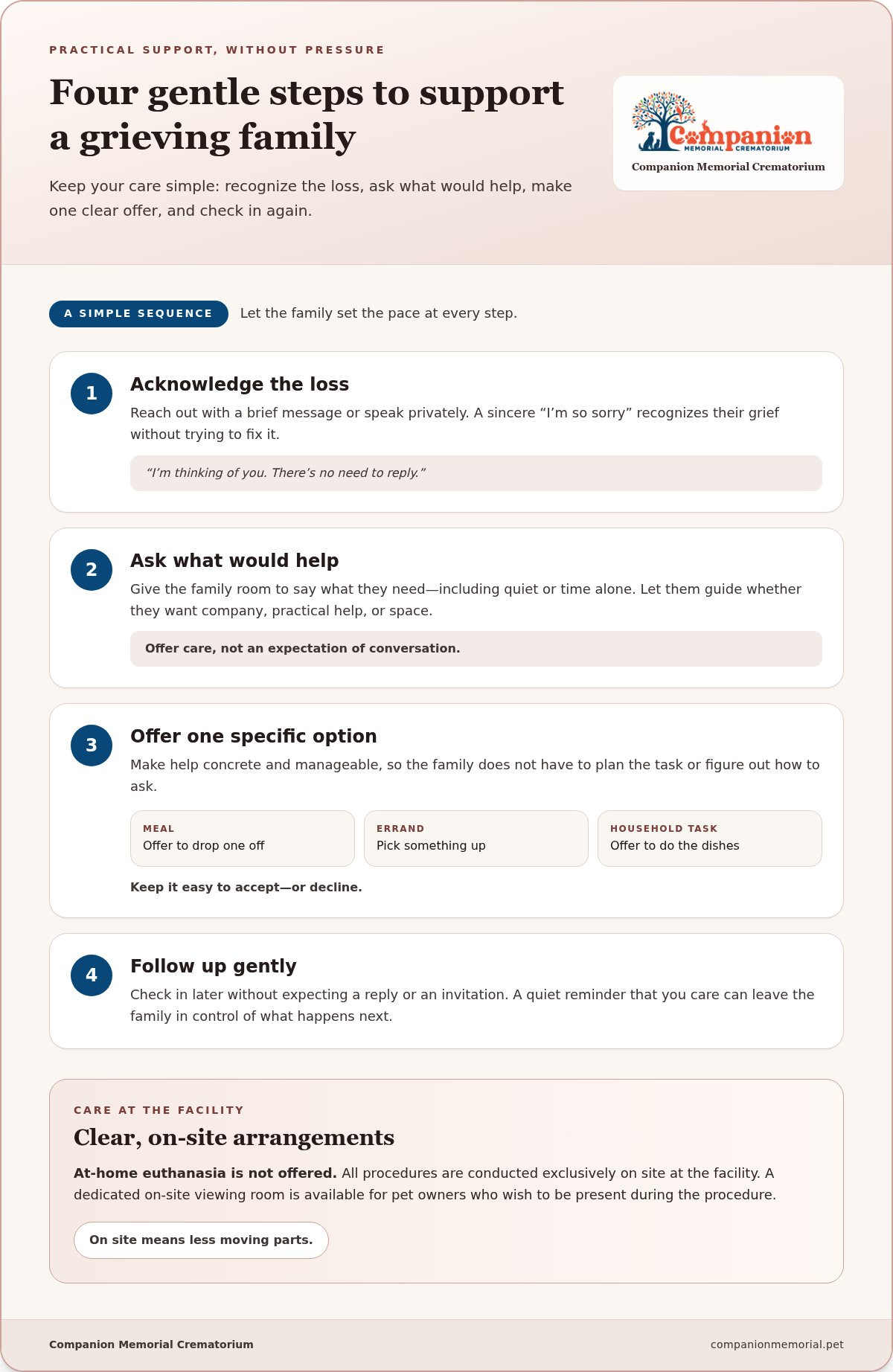
A simple sequence can help you offer support with care:
- Acknowledge the loss: Send a brief message or speak privately.
- Ask what would help: Give the family room to say what they need, including quiet.
- Offer a specific option: Suggest dropping off a meal, picking up an errand, or helping with a household task.
- Follow up: Check in later without expecting a reply or an invitation.
Offer specific help without adding pressure
“Let me know if you need anything” is kind, but it asks the family to identify a task and ask for help. A clear offer can be easier to respond to: “I’m going to the grocery store. Could I leave a few things at your door?” or “Would it help if I took care of the dishes?” Keep the offer manageable and make it easy to decline. Don’t expect the family to host you, explain their feelings, or reassure you that your gesture helped.
Consent matters. Ask before visiting, and respect a preference for privacy or a later conversation. If they decline, accept their answer warmly. Their choice may reflect what they can manage that day, not how much they value your care.
Remember the family beyond the first few days
Support can become quieter after the first messages and immediate arrangements. A brief note or gentle check-in later can remind the family they haven’t been forgotten. You might write, “Thinking of you and Milo today. There’s no need to reply.” Avoid setting a schedule they might feel obliged to maintain.
Meaningful dates, such as the pet’s birthday or the anniversary of their death, may be tender. Acknowledge them only if the family has indicated that they welcome it. You can also offer a memory or a small tribute that reflects what you know about the pet and the family’s preferences, without assuming they want a particular ritual.
For anyone considering how to comfort a grieving family pet, practical care is less about finding a perfect gesture and more about offering help with sensitivity. Ask, offer one clear choice, and let the family set the pace. A thoughtful check-in later can remind them that their loss still matters to you.
How to Support Children and Other Pets in the Family
A family’s grief may show up differently in each person and animal in the home. Children might ask repeated questions, want to talk about the pet, or return to play and ordinary activities. Surviving pets may show changes in behavior or appear to carry on as usual. There’s no single response that proves how much someone cared.
Helping children understand and express their grief
Let the child’s family guide conversations according to their values and choices. Encourage adults to answer questions simply and truthfully, using words the child can understand, rather than offering explanations they don’t believe or making promises about how quickly sadness will pass. A child may ask the same question more than once; patience and familiar reassurance can help them feel safe enough to ask again.
Some children may want to draw a picture, share a favorite story, or take part in a family-chosen remembrance. Others may prefer not to participate, or may move between sadness and everyday play. Make room for both. If a child’s distress feels overwhelming or continues to interfere with daily life, their caregiver can consider support from a qualified mental health professional.
Supporting other pets after a companion dies
For household pets who remain, keep familiar feeding, walking, and rest routines where practical. Offer calm attention and observe any changes without assuming they’re grieving in the same way a person would. A change in appetite, behavior, or health may have different causes, so the family should bring health concerns or significant behavior changes to their veterinarian.
Knowing how to comfort a grieving family pet also means respecting how the household adjusts together. Ask the adults what feels helpful, avoid pressuring children to talk or surviving pets to respond in a particular way, and offer steady reassurance without expecting a quick resolution. If ongoing distress feels difficult to manage, a qualified professional can help the family consider appropriate support.
Families considering a remembrance can explore pet memorial options and choose what feels right for them. There’s no required ritual or single way to honor a beloved companion.
Honoring the Pet and Finding Gentle Next Steps
Remembering a pet doesn’t require a formal ceremony or a particular kind of tribute. The most meaningful gesture is one the family chooses in their own time. Some may want to talk about the pet; others may prefer a quieter way to keep their memory close. Let the family’s wishes guide you, and don’t treat a memorial as something they need to arrange before they’re ready.
Choose a remembrance that feels right to the family
Offer gentle, optional ideas rather than a plan they’re expected to follow. The family might collect photographs, write down a favorite memory, or share a story together. You could ask, “Would it feel comforting to remember Luna together, or would you rather have some quiet?” If they decline, respect that. A tribute can happen later, take a different form, or not happen at all. There’s no required ritual for grieving well.
For additional ideas, the family may find it helpful to read “Honoring a Lifetime of Love: Pet Memorial Services in Sullivan County, NY (2026 Guide).” Treat suggestions as invitations, not expectations. A small remembrance matters only if it feels meaningful to the people closest to the pet.
When the family needs end-of-life or aftercare information
If the family is facing an end-of-life decision, practical details can help them understand their options without pressure. Companion Memorial Crematorium provides on-site euthanasia exclusively at its facility in Ferndale, New York. At-home euthanasia isn’t offered. Handling the procedure and care on site means less moving parts. Families who wish to be present can use the dedicated on-site viewing room.
Keep this information secondary to the family’s needs. They may want to understand the setting now, or they may not be ready to discuss it. If they welcome further reading, you can point them toward “Compassionate On-Site Pet Euthanasia in Ferndale, NY: A Guide to Peaceful Goodbyes” or “Private Pet Cremation: A Guide to Dignified End-of-Life Care in 2026.” Share these resources as options, not as a request to make decisions immediately.
At its heart, how to comfort a grieving family pet means honoring the family’s bond while allowing them to set the pace. Offer remembrance ideas gently, share practical information only when it’s welcome, and let each next step belong to the family.
Offer Steady Support, One Thoughtful Step at a Time
Comfort doesn’t require perfect words. Acknowledge the family’s loss, listen without rushing them, and offer specific help while respecting their wishes. Children, adults, and other pets may respond differently, so let the family set the pace and choose how they want to remember their companion.
If you’re considering how to comfort a grieving family pet, remember that your role isn’t to erase grief. A sincere check-in, a practical gesture, or simply making space for a cherished memory can help the family feel less alone.
When end-of-life care is part of the family’s next steps, Companion Memorial Crematorium provides services exclusively on site at its facility. The on-site setting has less moving parts, and families who wish to be present can use the dedicated viewing room. Private, individual, and group cremation options are available. As a veteran-owned company, Companion Memorial approaches each family’s choices with care and respect.
Learn about Companion Memorial’s compassionate on-site care. Your steady presence can make a difference, and the kindness you offer today may remain a comfort long after this difficult moment.
Frequently Asked Questions
What should I say to someone whose family pet has died?
Offer sincere, direct condolences, and use the pet’s name if it feels welcome. You might say, “I’m so sorry about Milo. I know how much he meant to your family.” Then give them space to respond. Listening matters more than finding perfect words. Avoid comparing their loss with someone else’s, explaining why it happened, or urging them to feel better before they’re ready.
How can I comfort a grieving family without saying the wrong thing?
Acknowledge the loss and listen before offering advice. You can ask, “Would you like to talk, or would practical help feel better right now?” For anyone wondering how to comfort a grieving family pet, a sincere, simple expression of care is enough. You don’t need to solve the family’s grief or deliver a perfect speech. Let their response guide what you say and do next.
What practical help can I offer a family grieving a pet?
Offer one specific, low-pressure gesture, such as bringing a meal, running an errand, or helping with a household task. Ask before visiting, and make it easy for the family to decline without explanation. If they say no, accept their answer gently rather than taking it personally. Consider checking in later, too. Support may still matter after the first days, when initial messages and arrangements have quieted.
How do I help a child grieving the family pet?
Encourage the child’s caregiver to answer questions simply and honestly, using language suited to the child and the family’s values. Let the child share a memory, ask questions, or choose whether to join a remembrance. Don’t insist on a particular reaction; a child may move between sadness and ordinary activities. If distress feels overwhelming or continues over time, the caregiver can seek support from a qualified professional.
Can other pets grieve when a family pet dies?
A surviving pet’s behavior may change after a household companion is gone, but responses vary and shouldn’t be assumed to mirror human grief. Keep familiar care routines where practical, offer calm attention, and observe any changes. A significant behavior change or health concern should be discussed with the family’s veterinarian. Avoid interpreting every difference as grief, since changes can have other causes that need attention.
How can I support a family after their pet’s euthanasia?
Acknowledge how difficult the loss is without questioning the family’s decision or asking them to defend it. Offer to listen, help with a practical task, or share a kind memory if welcome. If the family is preparing for a goodbye, Companion Memorial Crematorium’s euthanasia procedures take place only on site at its facility in Ferndale, New York, not at home. A dedicated viewing room is available for families who wish to be present. The facility serves families in New York, Connecticut, Pennsylvania, and New Jersey.
What is a thoughtful way to remember a family pet?
Share a favorite memory, write a note, or offer to help the family create a tribute, if they’d welcome the gesture. There’s no required memorial activity or schedule for grieving well. Let the family choose what feels comforting and when they’re ready. You can also check in later and ask whether they’d like to talk about the pet. A gentle invitation leaves the choice in their hands.


