
Yes, dog urns shaped like a particular breed are available, with options spanning more than twenty breeds. To understand how to choose a pet urn, start with the capacity needed for the ashes, then consider whether you want a full-size urn, a keepsake for sharing, or a memorial designed around your pet’s likeness. The right choice can be practical and personal at the same time.
It’s natural to want a tribute that feels connected to the companion you remember. A breed-shaped urn can capture a familiar silhouette, while a photo or simpler design offers another way to remember your pet.
This guide explains how to choose a pet urn by capacity, material, style, and personalization, then compares breed-shaped, symbolic, and photo memorials. You’ll find guidance for keeping all the ashes, sharing a portion with family, or choosing a design that suits your space. Take the decision one step at a time; no single style is right for every family.
Key Takeaways
- Use your pet’s weight as a starting point for estimating capacity, and compare the urn’s internal volume rather than its height or size label.
- Decide whether you want to keep all the ashes together, share portions with family, or choose a memorial for scattering or burial.
- Choose a material and finish that suit the intended display place, and consider how the urn will be handled and cared for.
- Personal details such as a name, photograph, engraving, or paw print can make a memorial feel more closely connected to your companion.
- Compare symbolic designs with breed-shaped options to find a tribute that reflects the way you remember your pet.
Can a keepsake urn hold all my cat’s ashes?
A keepsake urn can hold all your cat’s ashes if its internal capacity is sufficient. Estimate the capacity you need from your cat’s weight, then compare it with the urn’s listed volume.
-
Estimate Capacity From Pet Weight
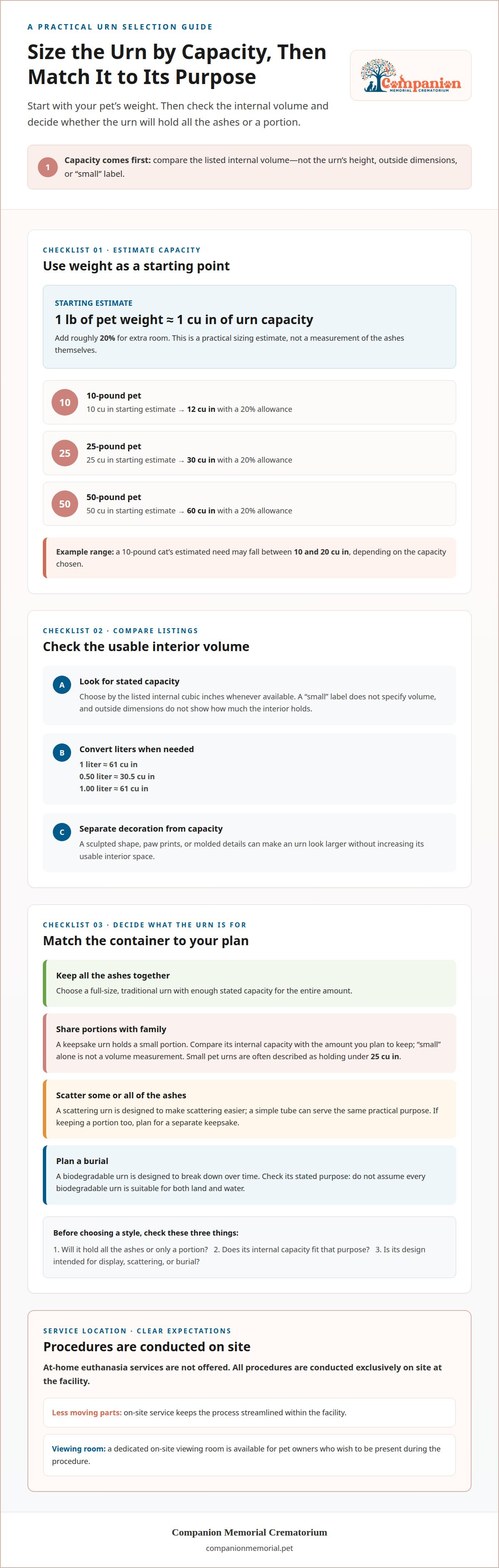
Use one cubic inch of urn capacity per pound of your cat’s weight as a starting estimate. For a 10-pound cat, that means about 10 cubic inches before allowing extra space. Add roughly 20% for a buffer, bringing this example to 12 cubic inches. This is a practical sizing estimate, not a measurement of the ashes themselves.
Compare the estimate with your purpose. A keepsake urn is generally intended for a small portion when ashes are shared, while a full-size urn must hold the entire amount. A 10-pound cat’s estimated need may fall between 10 and 20 cubic inches, depending on the capacity chosen.
-
Check Product Dimensions and Capacity
Check the listed internal capacity before comparing an urn’s height, width, or decorative shape. A label such as “small” doesn’t specify volume, and the outside dimensions don’t tell you how much the interior holds. Choose by the stated cubic inches whenever that figure is available.
For another comparison, one liter holds about 61 cubic inches. A 0.50-liter urn therefore holds about 30.5 cubic inches, while a 1.00-liter urn holds about 61 cubic inches. Those conversions can help you compare listings that use different units.
-
Allow Room Beyond the Starting Estimate
Choose some additional capacity rather than matching your cat’s weight exactly. For example, the 10-pound estimate rises from 10 to 12 cubic inches with a 20% allowance. Extra room gives you a more comfortable margin when selecting a container for all the ashes.
Apply the same method to other weights: a 25-pound pet starts at 25 cubic inches, or 30 cubic inches with 20% extra. A 50-pound pet starts at 50 cubic inches, or 60 cubic inches with that allowance. These examples show why weight helps narrow the size.
-
Separate Decorative Details From Usable Space
Focus on interior capacity, not the apparent size of a sculpted or unusually shaped urn. Paw prints, molded features, and other decorative details can make an urn look larger without increasing its usable interior volume.
Check whether the listed capacity is in cubic inches or liters, then compare it with your estimate. If the urn is too small, choose a larger option or reserve that design for a keepsake portion.
Keepsake urns and sharing ashes
Cemeteries and columbaria set their own acceptance policies, and airlines have their own carriage requirements. Acceptance depends on the destination, transport method, and rules of the facility or carrier.
- Decide whether to keep the ashes together or share them. A full-size urn is intended to hold all the remains; a keepsake urn holds a small portion. Families can divide the ashes among relatives, with each person choosing a small urn or another memorial form.
Match the urn’s capacity to its purpose. Small pet urns are often described as holding under 25 cubic inches, but the label “small” alone doesn’t show whether one can hold the portion you have in mind. Compare the stated internal capacity with the amount being kept.
- Choose a traditional urn if you want to keep all the ashes together in a lasting container at home. A keepsake urn serves a different purpose: it holds a small portion when family members share the remains. Decide first whether the memorial will hold all the ashes or only some, as these options aren’t interchangeable.
For a personal tribute without a separate container, keepsake jewelry can hold less than 1 cubic inch of remains. A photo urn offers another way to connect a memorial with a familiar image. Consider who will keep the item and where it will be displayed.
- Choose a scattering urn if releasing ashes is part of your plan. Its design is intended to make scattering easier, and a simple tube can serve the same practical purpose. Consider where and how you plan to scatter the ashes, then choose a container with an opening and handling style suited to that use.
A scattering urn differs from a traditional urn intended for home display. If you want to keep a portion and scatter the rest, plan for both: set aside a keepsake amount and choose a suitable container for the remaining ashes.
- Consider a biodegradable urn if you plan to bury the ashes on land or in water. These urns are designed to break down over time, unlike traditional display urns intended to remain intact. Choose one only if its intended use matches your memorial plan.
For a yard burial, a biodegradable pet urn may suit the intention of returning the remains to the earth. For water, review the urn’s stated purpose and the destination’s requirements. Don’t assume every biodegradable urn is suitable for both land and water.
- Before choosing a style, write down how you plan to use the urn: keep all the ashes, share portions, scatter them, or arrange a biodegradable burial. A family sharing ashes, for example, may need one main urn and several keepsakes, while a scattering plan may call for a separate small keepsake.
Use your plan to compare capacity, opening, and intended use. A memorial designed for display may not be suitable for scattering or burial, and a keepsake urn isn’t necessarily large enough for all the remains.
Choosing urn materials, colors, shapes, and styles
Choose a material based on where the urn will be kept, how it will be handled, and the care it requires. Wood, metal, and ceramic suit different settings; a biodegradable urn is an option for a planned burial.
For home display, consider how the urn’s finish and shape fit the room, but let practical needs guide your choice. A decorative urn still needs a suitable surface and a secure closure.
-
Compare Material Options
Choose wood for indoor display and keep it away from moisture. Metal is durable and can be placed indoors on a mantel. Ceramic has a smooth, hand-finished appearance but needs protection from knocks. Consider a biodegradable urn for a planned burial, not solely for its appearance.
Each material serves a different purpose. A wood urn may suit a dry shelf, while ceramic may appeal if you prefer a finished, sculptural look. A biodegradable option suits a planned burial. Match the material to the memorial setting before weighing color or shape.
-
Match Materials to Care Needs
Choose a material based on the care you can provide. Protect wood from moisture, and place ceramic or glass where they won’t be knocked. Stone and marble can be heavy, so measure the display surface and consider the urn’s weight before placing it.
For a mantel, metal offers a durable indoor option, while a delicate ceramic design needs a stable location. If the urn will be outdoors, don’t assume its appearance means it can withstand the elements. The product, finish, and closure all affect outdoor durability.
- Check the opening and closure as carefully as the outer material. A secure closure helps keep the contents contained during handling. Consider how you’ll move, open, and position the urn, then choose a design that suits those needs.
If you’ll transfer ashes into the urn, consider how accessible the opening is. A narrow opening can make handling more difficult than a wider one. Choose according to the urn’s design and how you plan to use it.
- Choose a color and shape that feel right for the memorial and its setting. A simple vase shape may blend into a room, while a sculpted design can make the urn a more visible tribute. Consider the room’s existing colors without letting appearance outweigh practical care needs.
A name or short message can personalize a simple design. If you plan to add lettering, consider where it will appear and whether the urn’s shape leaves a clear area for it.
- Before choosing an outdoor urn, review the stated material, finish, and closure for outdoor durability. Appearance alone can’t tell you whether it’s suitable for an outdoor setting.
Wherever you plan to display the urn, measure the shelf, table, or memorial space and leave room to handle it comfortably. A stable surface is especially important for a heavy stone or marble design.
Personalizing an urn with engraving, a photo, or a paw or nose print
Pet urns are available through cremation providers and memorial retailers. Before ordering, compare the urn’s capacity, material, personalization details, and delivery terms.
- Choose a personal detail that reflects your animal’s place in the family. An engraved name, meaningful date, or short message can make a cremation urn feel individual. A paw or nose print offers a direct reminder of your companion, while a photograph can preserve a familiar expression.
Keep the design focused. A name and short message, for example, may be easier to read than a long inscription on a small keepsake. Consider whether the urn will be displayed in a shared room or kept privately by one family member.
- Review the photo layout before ordering a photo urn. Check how the image will be cropped, whether your pet’s face remains clear, and whether any lettering stays readable beside it. A photo tile format may use a 5 cm by 5 cm image, so choose a photograph that keeps the face visible within that space.
For a photograph or sculpted likeness, ask how image placement is approved. Reviewing a proof before production can help you catch cropping or spelling issues while changes are still possible.
- Prepare engraving text carefully. Write the name, dates, and message exactly as you want them to appear, then review every character before submission. Some plaque formats allow five lines with up to 24 characters per line, so a concise inscription may fit more clearly.
Check punctuation and spacing as well as spelling. A short message such as “Forever in our hearts” may be easier to read than several lines of text, especially on a small urn.
- Consider how a paw or nose print will be represented. An imprint can create a distinctive memorial, while a printed or engraved paw motif offers a simpler symbol. Choose the approach that suits the urn’s material and the level of detail you want preserved.
If several family members will keep keepsakes, agree on the wording and design first. Matching names or symbols can create a shared tribute, while each person may choose a different photograph or message.
- Review all the order details before purchasing. Confirm the capacity, outer dimensions, material, inscription, photo requirements, and shipping terms. Compare the interior capacity with the amount of ashes the urn is intended to hold.
For a personalized urn, request a quote, as the price depends on the case. Material, engraving, photo work, and shipping affect the total. Read the delivery and personalization terms before completing an order, especially if the memorial depends on a particular image or inscription.
Comparing symbolic, breed-specific, and photo memorials
Choose the design that best reflects how you remember your companion: a symbolic form, a familiar breed shape, or a photograph. Each offers a different kind of tribute, so consider what you want to see when the urn is on display.
- Start with a symbolic design if you prefer a quiet tribute over a lifelike likeness. Paw prints, hearts, and other familiar motifs can represent your bond without reproducing your pet’s appearance. A simple ceramic urn with a paw motif, for example, may suit an indoor display and complement the room’s decor.
Consider how visible you want the memorial to be. A small symbol can offer a personal reminder without drawing attention, while a prominent sculptural form can become a focal point. Choose what feels appropriate for the place where you plan to keep it.
- Look for a breed-shaped urn if a recognizable silhouette feels important. Dog statue urns are available in more than twenty breeds, offering options beyond a generic dog figure. A German Shepherd-shaped urn, for example, can reflect a connection to a particular breed rather than relying on a general paw-print design.
Compare the shape with your pet’s individual features, not just its breed. Posture, coat markings, and expression vary, so a breed figure may represent the type of dog without closely matching your own. Choose it for the familiar breed form, not as a precise portrait.
- Choose a photo memorial if a specific face or moment matters most. A photograph can bring a personal memory into the tribute, while a symbolic design represents the relationship more generally. Choose a clear image with your pet’s face visible, and consider how it will look when cropped to fit the urn’s display area.
Photo urns can help recall happy memories, but the image should remain recognizable at its final size. A close, well-lit portrait may work better than a busy scene with several animals or people. Keep any accompanying message short enough to read beside the photograph.
- Compare practical details alongside appearance. Breed-shaped examples vary in capacity: a German Shepherd design is listed at 1.4 liters, about 84 cubic inches, while a French Bulldog design is listed at 0.77 liters, about 47 cubic inches. These figures show why the sculpted shape alone can’t tell you whether an urn holds the intended amount.
Before settling on a tribute, match its capacity to your plan and its material to the display location. Ceramic suits an indoor setting but needs protection from knocks. The design should fit the space and serve its intended purpose, as well as look right.
If you’re arranging cremation and considering a personal memorial, explore private cremation options as you plan the tribute.
Companion Memorial Crematorium
Companion Memorial Crematorium offers private, individual, and group cremation, helping families choose an arrangement that reflects how they wish to remember their pet. These options can guide your next decision: how the cremated remains will be cared for and whether they’ll be returned for a personal memorial.
On-site euthanasia services are conducted exclusively at the facility; at-home euthanasia isn’t offered. For families who wish to be present, a dedicated viewing room is available. Keeping the procedure on site means less moving parts and a dedicated setting for your farewell.
When you’re ready to discuss cremation or on-site euthanasia, contact Companion Memorial Crematorium.
Give yourself room to choose with care
Choosing a pet urn can be part of creating a lasting remembrance, not simply completing a practical task. Give yourself room to consider what feels meaningful, and remember that one tribute doesn’t need to hold every memory. Your choice can reflect your bond in a way that feels personal to you.
If you’re still deciding how to choose a pet urn, begin with the feeling you hope the memorial will hold. A quiet design, personal image, or familiar shape can each offer a different expression of remembrance. You don’t need to decide every detail at once.
When you’re ready to discuss arrangements, contact Companion Memorial Crematorium. Take the next step at a pace that feels right for you.
Frequently Asked Questions
Are there urns shaped like a particular dog breed?
Yes, breed-shaped dog urns are available in more than twenty breeds. A sculpted figure can reflect a familiar breed silhouette, while a photograph or engraved name can make the tribute more specific to your own dog. Compare the listed capacity and dimensions as well as the appearance. Breed shape alone doesn’t indicate how much the urn holds or whether it suits your display space.
Can a ceramic pet urn be kept outside?
Don’t assume a ceramic urn is suitable for outdoor placement based on appearance alone. Outdoor durability depends on the specific product, finish, and closure, and ceramic urns need protection from knocks. If you’re considering an outdoor memorial, choose a product explicitly intended for that setting. For a ceramic urn designed for indoor display, use a stable surface away from accidental bumps.
Can a pet urn be too large?
An urn can be larger than needed for the ashes, and still serve as a memorial. The practical limits are its footprint, weight, and ease of handling. Measure the shelf or table where it will sit, leaving room to lift and open it comfortably. A large sculpted urn may also take up more space than a simple vessel with similar capacity.
Do I need to choose an urn immediately?
No, you don’t need to select a permanent urn immediately. Take time to decide what kind of tribute feels right rather than making a design choice while grieving. If you’re not ready to choose, first find out how the ashes will be returned and whether the return container can hold them temporarily. This separates the immediate arrangements from the later memorial decision.
What size pet urn do you need?
Choose capacity according to your pet’s weight and whether the urn will hold all the ashes or only a keepsake portion. A full-size urn needs enough internal volume for all the remains, while a keepsake is designed for a small amount. Check the capacity in cubic inches or liters; height and labels such as “small” don’t tell you the usable interior volume.
How do I calculate the right urn size for my pet’s weight?
Use one cubic inch of capacity per pound of body weight as a starting estimate, then allow extra room. For example, a 25-pound pet starts at 25 cubic inches; adding about 20% gives 30 cubic inches. These figures help compare urns, but remain estimates. Focus on the listed internal capacity, not the urn’s outside dimensions or decorative shape.
What urn capacity is needed for a dog, cat, or other pet?
Estimate capacity from the individual pet’s weight rather than relying only on species or breed. For instance, the starting estimate for a 10-pound cat is 10 cubic inches; a 10-pound dog uses the same weight-based starting point. Smaller animals also need an urn matched to their remains and memorial plan. Add capacity beyond the starting estimate when selecting a container for all the ashes.
How much do pet urns cost in the United States?
Pet urn prices vary with factors such as material, size, design, and personalization, so compare the features you need rather than choosing by appearance alone. Companion Memorial Crematorium is 100% combat veteran-owned and serves families across New York, Connecticut, Pennsylvania, and New Jersey. For current pricing on its urns and cremation services, use the “Call For Pricing” option.


