

Guilt is not proof that you made the wrong choice. Feeling responsible, wondering whether it happened too soon, or replaying your pet’s final moments is common after euthanasia, even when you made the decision to ease suffering. Finding peace after putting a pet down can take time, and doubt doesn’t erase the love and care behind your choice.
You may keep asking whether you could have done more or waited longer. Those questions can hurt, but they don’t mean you failed your companion. You made the decision with the information and circumstances you had at the time, often while trying to protect your pet from further suffering.
This article explores guilt about timing, when grief counseling may help, and ways to find comfort in remembrance. You’ll also learn why grief has no fixed timeline and discover gentle ways to honor the life you shared, from creating a memorial to talking with someone who understands pet loss.
Key Takeaways
- Feeling guilty or questioning the timing is common after euthanasia; those feelings alone don’t mean you made the wrong choice.
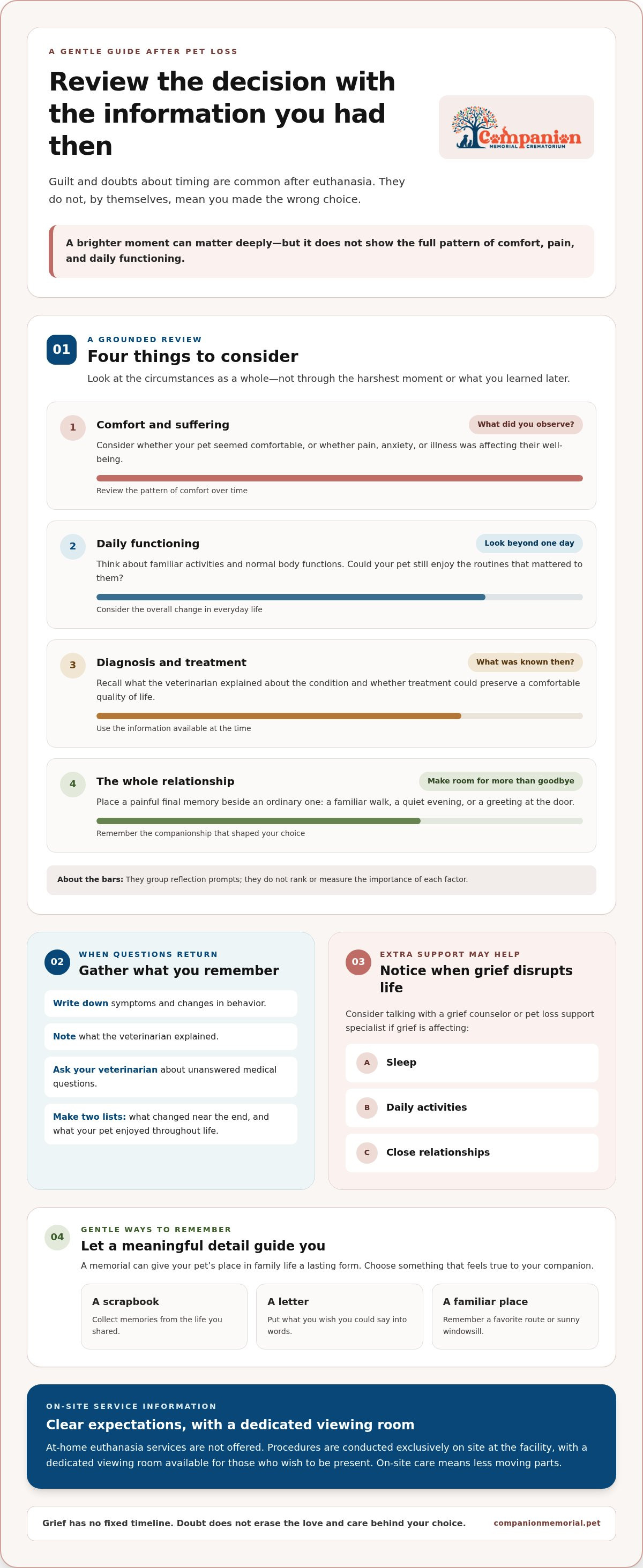
- When doubts arise, reflect on your pet’s comfort, daily functioning, and the information you had at the time.
- If grief is affecting sleep, daily activities, or relationships, a grief counselor or pet loss support specialist may help.
- Honor your companion in a personal way, such as creating a scrapbook, writing a letter, or planting flowers in their memory.
- Grief has no fixed timeline. Talking with someone who understands can make it easier to carry the loss.
Is it normal to feel like I euthanized my dog too soon?
Yes. Guilt about timing, responsibility, or your dog’s final moments is common after euthanasia. Reflecting on your pet’s comfort and the information available at the time can help you understand the decision.
Common Sources of Euthanasia Guilt
Euthanasia guilt is the painful belief that you caused your pet’s death or should have acted differently. You might wonder whether you could have done more, regret something left unsaid, or feel you betrayed your dog’s trust. These emotions can make the final moments seem to overshadow the years you shared.
Medical decisions can be difficult because illness does not always reveal its full impact. Cats, for example, may hide discomfort until a condition has progressed. A veterinarian can explain the diagnosis, available treatment, and whether care could preserve your pet’s quality of life. Understanding the reasons behind the decision may help separate grief from evidence that it was wrong.
Worrying About Acting Too Soon
Worrying that euthanasia happened too soon often means imagining another possible choice. You may replay a day when your dog ate, greeted you, or seemed calmer, and wonder whether that moment meant more time was possible. A brighter moment can matter deeply, but it doesn’t show the full pattern of comfort, pain, and daily functioning.
To revisit the decision, write down what you observed and what the veterinarian explained. Consider whether your dog could enjoy familiar activities, perform normal body functions, and remain comfortable. Also consider whether treatment could restore quality of life. These questions help you review the circumstances you faced, rather than judge yourself with information you learned later.
Reframing the Decision as Ending Suffering
Reframing euthanasia means recognizing that the choice may have been made to prevent further suffering, not to abandon your companion. Euthanasia can relieve a dog’s anxiety or pain. Your veterinarian can explain how your pet’s condition informed the decision and why comfort mattered.
When painful moments return, place them beside a specific memory from your life together, such as a familiar walk or a quiet evening at home. This doesn’t erase the goodbye. It gives that difficult moment a more balanced place in your dog’s story and recognizes the care that shaped the decision.
For children, use simple, honest words: explain that the pet was very ill or suffering, and that the veterinarian helped prevent more pain. Invite questions and let each child share a memory, such as a favorite game or routine.
There’s no set time to adopt another pet after a loss. Consider whether you can welcome a new animal as an individual, rather than expecting them to replace your companion. Waiting until your household feels ready can help make the choice thoughtful, not pressured.
Seeking grief counseling when grief disrupts daily life
Grief counseling can help when a pet’s death makes ordinary responsibilities difficult to manage. Consider support if you regularly lose sleep, struggle with daily tasks, or find grief affecting close relationships. For example, repeatedly missing work because memories of the goodbye feel overwhelming may be a sign that extra support could help. A grief counselor or pet loss support specialist can offer a private place to talk through these emotions.
Begin by describing what feels hardest right now. You might say, “I keep replaying the final moments,” or “I can’t sleep because I’m questioning the decision to euthanize.” A counselor can help you explore these thoughts without dismissing the bond you shared. If speaking feels difficult, write down a few concerns beforehand, such as guilt, changes in routine, or the quiet at home.
Remembering your companion’s life can give you a fuller view of the relationship than focusing only on the goodbye. Share an ordinary detail with someone you trust: a dog waiting by the door, a cat sleeping beside your chair, or a familiar greeting after work. These memories keep your pet’s companionship present alongside the difficult final moments.
Making peace with an end-of-life decision doesn’t require certainty about every detail. Instead, look at the information you had then. Write down your pet’s symptoms, changes in behavior, and the veterinarian’s explanation. If unanswered medical questions keep returning, ask the veterinarian who knew your pet to explain how the diagnosis and available treatment shaped the decision.
Consider quality of life through specific observations, rather than focusing on one difficult day. Note whether your pet still enjoyed familiar activities, could perform normal body functions, and seemed comfortable. A cat withdrawing from play or a dog no longer greeting family members may reflect declining well-being. Also consider whether treatment could preserve a comfortable life, rather than simply extend it.
A counselor can help you consider these observations alongside the affection and care that shaped your choice. Grief may make one painful image feel larger than years of companionship. Try writing two short lists: what changed near the end, and what your pet enjoyed throughout life. Bring them to a counseling session if you want help making sense of both.
Support can also come from a friend or pet loss group where people understand the bond with an animal. Ask someone to listen as you share a story, without trying to solve your grief. If sleep, daily activities, or relationships remain disrupted, counseling offers a focused setting to work through the loss at your own pace.
Creating a memorial or tribute
A memorial gives your pet’s place in family life a lasting form. Choose a detail that feels true to your companion, such as a favorite walking route, a sunny windowsill, or the sound of a collar. Let that detail guide the tribute. It doesn’t need to be elaborate; a small, personal act can honor the journey you shared.
A photo album or scrapbook can hold memories from beyond your pet’s final days. Gather pictures from different parts of their life, then add captions describing what was happening. A photo of a muddy dog might include the trail you walked together, while a cat curled beside a book could bring back a quiet evening. These details make the tribute reflect your pet’s character.
Writing a letter offers another way to give your feelings a place. Thank your pet for a loving greeting after work, describe a moment that still makes you smile, or say what you wish you’d expressed before goodbye. Keep the letter in a memory box, read it privately, or share a passage with someone who knew your companion.
Some families prefer a living tribute. Plant flowers in a garden corner your pet enjoyed, or choose a tree as a place to pause and remember. If planting outdoors isn’t practical, grow a small plant indoors beside a photograph. Caring for it can become a quiet ritual that marks your pet’s place in family memories.
A gathering can make remembrance shared rather than solitary. Invite family or friends to tell a story each, such as a beloved habit or a day your pet improved everyone’s mood. Children might draw a picture, while adults add written memories to a keepsake box. A short gathering honors your pet without requiring formal words.
- Make a memory box: Place a tag, photograph, favorite toy, or handwritten story together in one keepsake.
- Create a playlist: Choose music connected with a familiar routine, such as evening walks or resting together at home.
- Write a tribute: Describe your pet’s personality through specific memories, not only a list of dates or milestones.
- Give in their name: Donate to an animal rescue or volunteer in a way that reflects the care you shared.
Grief may bring complicated feelings, including sadness, tenderness, and guilt about the decision to euthanize. A tribute doesn’t need to resolve those emotions. It can recognize that the choice was made out of love while honoring the companionship and quality of life your pet brought to yours.
Choose a form of remembrance that feels manageable today. Begin with one printed photograph, then add a note when another memory surfaces. Your memorial can change as your feelings and needs change. The purpose is to honor the life you shared, not to meet anyone else’s idea of a perfect tribute.
How long does guilt after pet loss last?
Guilt can feel different from one person to another. To cope after putting a pet to sleep, make room for grief, talk with someone who listens, and seek added support if the loss disrupts sleep, daily activities, or relationships. One day may feel manageable, while a familiar routine, such as reaching for your dog’s leash, brings sadness back.
Choose someone you trust and tell them what would help today. You might ask a family member to sit with you while you look through photographs, or ask a friend to listen without offering advice. Clear requests can make support easier to receive: “Could you hear one story about my cat?” or “Please check in with me this evening.”
Supportive people don’t need perfect words. A relative who remembers your pet’s habits can share a detail you might have forgotten, such as the way your dog waited by the door. If someone minimizes the loss, you can say, “This pet was part of my family, and I need you to listen.”
Pet loss support groups offer a place to meet people who understand the bond with an animal. An in-person group may suit you if conversation helps you feel connected; an online group may feel more comfortable when leaving home is difficult. You can listen before sharing. Hearing someone describe guilt or missing familiar routines may ease the feeling that you’re facing grief alone.
The American Veterinary Medical Association’s resource, “Coping with the Loss of a Pet,” offers guidance for grieving families. AVMA Animal Loss Support Services is another resource for pet loss support. These can be places to begin when you want information beyond conversations with family or friends.
Consider a grief counselor or pet loss support specialist if sadness or guilt keeps interfering with everyday life. Before a session, write down what you most want help with, such as replaying the passing, feeling the decision was too soon, or struggling with an empty space at home. A written note can help you begin when emotions make speaking difficult.
Support can also be practical. Ask someone to help with a specific task, such as preparing dinner or walking a remaining dog, rather than saying only that you need help. If your pet’s bowls or bed feel difficult to face, invite a trusted person to sit with you while you decide what to do. You don’t have to make every change at once.
Grief may change shape rather than disappear on a schedule. Mark a difficult day by calling someone who understands, attending a support group, or sharing a memory of your companion. These choices can offer comfort while leaving room for the continuing bond you feel after your pet’s death.
Finding peace after a pet’s passing
Finding peace after putting a pet down doesn’t mean forgetting your beloved pet or approving of every detail. It can begin with recognizing what the decision was meant to do: prevent suffering when comfort and quality of life were declining. When guilt returns, name the thought plainly, such as, “I should have waited,” then separate that feeling from what you observed and understood at the time.
The mind may replay the final moments as if reviewing them could change the outcome. When that loop starts, write down the memory that keeps returning, then add one fact you knew then, such as your pet’s pain or loss of interest in familiar activities. This doesn’t erase sadness. It can help place one painful scene beside the fuller story of your life together.
What-if thoughts often seek certainty that no decision can provide after a loss. Try answering one with the care you showed: “I made this choice because my companion was suffering.” You can also write a short note to your pet, acknowledging your doubt while describing the love behind your decision. Keep it in a journal or read it during a quiet moment.
Allow grief to surface without treating every emotion as a judgment on your choice. Crying, sadness, or a reduced appetite can accompany loss. If a familiar place, such as your pet’s resting spot, brings a wave of emotion, pause there or step away. Neither response measures how deeply you loved them. A gentle routine, such as a walk or shared cup of tea, can help anchor the day.
Talking about your pet can bring loving memories forward when guilt dominates your thoughts. Ask a family member to share a story that shows your pet’s personality, such as a greeting at the door or a favorite resting place. You might record the story, add it to a scrapbook, or write it beside a photograph. These acts recognize a life that included far more than its final chapter.
Peace may come through creative expression rather than conversation. Write a poem, paint a familiar scene, or choose music that recalls a calm afternoon together. If you have another pet at home, notice changes such as searching, crying, or loss of appetite. A steady routine and gentle attention can support that animal while you continue grieving.
Choose one manageable act today: write a memory, speak with someone who understands, or set aside a photograph for a quiet remembrance. If you’re considering a practical next step after your pet’s passing, explore a respectful way to honor your pet.
Companion Memorial Crematorium: Private Cremation
Companion Memorial Crematorium provides private cremation for families choosing an individual aftercare option for their pet. Group cremation is also available. If you’re considering euthanasia, all procedures take place on site at the facility; at-home euthanasia isn’t offered. Keeping the care on site means less moving parts, and a dedicated viewing room is available if you wish to be present.
These options can help families make a practical aftercare choice while honoring a beloved companion. When you’re ready, contact Companion Memorial Crematorium to discuss which option feels right for your pet and family.
For information, contact Companion Memorial Crematorium or visit companionmemorial.pet.
Take the next step at your own pace
Finding peace after putting a pet down doesn’t require setting grief aside or reaching a final answer about every feeling. It can mean allowing memories of your companion to remain part of daily life while taking one manageable step forward. On difficult days, choose something simple: write down a memory, speak with someone you trust, or pause without judging how you feel.
Practical decisions after a loss can also be made gently, when you feel ready. If you would like to discuss arrangements for your pet, Companion Memorial Crematorium can help you consider its private, individual, and group cremation options. There’s no need to have every word prepared; begin with what matters most to your family.
Contact Companion Memorial Crematorium when you’re ready to talk about your next step. Your bond with your pet remains meaningful, and you can honor it in a way that feels right for you.
Frequently Asked Questions
Do dogs or cats feel betrayed when you put them down?
There’s no way to know exactly what a pet experiences, but “betrayal” is a human interpretation. Pets value their caregivers’ companionship and love; they don’t understand time as people do. If you were present, your familiar voice and closeness could offer comfort in those moments. Try not to judge the decision through imagined thoughts your pet may have had. Focus instead on the care and protection you provided throughout their life.
How Do I Cope with Guilt After Euthanasia?
Give guilt a specific place to be heard, rather than letting it occupy every moment. Write down the thought that hurts most, then answer it with what you knew and intended when you made the choice. For example, “I wish I’d had more time” can sit beside “I wanted to prevent more suffering.” Share both statements with someone who can listen without rushing you toward closure.
How do I know if I made the right decision?
Revisit the decision using the circumstances you faced, not hindsight alone. Write a brief timeline of your pet’s changes, the veterinarian’s guidance, and the options discussed. If a medical detail still troubles you, ask the veterinarian to clarify how it related to your pet’s comfort. You’re seeking understanding, not a guarantee that grief will disappear. A decision made with care can still feel painful afterward.
How do I stop feeling guilty after putting my dog down?
You may not be able to stop guilt immediately, but you can respond differently when it returns. Name the thought, such as “I should have waited,” and remind yourself that a thought isn’t new evidence. Then choose one grounding action: step outside, make tea, or call someone you trust. Finding peace after putting a pet down can include allowing doubt to arise without letting it define your love or your decision.
What can help ease feelings of guilt?
Try separating what you regret from what you could control. Write two short notes: what you wish had happened, and what you did to care for your pet. For instance, you might wish the illness had been treatable while remembering the appointments and comfort you provided. A trusted friend can help you see both sides when self-blame narrows your view. These notes aren’t a verdict; they’re a fuller record of your care.
Why do I keep replaying the moment in my mind?
Replaying the final moment is one way the mind tries to process a loss. It can happen when a painful scene feels unresolved or emotionally overwhelming. When it returns, gently orient yourself to the present: say where you are, notice what you can see, and feel your feet on the floor. Later, write down what you remember and close the page. If these memories disrupt daily life, consider speaking with a grief counselor.
Will my dog forgive me for putting her to sleep?
Your dog didn’t understand forgiveness as a moral judgment in the human sense. She knew the care, routines, and companionship you shared, rather than weighing your decision as a betrayal. If this question keeps troubling you, write a few lines to her about what you hoped to protect her from and what you loved about your life together. The letter can give the feeling a voice without asking you to prove your love.
What are the stages of pet loss grief and how long do they last?
Grief may include sadness, anger, guilt, disbelief, or moments of acceptance, but these aren’t steps everyone experiences in order. Feelings can change from day to day, and reminders may bring them back. There’s no fixed timeline for pet loss grief. Rather than measuring progress against a calendar, notice whether you’re gradually finding ways to manage daily life. If grief continues to disrupt sleep, activities, or relationships, a counselor can offer support.


