
Is it too late to make a paw print after your pet has passed? Often, it isn’t. If you’re considering getting a paw print from deceased pet, you may still be able to create a keepsake, even if you didn’t plan for one beforehand.
It’s understandable to feel unsure about handling your pet’s paw while you’re grieving or to worry about choosing the right materials. A print may be easier to make sooner, before the limbs stiffen, but you don’t have to assume you’ve missed your chance. This guide covers practical methods, supplies to prepare, and gentle steps that may make the process less difficult. It also suggests what to ask before cremation, including whether staff can assist and which materials may be available. Companion Memorial Crematorium does not provide paw-print services, so confirm arrangements directly. Euthanasia takes place only on site, not at home. Families who wish to be present can ask about the dedicated viewing room.
Key Takeaways
- Getting a paw print from deceased pet may still be possible. Ask about timing and arrangements before cremation.
- Prepare your materials first, handle the paw gently, and stop if positioning requires force or feels distressing.
- Compare ink, impression material, and photography based on how much handling they involve and the kind of keepsake you want.
- Check product-specific safety and suitability information before using any print-making material.
- Consider taking a photograph as a backup, and ask about private, individual, and group cremation when discussing aftercare.
Getting a Paw Print from a Deceased Pet: What to Know First
After a loss, the wish to hold on to a small, familiar detail can feel urgent. A paw-print keepsake can be a physical impression or a photograph that records your pet’s paw. Making a physical impression requires access to the paw before cremation. Timing and your pet’s condition can affect whether a clear print is possible, so contact your veterinarian or crematorium promptly if you’re considering one. The closeness many people feel with a companion animal, described as the human-animal bond, can make even a simple record feel meaningful.
This video offers a brief overview of aftercare paw prints and memorial options:
It isn’t possible to know in advance whether a print will be feasible in a particular situation. If a paw is difficult to position or its condition has changed, the impression may not capture the details you hoped for. Don’t try to force the paw into place. A veterinarian or crematorium can offer guidance based on the circumstances, but a print cannot be promised or recovered after cremation.
Is it still possible to make a print after a pet has died?
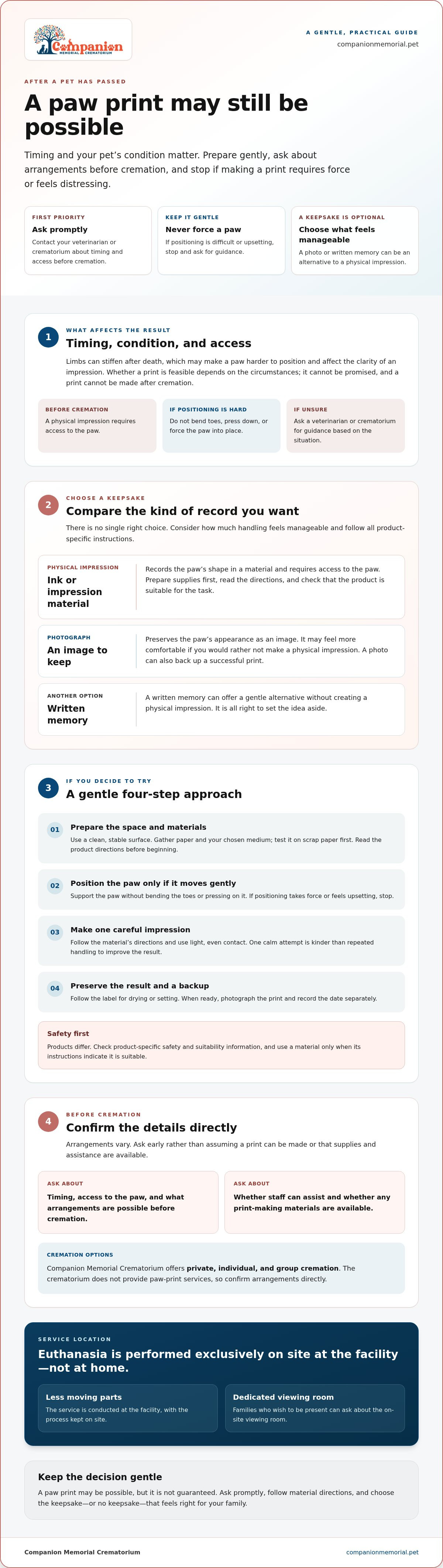
It may be possible, but timing and condition matter. Limbs can stiffen after death, which may make the paw harder to position and affect the clarity of an impression. If getting a paw print from deceased pet matters to you, ask about timing before transport or cremation. Access and arrangements vary, so confirm directly instead of relying on a general timeframe.
Companion Memorial Crematorium offers private, individual, and group cremation. A paw-print service is not among its confirmed services, so ask directly whether staff can assist or materials are available. Contacting the facility promptly can help clarify the arrangements without assuming a print can be made.
Choose a keepsake that feels right for your family
A physical impression records the paw’s shape in a material, while a photograph preserves its appearance as an image. An impression may require handling the paw; taking a photograph may feel more comfortable for some families. Neither is necessary. If making a print feels too difficult, it’s all right to set the idea aside.
A photograph or a written memory can offer a gentler alternative without creating a physical impression. If you decide to make a dedicated memory box, tribute book, or customized frame to preserve these items, check out PoscART for creative supplies and paint markers. Choose what feels manageable now. There’s no single right way to remember your companion.
How to Make a Paw Print from a Deceased Pet, Step by Step
Preparing in advance can make the process calmer and reduce how often you need to handle your pet’s paw. Choose a print medium intended for this purpose, and read the directions before beginning. Products differ, so follow the label for use, drying, and preservation. Don’t use a material unless its instructions indicate that it’s suitable for the task.
For getting a paw print from deceased pet, move slowly and let comfort guide each step. If you can’t position the paw gently, stop. A keepsake isn’t worth forcing the paw or adding distress.
- Prepare the space and materials. Choose a clean, stable surface and cover the work area. Gather paper and your chosen print medium. If it feels helpful, ask someone to keep the supplies ready. Test the medium on scrap paper first to see how it transfers and make any adjustments before approaching the paw.
- Position the paw gently. Support the paw without bending the toes or pressing on it. Move it only as much as needed for the surface to meet the paw naturally. If positioning requires force or feels upsetting, stop and contact a veterinarian or crematorium for guidance.
- Make one careful impression. Follow the product directions. Depending on the material, you may bring a prepared surface to the paw or apply the medium as instructed. Use light, even contact rather than pushing down. One calm attempt is usually kinder than repeatedly handling the paw to improve the result.
- Preserve the keepsake and a backup. Follow the material’s label for drying or setting, and avoid handling the impression until the instructions say it’s ready. If the print is successful, photograph it and record the date separately. The photo gives you another record without further contact with the paw.
In short, prepare your materials, position the paw only if it moves gently, make a careful impression, and preserve the result according to the product directions. A clear print isn’t guaranteed.
If you’d rather not make the impression yourself, ask your veterinarian or crematorium whether staff can assist and what arrangements may be possible. Companion Memorial Crematorium does not offer a guaranteed paw-print service, so confirm any assistance or available materials directly. For practical information about the facility’s confirmed aftercare options, visit Companion Memorial Crematorium.
Ink, Impression Material, or Photo: Which Paw-Print Method Should You Choose?
Choosing a method for getting a paw print from deceased pet depends on what feels manageable, how much handling it involves, and the kind of keepsake your family wants. Ink and impression materials create a physical record, while a photograph captures the paw’s appearance. No method guarantees a clear result. Check the product directions for its suitability and safe use.
| Method | Preparation | Handling | Keeping the result |
|---|---|---|---|
| Ink | Prepare the ink medium and paper as directed. A test on scrap paper can help. | Requires contact between the paw and the print surface or medium. | Creates a paper impression. Follow product directions for care. |
| Impression material | Prepare and shape the material according to its instructions. | Requires contact and gentle pressure to record the paw’s contours. | Creates a physical impression. Setting and care depend on the product. |
| Photography | Prepare a camera or phone and choose a clear view of the paw. | Doesn’t require pressing material against the paw. | Creates a digital image that can be stored or copied. |
When an ink print may be the simplest choice
An ink method transfers the paw’s shape onto paper using a product intended for print-making. Check that the product is suitable for this use and follow its directions before bringing it near the paw. Smudging can happen, so testing the transfer on scrap paper may help you understand how much contact is needed. A practice test won’t guarantee a sharp impression, but it can reduce guesswork.
When a clay-style impression or photo may suit better
Impression material can record more of the paw’s contours, depending on the material and whether the paw can be positioned gently. Check its instructions for suitability, use, and setting. Photography is another option: it can preserve visible details without pressing ink or impression material against the paw. Consider which approach feels respectful and possible for your family. You don’t have to make a physical keepsake.
The gentlest method is the one your family can manage comfortably, without forcing the paw or adding distress. Product suitability, handling guidance, and permanence vary, so read the label instead of assuming one material is right for every situation.
Your Pet Has Already Passed: Timing, Gentle Handling, and What to Ask
If your pet has already passed, contact the veterinarian or crematorium before transport or cremation if you hope to make a paw print. Timing and access vary, and your pet’s condition may affect whether an impression is possible. There isn’t one timeframe that applies to every situation, so ask for guidance based on your circumstances rather than trying to manage the process alone.
Keep the conversation simple. Explain that you’re hoping to make a print, then confirm what may be possible before cremation arrangements proceed. Companion Memorial Crematorium offers private, individual, and group cremation, but a paw-print service is not among its confirmed services. Ask directly about possible assistance or materials instead of assuming they’re available.
Questions to ask before cremation arrangements proceed
These questions can help clarify the next step:
- Is there time to make a paw print before cremation begins?
- Can the facility accommodate a method or materials I provide?
- Who, if anyone, can assist with the arrangement?
Confirm the answers with the veterinarian or facility handling your pet’s care. If the paw is difficult to position or you feel unsure about handling it, don’t force the process. You can also review What to Do When Your Pet Dies: A Step-by-Step Checklist for broader next-step guidance.
When the paw print is not possible
Not every situation allows for a paw print, and that doesn’t lessen the bond you shared. A photograph, a written recollection of a familiar habit, or another personal remembrance can hold meaning without a physical impression. Choose what feels manageable. You don’t have to create a keepsake immediately or in any particular form.
If you’re exploring other ways to remember your companion, a guide to honoring a pet through memorial services may help you consider options at your own pace. For practical information about cremation arrangements or timing, contact Companion Memorial Crematorium and ask what can be confirmed for your situation. Families who wish to be present can ask about the dedicated on-site viewing room, which is separate from any paw-print arrangement.
Getting Support with Aftercare and a Paw-Print Request
If you’re considering getting a paw print from deceased pet, keep the next steps simple: ask promptly about timing and arrangements, choose a method that feels gentle, and take a backup photo if you make a print. Access and assistance can vary, so confirm details directly before cremation rather than assuming a facility can make one.
What to expect when asking the facility about a paw print
Explain that a print matters to your family and ask whether there may be time to make one before cremation, whether the facility can accommodate a method or materials you provide, and who can assist. Companion Memorial Crematorium does not offer a guaranteed paw-print service, so confirm directly whether materials or staff assistance may be available. The dedicated on-site viewing room is a separate facility amenity, not a paw-print service.
Companion Memorial Crematorium’s euthanasia services take place on site; at-home euthanasia isn’t offered. Families who wish to be present can ask about the dedicated on-site viewing room. These details can help you understand the facility’s arrangements while keeping the paw-print request distinct and specific.
Choosing a cremation arrangement that reflects your wishes
Companion Memorial Crematorium offers private, individual, and group cremation. Ask the facility to explain what each arrangement means for your circumstances before deciding. If you’re weighing the options, the Guide to Private Pet Cremation offers further reading about private cremation.
A calm, direct question can be enough to begin: “I’m hoping to make a paw print. Is there time, and can you accommodate the method I have?” If the answer is no, or the timing doesn’t allow it, you can still choose another meaningful way to remember your companion. A photograph or written memory can preserve something personal without a paw impression.
For verified information about cremation arrangements, on-site euthanasia, or the viewing room, contact Companion Memorial Crematorium and ask what can be confirmed for your situation.
Take the Next Step at Your Own Pace
Timing and your pet’s condition can affect whether a paw print is possible, so ask your veterinarian or crematorium promptly before cremation. If you decide to try, choose a method that feels gentle, follow its instructions, and photograph any successful impression as a backup. If making a print feels too difficult, a photograph or written memory can be a meaningful alternative.
If the question of getting a paw print from deceased pet remains on your mind, contact the facility to ask what arrangements can be confirmed. Companion Memorial Crematorium offers private, individual, and group pet cremation, but does not provide a guaranteed paw-print service. The company is 100% combat veteran-owned and has a dedicated on-site viewing room for families who wish to be present. Euthanasia procedures take place on site; at-home euthanasia isn’t offered.
Contact Companion Memorial Crematorium to discuss aftercare arrangements and confirm practical details for your situation. Whatever you choose, there’s no single right way to honor the bond you shared.
Frequently Asked Questions
Can you get a paw print from a pet after cremation?
A physical paw impression generally needs to be made before cremation, while the paw is accessible. Ashes can’t provide a record of the paw’s shape, and a print can’t be promised or recreated after cremation. If you’re hoping for a keepsake, contact your veterinarian or crematorium before arrangements proceed. If you already have a photograph of the paw, that image can still serve as a personal remembrance.
How do you make a paw print from a deceased pet?
Prepare paper, a print medium intended for the task, and a covering for the work surface, then test the medium on scrap paper. Support the paw gently and follow the product directions to make one careful impression. Don’t bend the toes or use force. Stop if positioning is difficult or distressing. Let the print set or dry as directed, and photograph a successful impression as a backup. A clear result isn’t guaranteed.
Is ink or clay better for a pet paw print?
Neither ink nor impression material is best for every family or situation. Ink can make a paper record, though smudging is possible. Impression material can record paw contours, but requires contact and gentle pressure. Suitability, handling, and care depend on the specific product, so read its directions before use. If you want to avoid pressing material against the paw, a photograph may feel more manageable.
What supplies do I need to make a paw print?
Gather paper, a print medium labeled as suitable for the task, and a covering for the work surface. A clean, stable surface can help keep materials in place. You may also want a phone or camera to photograph a successful print and a way to record its date separately. Follow the product’s directions, and don’t use materials if their suitability or safety for this purpose is unclear.
Can a veterinarian or crematorium help make a paw print?
They may be able to explain timing or possible arrangements, but assistance varies. Ask directly before transport or cremation whether there’s time to make a print, whether family-provided materials can be accommodated, and who may assist. Companion Memorial Crematorium doesn’t offer a guaranteed paw-print service, and its available materials or staff assistance should be confirmed. The same applies when contacting facilities serving families in New York, Connecticut, Pennsylvania, and New Jersey.
What if I cannot make a paw print before cremation?
If a print isn’t possible, it doesn’t diminish the bond you shared with your pet. You might keep a photograph, write down a memory of a familiar habit, or choose another personal way to remember them. Much like the compassionate approach taken by Solace Family Funerals when guiding family memorial planning, honoring a life comes down to finding thoughtful tributes that bring comfort. There’s no single correct keepsake, and you don’t have to decide immediately. Choose an option that feels comforting and manageable for you and your family.
Does Companion Memorial Crematorium offer at-home euthanasia?
No. Companion Memorial Crematorium’s euthanasia procedures take place exclusively on site at its facility; at-home euthanasia isn’t offered. Families who wish to be present can ask about the dedicated on-site viewing room. The crematorium also offers private, individual, and group pet cremation. Contact the facility to confirm practical details for your circumstances.


