
What if finding closure after pet loss isn’t about letting go, but about honoring the bond you still carry? The emptiness can feel overwhelming, and questions about euthanasia or cremation may make grief even harder to bear. If others don’t understand why this loss hurts so deeply, your feelings are still valid.
There’s no single right way to grieve. Peace may come through small, intentional choices rather than one defining moment. This guide offers practical ways to make space for grief, remember your companion, and approach difficult decisions with greater clarity.
We’ll explore ways to honor your pet’s memory and understand aftercare options. For families considering euthanasia, Companion Memorial Crematorium provides this service exclusively on site in Ferndale, New York, not at home. Its dedicated viewing room offers a place to say goodbye. Families in New York, Connecticut, Pennsylvania, and New Jersey can contact the facility to ask about its on-site arrangements.
Key Takeaways
- Understand why grief after losing a pet can take time, and why closure is better viewed as a gradual transition than a single moment.
- Explore how finding closure after pet loss can include intentional choices that honor your companion and make space for remembrance.
- Learn what to ask when choosing between private, individual, and group cremation, including whether ashes are returned and how an official cremation certificate fits into the arrangements.
- Find simple ritual ideas you can adapt for yourself, your family, or others who shared a bond with your pet.
- Discover ways to approach special dates and anniversaries while moving forward without feeling that you must leave your pet’s memory behind.
Understanding Grief and Finding Closure After Pet Loss
Finding closure after pet loss isn’t a matter of forgetting or reaching a fixed point where sadness disappears. It can be a gradual transition from the sharpness of acute pain toward steadier, more peaceful remembrance. Grief may bring guilt, unanswered “what-ifs,” or a sudden ache when you return to a quiet home where familiar routines have changed.
There’s no timetable for grief, and it doesn’t follow a neat sequence of stages. The loss of a pet can be deeply painful because the bond is personal, constant, and woven into everyday life. This overview of grief following the loss of a pet describes emotional effects and social attitudes that can shape the experience.
To hear a thoughtful explanation of why pet loss can hurt so deeply, watch this talk:
Why Pet Loss Hits So Hard
A pet’s affection can feel uncomplicated and dependable. They may greet you at the door, rest beside you, or share the quiet rhythms of home. When they’re gone, the loss includes both their loving presence and the daily structure built around feeding, walks, medication, or bedtime. Those empty moments can make the absence feel newly vivid.
Guilt and “what-if” thoughts are common, especially after difficult decisions, but they aren’t proof that you failed your companion. Disenfranchised grief is grief that feels unrecognized or unsupported by others. This can happen when people minimize the loss of a pet. Your bond matters, even if someone else doesn’t understand its depth.
The First Steps Toward Emotional Healing
Give yourself permission to grieve without judging how you’re doing. You might feel sorrow, relief, numbness, or several emotions in the same day. You don’t need to compare your loss with anyone else’s or hurry toward acceptance. Closure means finding a new way to hold your pet’s memory, not leaving it behind.
Consider talking with someone who will listen without diminishing your feelings. A trusted friend, family member, counselor, or local pet loss support group may offer room to speak openly and remember your companion. If practical decisions feel difficult in the early days, this step-by-step checklist for what to do when your pet dies can help organize immediate next steps while you take things at your own pace.
Creating a Meaningful Final Goodbye at a Professional Facility
A final goodbye is more than an emotional moment. The setting and arrangements can help families acknowledge the loss and create space to remember their companion. Some people wish to be present; others prefer a quieter farewell. There’s no single right choice, but understanding what’s available can make the next steps feel less uncertain.
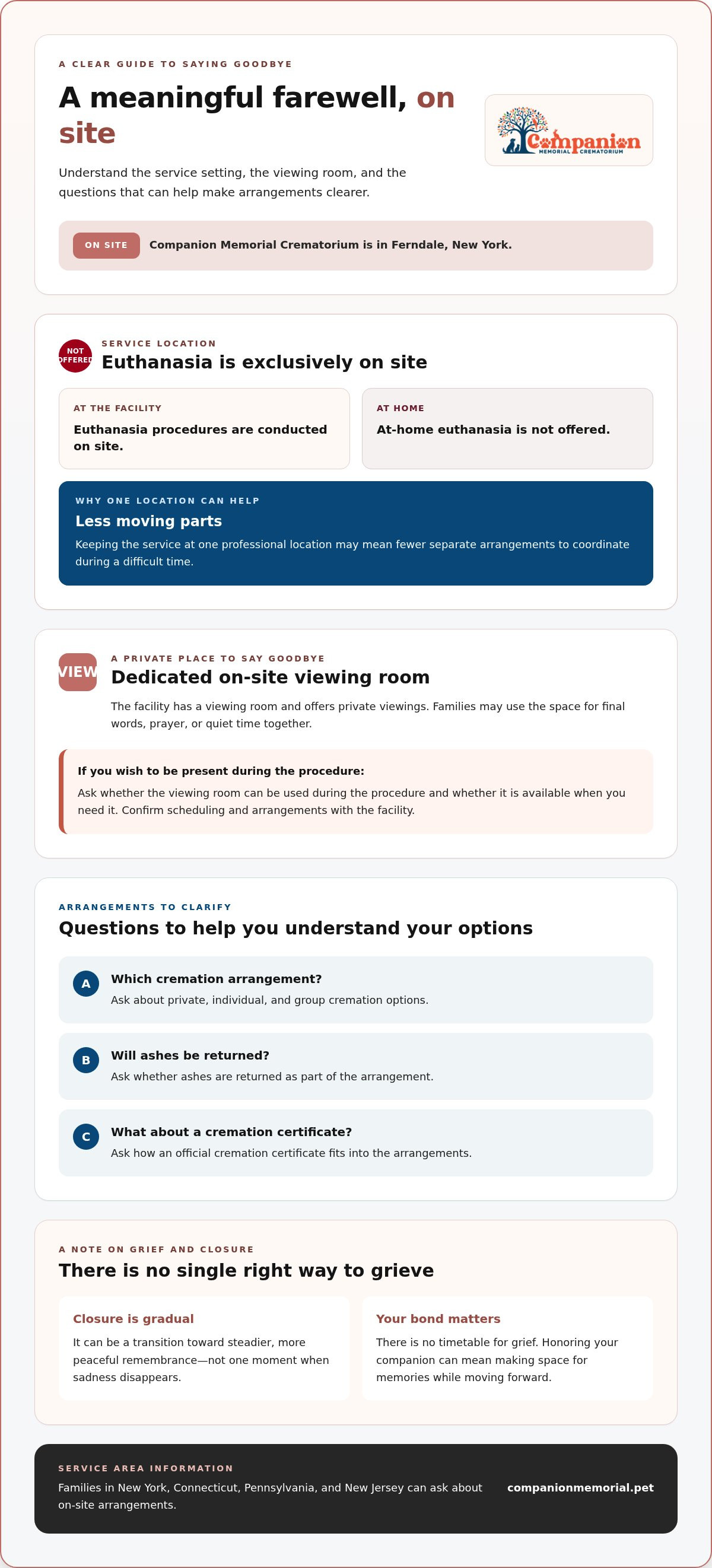
At Companion Memorial Crematorium in Ferndale, New York, euthanasia services are provided exclusively on site. At-home euthanasia isn’t offered. Having services at one professional location may mean fewer separate arrangements to coordinate during a difficult time. The facility provides an on-site setting for families to say goodbye.
The Benefits of an On-Site Euthanasia Experience
An on-site setting brings the service together in one professional location, which may help families focus on their companion rather than coordinating between places. If you’re considering being present during the procedure, ask the facility about the arrangements and whether the viewing room can be used for this purpose. Read more about compassionate on-site pet euthanasia in Ferndale, NY to learn about this option.
Utilizing a Viewing Room for Final Closure
A dedicated viewing room offers families a private place to say goodbye. If you wish to be present during your pet’s on-site euthanasia, contact the facility to ask whether the room can be used during the procedure and whether it is available when you need it. Confirming these details can help you understand what to expect.
For some families, being together in a private room allows space for prayer, final words, or silence. It can offer a personal setting for loved ones to focus on their bond and the goodbye they wish to share. Companion Memorial Crematorium has an on-site viewing room and offers private viewings. Ask the facility about scheduling and arrangements for your family.
There’s no single farewell that brings peace to everyone. Clear information about the setting and available arrangements can help you make a choice that feels right. For additional emotional support, the Association for Pet Loss and Bereavement offers resources for people grieving a companion animal.
For details about the facility and its on-site services, visit Companion Memorial Crematorium’s service information.
How Choosing the Right Cremation Path Supports Healing
Cremation decisions can carry emotional weight because they shape how you say goodbye and what memorial choices may follow. Taking time to understand the options can make the process feel less uncertain. There’s no universally right choice. What matters is understanding what each option means and feeling comfortable with the arrangements.
Private vs. Individual Cremation: Your Choice Matters
Private and individual cremation are both options offered by Companion Memorial Crematorium, but providers may use these terms differently. Before choosing, ask what each option means at the facility, whether your pet is cremated separately, and whether their ashes will be returned to you. Clear answers help you choose an arrangement that fits your wishes instead of relying on assumptions about terminology.
For some families, knowing how their pet will be cared for offers reassurance. Others may focus on the memorial they want to create afterward. If having your pet’s ashes returned is important to you, confirm which cremation option provides for that and ask how the process is documented. You can learn more in this guide to private pet cremation and dignified end-of-life care.
The Significance of Receiving Your Pet’s Ashes
For families who choose an option that includes receiving their pet’s ashes, bringing them home in an urn can feel like a quiet homecoming. The urn may become a place to pause, reflect, or share memories. Others may prefer a different form of remembrance. Neither choice diminishes the bond you shared.
An official cremation certificate can provide a tangible record of the arrangements. Companion Memorial Crematorium provides official cremation certificates. If you have questions about how your pet is identified or how arrangements are documented, ask the facility to explain its process before you decide. Clear answers can replace uncertainty with a better understanding of what to expect.
Companion Memorial Crematorium is veteran-owned and operated. Its stated approach emphasizes dignified care, with each pet handled respectfully. For some families, learning about the facility and asking about its procedures can help them feel more assured during a vulnerable time. Explore pet cremation options and what to consider as you weigh your choices.
Finding closure after pet loss may involve practical details as well as private acts of remembrance. You can ask questions, take time to consider the available options, and choose what feels meaningful to you. To review cremation services and urns, visit Companion Memorial Crematorium’s service information.
5 Practical Rituals for Finding Peace After Loss
A simple ritual can give a difficult moment some shape: a beginning, a pause to remember, and a way to carry love forward. It doesn’t need to be elaborate or public. The most meaningful gesture is one that feels right to you, whether it brings comfort through a familiar object, a quiet sound, or time with people who loved your companion too.
Immediate Rituals Following the Loss
Choose a small act that helps you acknowledge the goodbye without asking yourself to feel any particular way. You might:
- Gather for a remembrance. Share a few memories, say a prayer, or sit together in silence. Companion Memorial Crematorium has a dedicated on-site viewing room for private viewings. Ask the facility whether it is available for the quiet farewell you have in mind.
- Make a memory box. Place your pet’s collar, favorite toy, and printed photographs inside. Holding a familiar object or looking through the pictures can make remembrance tangible. Open the box whenever it feels comforting.
- Speak, write, or listen. Read a favorite note aloud, tell a story about your pet, or play music that reminds you of them. If words don’t come, simply sitting with a photograph can be enough.
Long-Term Memorialization Strategies
Remembrance can take different forms as grief changes. There’s no deadline for choosing a lasting tribute, and you can adapt these ideas to your beliefs and family traditions.
- Choose a memorial urn. If your chosen cremation arrangement includes receiving your pet’s ashes, consider an urn that reflects their personality or feels at home in a meaningful place. Companion Memorial Crematorium offers urns.
- Plant a living memorial. A tree, garden, or potted plant can become a place to visit and remember. Choose something suited to your space and the care you’re able to provide, and let it serve as a gentle reminder of the life you shared.
- Support an animal cause in their honor. Making a tribute gift to help animals in need is a comforting way to celebrate your companion's memory; click here to explore vetted grassroots animal charities and shelters.
Some families also choose to scatter ashes in a place associated with their pet. If this feels meaningful, first confirm that the location allows it and suits your wishes. You don’t need a ritual to prove your love. Finding closure after pet loss is personal. A private act, a family remembrance, or no formal ritual at all can be right for you. For more ideas, read this guide to honoring a lifetime of love through pet memorial services.
If a memorial urn or private viewing feels like a fitting part of your farewell, explore Companion Memorial Crematorium’s memorial options.
Moving Forward: Life After the Final Goodbye
Moving forward doesn’t mean moving on from your companion or leaving their memory behind. It means learning to carry the bond into a changed daily life. Some days may feel manageable; a familiar date, quiet room, or remembered routine can bring grief close again. That return of sadness doesn’t erase the healing that has already taken place.
Navigating the “New Normal”
Home may feel different without the sounds and routines you shared. You might keep your pet’s bed or bowls in place for now, or put them away when you’re ready. On birthdays, adoption anniversaries, or other meaningful dates, plan a small remembrance, spend time with someone who understands, or let the day pass quietly. There’s no required way to observe it.
Friends and family may ask what happened or how you’re doing. Share as much as feels comfortable, or say, “I appreciate you asking, but I’m not ready to talk about it.” In the early days, offer yourself patience. Grief can make ordinary tasks feel unfamiliar, and you don’t need to judge your pace or expect each day to feel better than the last.
Thinking about another pet can bring tenderness, uncertainty, or guilt. There’s no set waiting period. Consider whether you feel open to knowing a new animal as an individual, rather than expecting them to replace the companion you lost. You can continue to love and remember one pet while, in time, making room for another.
The Role of Professional Support
Support from a pet bereavement counselor may help if grief feels overwhelming, remains difficult to manage, or affects your ability to take care of daily needs. A counselor familiar with pet loss can offer a space to speak openly without minimizing the importance of the relationship. Seeking support isn’t a sign that you’re grieving incorrectly; it’s one way to care for yourself.
Memorials and personal rituals can also support healing. A photograph, a favorite story, or a quiet visit to a meaningful place can keep your companion’s memory present without asking you to remain in the hardest moments of loss. Finding closure after pet loss is not a final separation from that love. The bond endures, even as your life changes around it.
Companion Memorial Crematorium is veteran-owned and operated, and offers cremation services, urns, private viewings, and euthanasia exclusively on site. The facility can answer questions about these arrangements, but it does not provide at-home euthanasia. For information about on-site care, visit Companion Memorial Crematorium.
Carry Their Memory Forward with Care
Finding closure after pet loss doesn’t mean leaving your companion behind. Grief takes its own course, and the choices that support you may be simple: honoring the bond through a personal ritual, asking clear questions about cremation, or creating space for a final goodbye that feels right for your family.
At Companion Memorial Crematorium in Ferndale, New York, euthanasia services are provided exclusively on site. At-home euthanasia isn’t offered. A dedicated on-site private viewing room gives families a place to say goodbye, while official cremation certificates provide a tangible record of the arrangements. The facility is 100% combat veteran-owned and operated.
If you’re considering arrangements from New York, Connecticut, Pennsylvania, or New Jersey, take the time you need to understand your options and ask questions. Contact Companion Memorial Crematorium to discuss on-site services and memorial options. Your grief is valid, and the love you shared remains part of your story.
Frequently Asked Questions
How long does it take to find closure after losing a pet?
There’s no set timeline for finding closure after pet loss. Grief can shift over time, and familiar routines, special dates, or memories may bring sadness back even as daily life starts to feel steadier. Try not to measure your healing against someone else’s experience. Give yourself room to remember your pet in ways that feel comforting, and seek support if grief feels difficult to manage alone.
Is it normal to feel guilty after choosing on-site euthanasia?
Yes, guilt and “what-if” thoughts can arise after choosing euthanasia, including when it takes place on site. Those feelings don’t automatically mean you made the wrong decision. If you’re struggling with doubts, consider talking with the veterinarian involved or a pet bereavement counselor. Companion Memorial Crematorium provides euthanasia exclusively at its facility in Ferndale, New York, and does not offer at-home euthanasia.
What is the difference between private and group cremation for closure?
Private cremation is an option for families seeking an arrangement centered on their individual pet, while group cremation involves more than one pet in the cremation process. The specific handling and whether ashes are returned depend on the arrangement, so ask the provider to explain exactly what each option means before choosing. Companion Memorial Crematorium offers private, individual, and group cremation options for families in New York, Connecticut, Pennsylvania, and New Jersey.
Can I be present during my pet’s cremation?
Companion Memorial Crematorium offers private viewings in a dedicated on-site viewing room, where families may have an opportunity to say goodbye. Being present for a viewing is not the same as witnessing the cremation itself. Ask the facility directly whether families can be present during cremation and what arrangements may be available.
Does Companion Memorial offer at-home euthanasia services?
No. Companion Memorial Crematorium does not offer at-home euthanasia. Euthanasia services are conducted exclusively on site at the facility in Ferndale, New York. Families in New York, Connecticut, Pennsylvania, and New Jersey who are considering care can contact the facility to ask about its on-site service and discuss arrangements.
How can a viewing room help my children process the loss?
A private viewing room can give a family a quieter place to say goodbye together. Before deciding whether children should attend, consider their age, wishes, and what they understand about death. Explain in simple, honest language what they may see, and let them choose whether to participate without pressure. Companion Memorial Crematorium has a dedicated on-site viewing room. Ask the facility about scheduling.
What should I do with my pet’s ashes once I receive them?
There’s no required way to keep or honor your pet’s ashes. You might place them in a memorial urn, create a small remembrance space at home, or include them in a personal ritual. Some families consider scattering ashes in a meaningful place; if that appeals to you, check whether the location permits it. Choose an approach that feels respectful and comforting to you.
Why is a professional facility considered to have “fewer moving parts”?
“Fewer moving parts” describes the practical simplicity of having services conducted at one professional facility rather than coordinating across separate locations. Companion Memorial Crematorium provides on-site euthanasia and cremation services in Ferndale, New York. A dedicated viewing room is also available for private viewings. Ask the facility how its arrangements work so you understand the steps involved and can plan with greater clarity.


