

Payment plans aren’t automatic. Whether vets offer payment plans for euthanasia depends on the clinic: some arrange in-house installments, while others use third-party financing or require payment at the time of service. Ask which option applies and review its terms before deciding.
It’s understandable to want a clear picture of costs and payment choices while facing a difficult decision for your pet. This guide explains how clinic payment plans differ from outside financing, what terms to review, and how to assess a manageable budget.
You’ll also find practical questions about installments, interest, and accepted payment methods, so you can understand the options and plan for a difficult moment.
Key Takeaways
- Some veterinary clinics offer payment plans, but availability and terms differ. Learn what factors may affect whether a clinic can offer installments.
- Compare an in-house arrangement with third-party financing, paying close attention to interest, fees, and promotional terms.
- Build a practical budget by separating the veterinary bill from aftercare choices and considering how each affects the total.
- Before agreeing to a plan, understand the payment schedule and how installments are managed so you can plan with greater clarity.
- Payment methods vary by hospital, so knowing which options are commonly accepted can help you prepare.
1. Payment plans as an alternative to third-party financing
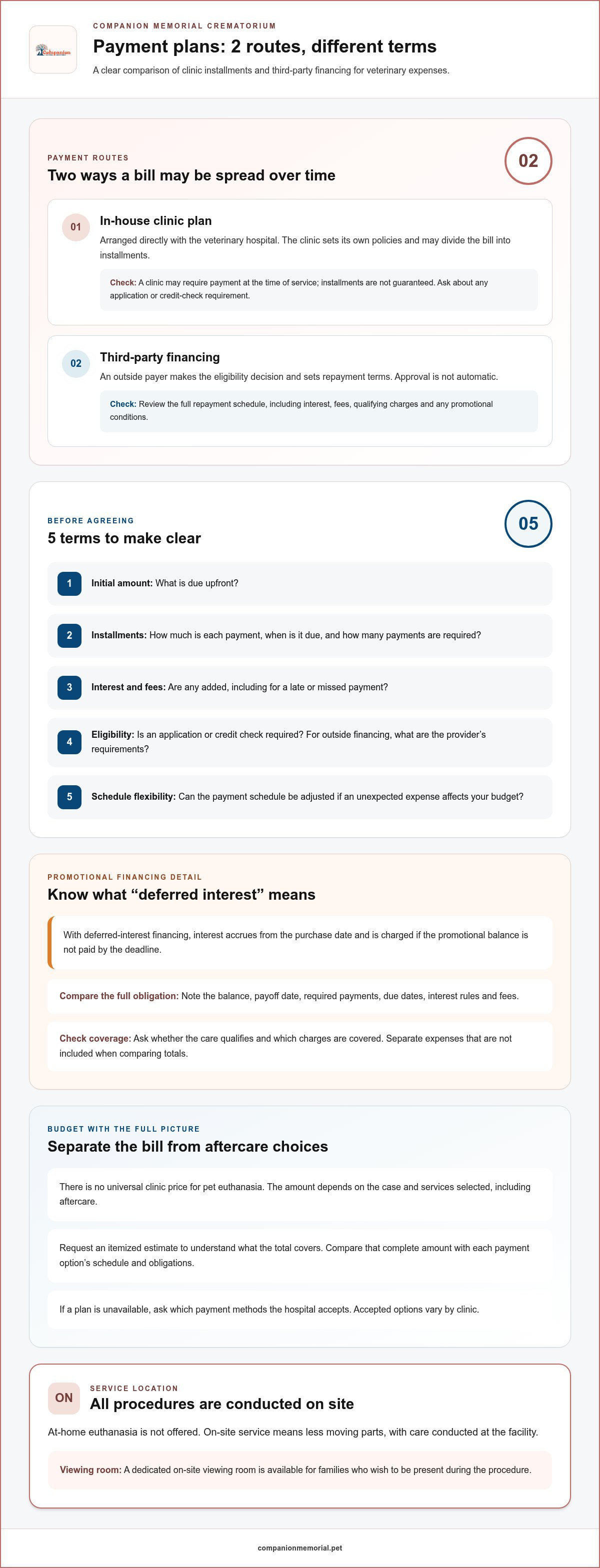
Some U.S. veterinary hospitals offer in-house payment plans, while others provide financing through an outside payer. Availability and terms vary, so ask whether the clinic offers its own installments or works with a third-party financing provider. These options can spread veterinary expenses over time, but they work differently.
Companion Memorial Crematorium provides euthanasia services on site, not at home. Euthanasia is offered only for pets facing suffering or a significantly reduced quality of life. Ask about the service and payment arrangements when discussing your pet’s care.
For an empathetic perspective on end-of-life decisions, watch this TEDx Talks video:
An in-house payment plan is arranged directly with a veterinary hospital. It may divide a bill into installments without involving a separate lender. Third-party financing involves an outside payer, which sets its own eligibility requirements and repayment terms. For example, a clinic may offer its own arrangement, while a qualifying purchase could use a lender’s promotional financing.
Loan amounts and repayment periods depend on the financing provider, the requested amount, and eligibility. Before accepting an offer, review the full repayment schedule, including interest and fees. A larger approved balance may cover more veterinary expenses, but it can also mean more to repay.
To apply for third-party financing, follow the provider’s application process and review its decision and terms before using the credit. Approval isn’t automatic. Some credit card providers allow applicants to receive approval for a new line of credit during a veterinary visit, subject to the provider’s terms.
Promotional financing may lower or defer interest costs during a stated promotional period. With deferred-interest financing, interest accrues from the purchase date and is charged if the promotional balance isn’t paid off by the deadline. Check the payoff date and required payments, then compare them with your budget before choosing this option.
For end-of-life care, compare the complete amount due with each option’s repayment schedule. A clinic plan may depend on its policies and your relationship with the hospital; third-party financing depends on lender eligibility and terms. Writing down the balance, due dates, interest rules, and any fees makes the differences easier to assess.
Some veterinary practices offer promotional financing through a third-party payer for qualifying purchases.
Before relying on this option, ask whether the care being considered qualifies and which charges the offer covers. Review the promotion’s terms, including the conditions for receiving its benefits, and consider how the payments fit your budget. If some expenses aren’t covered, separate them from the qualifying purchase when comparing the total cost. Financing is one possible way to manage a bill, so weigh it against the hospital’s own plan and other accepted payment methods. Base your decision on the full amount owed and repayment obligations, not the promotional feature alone.
2. Availability and terms of clinic payment plans
Payment plans aren’t available at every veterinary hospital, and each practice sets its own policies. This can matter during an unexpected end-of-life decision, when families need to understand payment choices. There’s no universal requirement for clinics to offer installments.
Do vets require payment upfront for euthanasia? Payment policies vary by hospital. One clinic may require payment at the time of service, while another may arrange installments. Ask what’s due and when.
Some veterinary hospitals that allow payment over time may not run a credit check or require an application. That makes an in-house plan different from financing based on a lender’s eligibility rules. Each clinic sets its own terms, and a previous relationship doesn’t guarantee payment flexibility.
An established relationship with a hospital or veterinarian may affect whether they agree to a payment plan. For example, a clinic may consider a longtime client differently from someone requesting an arrangement during a first visit. This isn’t an approval rule, so don’t treat past visits as a promise of funding.
Ask for the payment terms before agreeing to a plan. Specific questions help you compare the offer with what you can afford:
- Is an in-house payment plan available for this service, and what amount is due initially?
- How much is each installment, when is it due, and how many payments are required?
- Are interest or fees added, including charges for a late or missed installment?
- Does the clinic require a credit check or application for this arrangement?
- Can the payment schedule be adjusted if an unexpected expense affects your budget?
What should you ask a vet about euthanasia payment plans? Ask whether the clinic offers installments, then clarify the initial amount, due dates, interest, fees, and late-payment terms. If it doesn’t offer a plan, ask which payment methods it accepts so you can consider whether another financing option suits your circumstances.
Read the written terms carefully before accepting. If, for instance, a missed payment triggers fees, include that possibility in your budget rather than considering only the first installment. A clear schedule shows the full obligation more realistically.
For an on-site procedure, knowing the setting can also help you plan the visit. The on-site euthanasia services take place at the facility, with a dedicated viewing room available for families who wish to be present.
3. Budgeting and pet-specific savings
There isn’t one universal price for pet euthanasia at a veterinary clinic. The amount depends on the case and services selected, including aftercare. Request an itemized estimate to see what the total covers.
A budget can help separate expected veterinary expenses from an urgent need. In the United States, 37% of adults don’t have cash or its equivalent for a $400 emergency expense. That figure underscores why owners may benefit from planning before an illness or end-of-life decision becomes urgent.
Consider setting aside a pet-specific reserve, even if contributions are modest. Keep it separate from everyday spending, and record deposits alongside veterinary bills. For example, review the reserve after each payday and adjust contributions when household circumstances change. A clear record shows what funds are available without relying on credit.
Pet insurance can help with eligible veterinary care, but it doesn’t cover preexisting conditions. More than 6 million pets are insured in the United States. Most policies require owners to pay bills upfront and seek reimbursement afterward, so insurance may not provide immediate funds for an unexpected expense. Review the policy’s exclusions and reimbursement process before counting on it for urgent care.
Planning ahead can also make expenses easier to anticipate. Veterinary checkups are recommended at least once a year, with more frequent visits for senior pets and pets with medical issues. Use appointments to discuss ongoing illness, possible future care, and financial preparation. These conversations can help distinguish routine expenses from costs that may arise as circumstances change.
Pet ownership expenses over a pet’s lifetime can add up to tens of thousands of dollars. That broad commitment may include routine care and unexpected treatment, not just end-of-life services. Review spending periodically, update the pet-care budget after a diagnosis, and track any financing balance so future expenses remain visible.
Some nonprofit programs offer grants or donations for veterinary care that don’t require repayment. However, emergency grants often require applications and may involve wait times, so same-day funding is unlikely. If a pet needs time-sensitive care, a grant may not provide funds quickly enough to meet the immediate need. Treat grant assistance as a possible part of longer-term planning, not ready cash.
Use this simple budgeting sequence to prepare:
- List recurring preventive care and current treatment expenses.
- Set aside a separate reserve for unexpected veterinary needs.
- Review insurance exclusions, upfront payment requirements, and reimbursement steps.
- Record grant applications separately from funds already available.
- Update the plan after a new illness, diagnosis, or change in household circumstances.
These steps can’t remove the emotional weight of a difficult decision, but they can clarify what resources are available. A written budget, insurance details, and current reserve balance offer a practical starting point when unexpected veterinary expenses arise.
4. How payment plans are set up and managed
A veterinary hospital may manage an in-house payment plan through its billing system. Some hospitals let pet owners repay bills in monthly installments. The hospital sets the arrangement, so schedules and payment processes vary.
Ask the billing staff to explain the process before agreeing to installments. Clarify which balance the plan covers, when the first payment is due, and how to make later payments. A clear schedule helps you match due dates with your household budget and avoid missing an installment.
In-house plans may not require an application or credit check, but that doesn’t mean every pet owner will qualify. A hospital may consider its policies and your relationship with the practice. By contrast, a third-party financing application follows the outside provider’s process and eligibility rules. Keep these routes distinct when comparing terms.
Before accepting a plan, ask for the essential details in a form you can review later:
- The balance included in the plan and any amount due at the start.
- The installment amount, due dates, and payment frequency.
- Whether interest or fees apply to the arrangement.
- What happens if a payment is late or missed.
- How the hospital records payments and updates the remaining balance.
Pay close attention to late-payment terms. Some veterinary clinics charge interest or fees when clients miss installments. If a due date falls before your regular payday, ask whether another schedule is possible before committing. Don’t assume flexibility is available; confirm the terms offered.
Once the plan begins, track each installment against the hospital statement. Save receipts or confirmation messages and compare them with the balance on the next statement. If a payment doesn’t appear, contact the billing office promptly with its date and confirmation details. Keeping a record can help resolve posting errors and clarify your account.
A credit card may be another way to pay a veterinary bill, but it isn’t the same as an in-house plan. Card payments follow the card issuer’s terms, while clinic installments follow the hospital’s agreement. Before using a card, consider how the charge fits alongside existing expenses and other pet-care costs.
For a third-party plan, keep the application decision and repayment terms with your budget records. Note the promotional end date, if there is one, and track the remaining balance as payments post. Whether you pay through a hospital statement, credit card, or outside financing, a written schedule and regular review can make repayment easier to manage.
5. What payment options do vets accept for euthanasia?
Payment policies differ among veterinary hospitals. Emergency veterinary hospitals generally accept standard payment methods, but each hospital decides which forms it takes. A method accepted at one clinic may not be available at another, so identify how you plan to pay before the appointment.
Ask the hospital whether it accepts cash, a debit card, a credit card, or another payment method. These are examples, not a universal list of accepted options. If you plan to use a card, confirm that the clinic can process it for the service and ask when payment is due.
Some hospitals offer in-house installments, while others use third-party financing or require payment at the time of service. These arrangements are separate from standard payment methods. Ask which options apply to your appointment, what’s due initially, and whether any balance can be paid later.
For a clear conversation, keep the questions practical:
- Which payment methods does this hospital accept for euthanasia?
- Is payment due before or during the appointment?
- Can the bill be divided into installments through the clinic?
- Does the hospital accept third-party financing for this service?
- Can payment for aftercare be handled separately from the procedure?
That final question can help distinguish the euthanasia service from aftercare choices. If cremation or another available option is part of the arrangement, ask how each item appears on the estimate and when its payment is due. An itemized breakdown makes it easier to understand the total without confusing separate services.
Write down the answers and compare them with your available funds. If you plan to pay by credit card, bring it and confirm you have enough available credit. If a family member will contribute, decide in advance who will make the payment and which method they’ll use. A simple plan can keep payment logistics from adding confusion during a difficult visit.
At Companion Memorial Crematorium, euthanasia procedures take place on site, not at home. The facility has a dedicated viewing room for families who wish to be present. These details can help you plan the visit and its payment arrangements.
To plan an on-site visit, review on-site euthanasia service details and consider which payment questions you’ll want answered before the appointment.
Veterinary clinics do not all offer payment or financing options, so pet owners can ask their clinic about availability. Make that inquiry before relying on a particular arrangement, and ask specifically whether payment options or financing are available for this visit. If the clinic does not offer an option you had expected, use its answer to reconsider your payment plan before the appointment. Keeping the question direct can help clarify what the clinic can provide, rather than assuming that an option offered elsewhere will also be available here. Confirm the answer with the clinic when making arrangements.
Companion Memorial Crematorium: Private Cremation
Companion Memorial Crematorium offers Private Cremation for families considering aftercare following a pet’s passing. Its on-site euthanasia services are provided exclusively at the facility; at-home euthanasia is not offered. Keeping the procedure on site means less moving parts, with a dedicated viewing room available for families who wish to be present.
Families may also choose Individual Cremation or Group Cremation, depending on the aftercare option that feels appropriate. These services offer a practical next step after reviewing payment arrangements and deciding how to honor a beloved companion. The team can explain the options and help you choose without pressure.
For information about your options, visit companionmemorial.pet or contact Companion Memorial Crematorium.
Choose the next step that feels manageable
Before making arrangements, consider what would help you feel prepared: a written list of payment questions, a trusted person beside you, or time to consider aftercare choices. You don’t need to resolve every detail at once. A clear next step can make a difficult moment feel more organized.
Whether your veterinarian can offer a payment plan for euthanasia depends on the clinic’s policies. Once you understand the terms available, you can focus on what matters to your family and the way you wish to honor your companion. Companion Memorial Crematorium offers Private Cremation, Individual Cremation, and Group Cremation as aftercare options.
When you’re ready to consider those arrangements, explore your pet’s aftercare options. Take the time you need, and choose the path that best reflects your bond.
Frequently Asked Questions
Do veterinarians offer payment plans for pet euthanasia?
Some veterinarians offer payment plans for euthanasia, but clinics set their own policies. Before scheduling, request an itemized estimate that separates the procedure from aftercare, then ask the billing office to document any agreed payment schedule. This clarifies whether the arrangement covers euthanasia, cremation, or both. Knowing the payment expectations in advance can help you focus on your pet during the appointment.
Are there financial assistance programs for pet euthanasia?
Some nonprofit programs offer grants or donations for veterinary care that don’t require repayment. Applications and wait times mean emergency grants are unlikely to provide same-day funding. If you’re in New York, Connecticut, Pennsylvania, or New Jersey, include potential assistance in your advance planning, but don’t count pending funds as available for an immediate appointment. Review each program’s eligibility rules and whether its assistance covers the care you need.


