

Choosing to say goodbye is not an abandonment of your dog; it is the final, most profound act of protection you will ever perform for them. You likely feel a heavy weight of guilt, questioning whether you're acting too soon or waiting a moment too long. It's natural to worry about their comfort or feel uncertain about what follows. This guide is designed to help you approach dog euthanasia with clarity and peace, ensuring your companion's transition is as gentle as the life they shared with you.
We believe that every pet deserves a departure marked by quiet dignity and professional care. You'll learn how to evaluate your dog's quality of life with honesty, what the medical process actually entails to ease your fears of pain, and how to arrange a respectful aftercare plan. By understanding these steps, you can move forward with the confidence that you're honoring your pet's legacy with the same love they gave to you every day. This journey is difficult, but you don't have to walk it without a steady, knowledgeable hand to guide your way.
Key Takeaways
- Understand how to frame this difficult choice as a final act of protection, shifting the focus from loss to a release from pain.
- Learn to use objective tools to evaluate your pet's comfort, providing the clarity needed to make a decision rooted in love rather than guilt.
- Gain a step-by-step understanding of the dog euthanasia process to ensure your companion experiences a peaceful, pain-free transition in a private environment.
- Explore the importance of dignified aftercare and how selecting a personalized memorial service can help preserve your pet's legacy.
- Discover the benefits of a dedicated memorial facility, which offers a more serene and respectful atmosphere for your final goodbye than a busy animal hospital.
Recognizing the Time: Understanding Dog Euthanasia as an Act of Love
The word euthanasia is derived from the Greek terms eu, meaning good, and thanatos, meaning death. In the context of animal euthanasia, this concept represents a compassionate transition that prioritizes the comfort of a beloved companion over the human desire to hold on. Choosing dog euthanasia is often the most selfless decision a pet owner can make. It marks a profound shift in perspective, moving away from the heavy language of "putting a dog down" and toward the gentle reality of releasing a friend from a body that can no longer sustain their spirit without pain.
As pet owners, we carry an ethical responsibility that spans the entirety of our companion's life. Throughout your dog's years, you've provided food, shelter, and protection. This final duty of care is simply the final chapter of that lifelong commitment. While a traditional veterinary clinic is a place of healing, it can often feel hurried or clinical during such a sensitive moment. A professional on-site memorial facility offers a more dignified atmosphere, providing a quiet, sacred space where the focus remains entirely on the bond you share rather than the sterile efficiency of a medical office.
The Emotional Weight of the Decision
When navigating the complexities of dog euthanasia, many owners find themselves trapped in a cycle of guilt. They wonder if they're acting too soon or waiting a moment too long. It's helpful to remember that dogs don't perceive time through the lens of future milestones; they live entirely in the present. If their "now" is defined by persistent discomfort, a peaceful exit is a profound mercy. Your veterinarian serves as a compassionate medical advisor during this time, offering objective insights into your dog's physical condition while acknowledging the deep emotional weight you carry.
When the 'Good Days' No Longer Outnumber the Bad
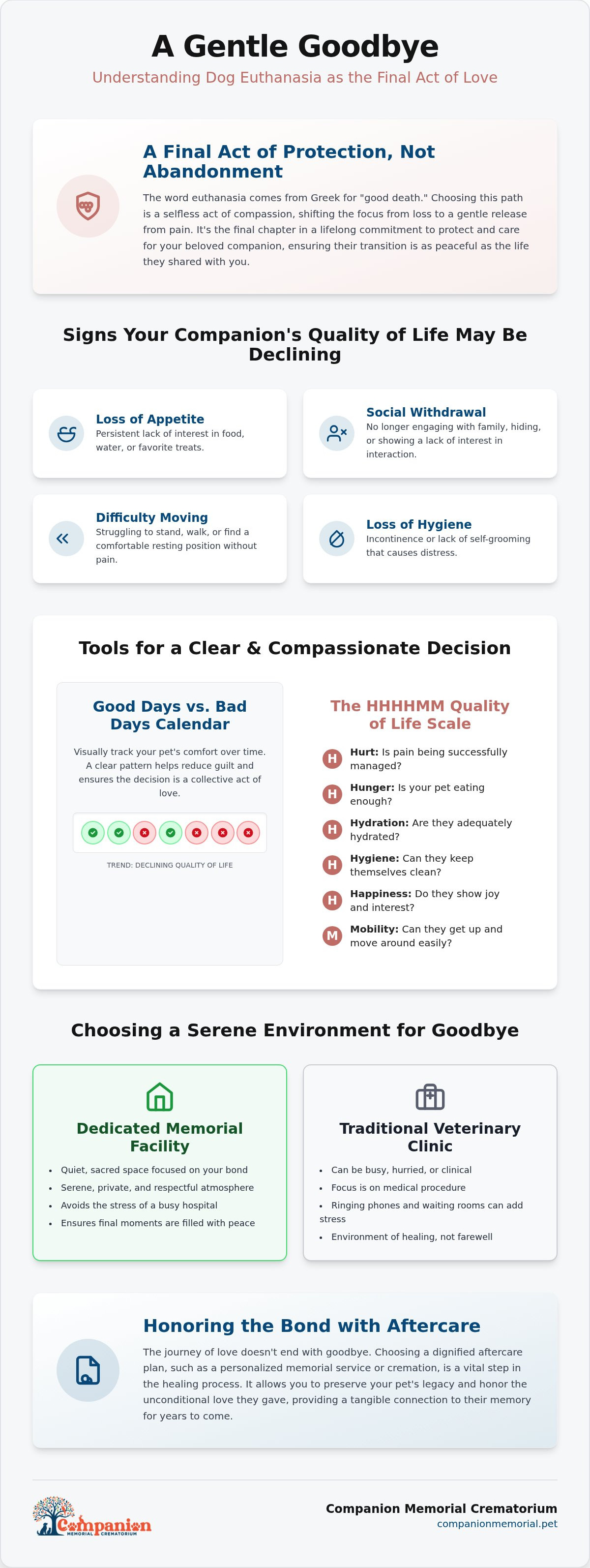
Recognizing the right moment often requires looking for subtle shifts in personality and engagement. There is a distinct difference between the natural slowing of aging and the heavy burden of suffering. You might observe several signs that indicate your dog's quality of life is declining:
- A persistent loss of appetite or lack of interest in favorite treats.
- Social withdrawal or a lack of engagement with the family.
- Difficulty standing, walking, or finding a comfortable resting position.
- Incontinence or a loss of basic hygiene that causes the dog visible distress.
A dedicated memorial facility provides the physical and emotional space needed to process these realizations. Away from the ringing phones and busy waiting rooms of a hospital, you're given the time to sit in stillness. This environment allows you to focus on the transition with the quiet dignity your companion deserves, ensuring their final moments are filled with peace rather than environmental stress.
Assessing Your Dog's Quality of Life: Tools for Decision-Making
The decision to move forward with dog euthanasia is rarely a sudden realization. It's more often a quiet, heavy accumulation of small observations. Because our love for our pets can sometimes cloud our judgment, using objective measurement tools helps reduce emotional bias. These frameworks aren't meant to replace your intuition. Instead, they provide a structured way to honor your pet's needs when they can no longer speak for themselves.
One of the most effective visual aids is the "Good Days vs. Bad Days" calendar. By marking each day with a simple symbol, you can see the trajectory of your dog's health over several weeks. If the bad days consistently outnumber the good, it's a clear indication that their quality of life is declining. This visual record helps family members reach a consensus, ensuring the decision is a collective act of love rather than an individual burden. It's also vital to observe shifts in mobility, appetite, and basic hygiene, as these are the primary pillars of a dog's daily comfort.
The HHHHMM Quality of Life Scale
The HHHHMM scale serves as a clinical yet compassionate standard for pet owners to assess their companion's daily experience. This tool evaluates six critical areas: Hurt, Hunger, Hydration, Hygiene, Happiness, and Mobility. By assigning a score from zero to ten in each category, you can identify where your pet is struggling most. If the total score drops significantly, it suggests that medical intervention may no longer be enough to maintain a dignified existence. This scoring system helps you move away from vague feelings and toward a decision rooted in your dog's actual physical and emotional state.
Consulting Your Veterinary Team
Your veterinarian is an essential resource during this period of uncertainty. They can provide a professional prognosis and explain the limitations of current pain management options. It's helpful to ask specific questions about how your dog's condition will progress. You might ask, "Is there a treatment that will restore their joy, or are we simply extending their discomfort?" Professionals who follow the AVMA Guidelines for the Euthanasia of Animals ensure that every step of the process is handled with the highest medical and ethical standards.
While general practitioners are excellent for routine care, end-of-life specialists often provide a different perspective focused entirely on comfort and legacy. If you're struggling to find clarity at home, visiting a dedicated facility for on-site euthanasia services can offer the peaceful environment needed to make these final assessments. This allows you to step away from the distractions of daily life and focus solely on what is best for your loyal companion in their final days.
The Euthanasia Process: What to Expect During the Appointment
Understanding the physical steps of dog euthanasia can replace fear with a sense of calm control. This moment isn't a medical procedure in the traditional sense; it is a sacred transition intended to provide a gentle end to a life well-lived. Choosing a quiet, private environment for this final goodbye is essential. Unlike a busy animal hospital where phones ring and other patients wait, a dedicated memorial facility offers a sanctuary where your focus can remain entirely on your companion.
One of the most frequent questions owners ask is whether they should stay in the room. This is a deeply personal choice with no wrong answer. Some find peace in being the last thing their pet sees, while others prefer to remember their companion in more vibrant moments. Your dog knows they are loved regardless of your physical presence in those final minutes. The veterinary team's primary goal is to ensure the dog feels only comfort and safety throughout the entire process.
Step-by-Step Procedure
The process typically begins with the administration of a sedative. This initial injection induces a deep, dreamless sleep within a few minutes. During this stage, your dog will be completely unaware of their surroundings and will feel only a profound sense of relaxation. Once the veterinarian confirms your pet is in a state of deep sleep, the final medication is administered. This concentrated anesthetic works quickly and painlessly to stop the heart.
By following the AVMA Guidelines for the Euthanasia of Animals, practitioners ensure the method used is the gold standard for humane care. After the final injection, the veterinarian will quietly listen for a heartbeat and confirm the passing. It's helpful to be prepared for natural physical changes that may occur after death. You might observe a final deep breath, muscle twitching, or the release of the bladder. These are involuntary reflexes of the body and do not indicate any pain or distress for the animal.
Creating a Peaceful Atmosphere
The environment plays a significant role in the quality of the farewell. Soft lighting, gentle music, and a non-clinical setting help to lower the stress for both the pet and the owner. This atmosphere allows for a meaningful "viewing" period where the family can sit with their companion for as long as they need. There is no rush; this time is yours to honor the bond you shared.
At a veteran-owned facility, this process is often guided by the values of honor, integrity, and ceremony. Every movement is disciplined and respectful, ensuring that the transition is handled with the quiet dignity it deserves. This commitment to service means your pet is treated with the highest level of care from the moment they arrive until the final aftercare steps are completed.
Honoring the Bond: Choosing Aftercare and Memorialization
The quiet moment following dog euthanasia often brings a complex mix of relief and profound sorrow. While the physical presence of your companion has transitioned, the bond you share remains as strong as ever. Aftercare is the process of moving from the immediate grief of the procedure to the lasting tribute of a memorial. It's a period where transparency and ethical standards are paramount, ensuring that your pet is treated with the same respect in death as they were in life. Many families find that the act of selecting a final resting place provides a necessary sense of closure and a tangible way to honor a lifetime of loyalty.
Cremation Options Explained
Choosing the right method of aftercare is a personal decision that depends on how you wish to remember your pet. Understanding the nuances of each service ensures you can move forward without uncertainty. Unlike a general veterinary practice that might outsource these duties, a dedicated crematorium maintains a chain of custody that prioritizes integrity and clear communication.
- Private Cremation: Your dog is the sole occupant of the cremation chamber throughout the entire process. This option is for those who wish to have their pet's ashes returned to them with the absolute certainty of their identity.
- Individual Cremation: Your pet is placed in a partitioned space within the chamber, ensuring they are separated from others. This method also allows for the return of your pet's specific remains to your home.
- Group Cremation: This is a communal and respectful farewell where several pets are cremated together. While ashes are not returned to the family, it's a dignified choice for those who prefer a simpler transition.
Memorial Tributes and Keepsakes
The emotional importance of receiving your dog's ashes back cannot be overstated. It represents a homecoming, a way to keep their memory close within the sanctuary of your own space. Selecting a memorial urn that reflects your dog's unique personality serves as a permanent tribute to their spirit. These vessels range from traditional wooden designs to more contemporary styles, allowing you to find a fit that feels right for your home and your memories.
Beyond the urn, many owners find comfort in small, physical keepsakes that offer a tactile connection. An official cremation certificate provides a formal record of the care provided and serves as a final document of your pet's life journey. Other meaningful tributes include paw prints, hair clippings, or memorial jewelry. These objects aren't just mementos; they are tools that help in the long-term grieving process by providing a focal point for your reflection. If you're ready to plan a dignified farewell, you can explore our specialized cremation services to find the option that best honors your companion's legacy.
A Dignified Farewell at Companion Memorial Crematorium
At Companion Memorial Crematorium, we understand that the setting of your final goodbye is just as significant as the care provided. Our facility in Ferndale is purposefully designed to function as a sanctuary rather than a clinic. While traditional veterinary hospitals focus on the efficiency of medical treatment, our space is built for peace, reflection, and quiet dignity. We serve as a bridge between the difficult moment of dog euthanasia and the lasting tribute of a memorial, ensuring that every step of the transition is handled with unwavering grace.
Being 100% combat veteran-owned and operated, we bring a disciplined commitment to respect, integrity, and honor to every family we serve. Our mission is rooted in the belief that the bond between a pet and their owner is sacred. We extend our services to families across New York, Connecticut, Pennsylvania, and New Jersey, offering a steady hand to guide you through one of life's most challenging journeys. This personality of service and professionalism ensures that your pet is treated as a subject of care, not merely a case number.
Our On-Site Euthanasia and Cremation Services
One of the most significant benefits we provide is the continuity of care; your companion never leaves our sight from the moment they arrive. By offering on-site euthanasia and specialized cremation services within the same facility, we eliminate the need for third-party transport, which often adds stress to an already difficult time. Private viewing rooms are available to provide your family with the seclusion needed to sit with your companion and say a final, unhurried goodbye. To maintain our mission of mercy and focus on end-of-life care, we uphold a strict policy against the euthanasia of healthy animals.
Supporting You Through the Journey
Our commitment to your family extends beyond the physical procedure. We provide resources for pet loss support and bereavement, acknowledging that the grieving process requires time and specialized care. If you feel it would help your decision-making process, we invite you to tour our facility in Ferndale to see the environment firsthand. We're here to answer any questions you have about the process of dog euthanasia or our aftercare options. When the time comes to honor your pet's legacy with the dignity they deserve, please Contact Companion Memorial to discuss a peaceful transition for your pet.
Honoring Your Companion's Legacy with Grace
Navigating the final stages of your dog's life is a journey that requires both immense courage and a steady, knowledgeable hand. By shifting your perspective from loss to a release from pain, you transform the decision for dog euthanasia into a profound act of protection. You've learned how to use objective quality-of-life tools to find clarity and what to expect during the gentle transition in a private, peaceful setting. These steps ensure that your pet's final chapter is marked by the same dignity and love that defined their entire life.
As a 100% combat veteran-owned facility, Companion Memorial Crematorium is committed to providing a sanctuary where integrity and empathy meet. We offer on-site euthanasia and private cremation services for families across New York, Connecticut, Pennsylvania, and New Jersey. Our team is here to support you with professional solemnity, ensuring your companion never leaves our care. When you're ready to provide your pet with a respectful farewell, please schedule a compassionate consultation with Companion Memorial. You don't have to walk this path alone; we're here to help you find peace and closure during this difficult time.
Frequently Asked Questions
How do I know if my dog is suffering or just getting old?
You can distinguish suffering from aging by observing your pet's engagement with their environment. While aging involves a natural slowing of pace, suffering is often marked by a persistent lack of interest in food, chronic pain that doesn't respond to medication, or a loss of basic hygiene. Utilizing tools like a quality of life scale can help you make an objective assessment during this emotional time.
Is the euthanasia process painful for my dog?
The process of dog euthanasia is designed to be entirely painless and peaceful. We first administer a sedative that allows your companion to fall into a deep, dreamless sleep where they feel no discomfort. The final injection is an overdose of anesthetic that quietly stops the heart. This transition occurs within minutes, ensuring your pet's final moments are calm and serene.
Can I stay with my dog during the euthanasia procedure?
You are welcome to stay with your companion throughout the entire procedure if you feel it's the right choice for your family. We provide private viewing rooms to ensure you have a quiet, secluded space to offer comfort to your pet. Some owners find peace in being present, while others prefer to say their goodbyes after the sedation has taken effect.
What is the difference between private and individual cremation?
Private cremation ensures your dog is the sole occupant of the chamber, while individual cremation involves a partitioned space that keeps your pet separate from others. In both instances, you are guaranteed to receive only your pet's specific remains back. The choice often depends on your personal preference for the level of exclusivity in the final transition process.
How long does the euthanasia appointment typically take?
A typical appointment lasts between thirty and sixty minutes, though we never rush the process. We prioritize a methodical and unhurried pace to allow your family the time needed to process information and say goodbye. This duration includes the initial consultation, the administration of the sedative, and the final transition, followed by any time you need for private reflection.
Will I get my dog's actual ashes back after cremation?
Yes, you will receive your dog's actual ashes back when you select a private or individual cremation service. We maintain a strict chain of custody and provide official cremation certificates to verify the integrity of the process. Our veteran-owned facility operates with a high level of personal integrity to ensure you can trust the return of your beloved companion's remains.
What should I do if my dog passes away at home before the appointment?
If your dog passes away at home, please contact us as soon as possible to arrange for aftercare. We can help you coordinate the transition to our facility for cremation services. It's helpful to keep your pet in a cool area and wrapped in a favorite blanket until they can be brought into our care, where they will be treated with the utmost respect.
Do you offer euthanasia for healthy dogs with behavioral issues?
We do not offer dog euthanasia for healthy animals or those with behavioral issues. Our mission is strictly rooted in providing a merciful end for pets suffering from terminal illness or a significant decline in quality of life. We believe our role is to facilitate a dignified transition when medical intervention is no longer an option to maintain a pet's comfort.


